


Schools need efficient administrative systems to ensure that academic activities, student services, and daily operations run smoothly. From maintaining student records to coordinating with teachers and parents, administrative professionals play an important role in creating an organized learning environment. Understanding how to become a school administrator can help graduates explore a career in the education sector without necessarily pursuing a traditional teaching role.
A school administrator manages various non-teaching operations, helping educational institutions function efficiently. Depending on the position, responsibilities may include:
- Managing school operations: Overseeing schedules, documentation, resources, and routine administrative tasks.
- Coordinating communication: Acting as a link between teachers, parents, students, and school management.
- Supporting admissions and records: Maintaining student information, processing applications, and organizing essential documents.
For individuals interested in school management, organization, and leadership, this career offers opportunities to develop valuable professional skills. However, the qualifications and experience required can vary depending on the institution and position.
If you are exploring how to become a school administrator, this guide covers the essential qualifications, responsibilities, skills, salary expectations, and career opportunities in India. You will also learn how to prepare for relevant positions and explore vacancies through platforms such as CareerGrowKaro Jobs. Understanding how to become a school administrator can help you plan your next steps towards a career in school administration.
Who Is a School Administrator?

A school administrator is a professional responsible for managing the non-teaching operations of an educational institution. They ensure that daily activities run smoothly by overseeing administrative tasks, maintaining records, coordinating staff, and supporting school management. Understanding how to become a school administrator starts with learning about their responsibilities and how they contribute to an organized learning environment.
Unlike teachers, who primarily focus on lesson planning, classroom instruction, and student learning, school administrators handle operational and organizational activities. While teachers help students achieve academic goals, administrators ensure that the systems supporting education function efficiently. Depending on the institution, they may also assist with admissions, budgeting, staff coordination, and communication with parents.
School administrators can find opportunities in various educational institutions, including:
- Government schools: Manage administrative records, documentation, staff coordination, and routine school operations according to applicable government rules.
- Private schools: Oversee admissions, school records, resource management, parent communication, and other administrative activities.
- International schools: Coordinate administrative processes, maintain documentation, and support the operational requirements of international curricula and diverse school communities.
- Educational organizations and school networks: Support administration across multiple campuses, coordinate operational activities, and help implement organizational policies.
If you are researching how to become a school administrator, understanding these differences can help you identify suitable entry-level positions and plan your career progression. Exploring different job descriptions can also help you determine which qualifications and skills employers expect. Learning how to become a school administrator involves identifying the type of institution and administrative role that best matches your career goals.
What Does a School Administrator Do?
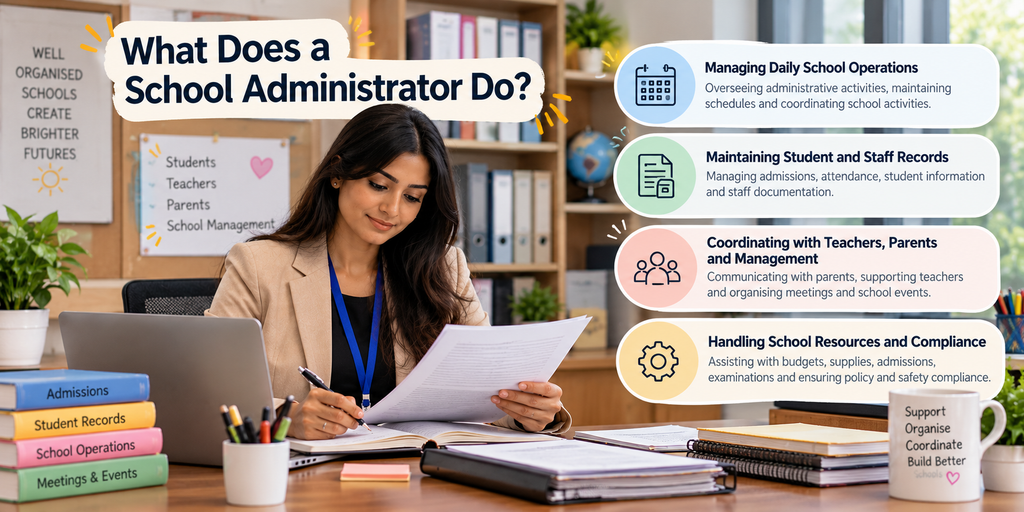
A school administrator is responsible for managing the administrative and operational activities that keep an educational institution running efficiently. Their duties vary depending on the school’s size and requirements, but the primary goal is to support teachers, students, parents, and school management.
If you are exploring how to become a school administrator, understanding these responsibilities will help you determine whether this career matches your interests and skills.
The key responsibilities of a school administrator include:
- Managing daily operations: Overseeing routine administrative tasks, maintaining school schedules, coordinating activities, and ensuring that facilities and resources are used effectively.
- Maintaining records: Managing student admissions, attendance records, staff documentation, and other essential files while ensuring accuracy and confidentiality.
- Coordinating communication: Communicating with parents, teachers, and school management to address administrative queries and ensure the smooth flow of information.
- Supporting staff: Assisting teachers and other employees with administrative requirements, scheduling meetings, and coordinating internal activities.
- Organizing school events: Helping arrange parent-teacher meetings, examinations, school functions, and other institutional activities.
- Managing resources: Assisting with budgets, office supplies, equipment, and resource allocation to support daily school operations.
- Supporting admissions and examinations: Coordinating admission procedures, processing applications, maintaining examination records, and organizing related documentation.
- Ensuring policy compliance: Following school policies, safety procedures, and applicable regulatory requirements to maintain an organized and secure learning environment.
These responsibilities require strong organizational, communication, and time-management skills. Knowing how to become a school administrator also involves understanding how these duties contribute to the overall efficiency of an educational institution.
Candidates interested in this profession can review school administrator job descriptions to understand employers’ expectations. Exploring relevant vacancies on CareerGrowKaro Jobs can also help aspiring professionals identify suitable opportunities and prepare for their next career step.
How to Become a School Administrator in India
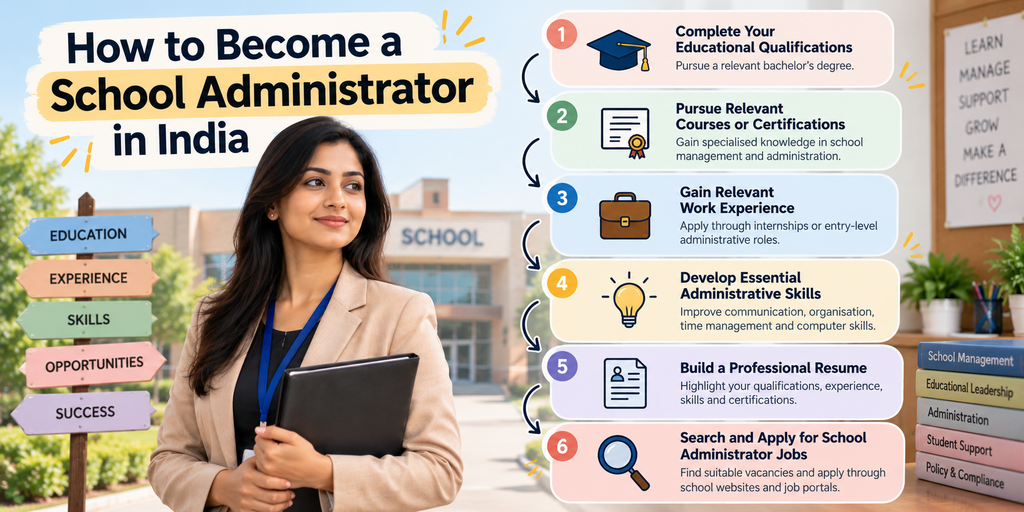
Building a career in school administration requires the right educational background, relevant skills, and practical experience. While some entry-level positions are open to fresh graduates, senior administrative roles may require additional qualifications and years of experience. If you are exploring how to become a school administrator, follow these six steps to understand the career pathway.
Step 1: Complete Your Educational Qualifications
The first step in learning how to become a school administrator is obtaining an educational qualification that aligns with your preferred role. A bachelor’s degree can be useful for many administrative positions, although specific requirements vary between institutions.
Relevant degree programs include:
- Business Administration: Develops knowledge of business operations, planning, and organizational management.
- Education: Provides an understanding of educational systems, institutional processes, and student support.
- Commerce: Builds foundational knowledge of accounting, financial records, and budgeting.
- Management: Develops skills in leadership, planning, and resource allocation.
- Public Administration: Introduces administrative systems, organizational policies, and governance.
Entry-level positions may accept candidates with a bachelor’s degree, while senior roles, such as school principal or administrative head, may require postgraduate qualifications, teaching credentials, or relevant professional experience.
Step 2: Pursue Relevant Courses or Certifications
Another important step in how to become a school administrator is developing specialized knowledge through relevant courses or certifications. Although additional qualifications are not compulsory for every position, they can strengthen your profile and help you understand school administration more effectively.
Consider courses in:
- Educational administration: Learn about school operations, institutional planning, and education management.
- School management: Understand school policies, resource allocation, and administrative procedures.
- Human resource management: Develop knowledge of staff coordination, recruitment, and employee documentation.
- Office administration: Improve your ability to manage records, schedules, correspondence, and daily office activities.
- Computer applications: Learn to use spreadsheets, word processors, databases, and other administrative tools.
Choose courses according to your career goals and the requirements listed in relevant job descriptions. Before enrolling, check whether employers in your preferred sector value the qualification.
Step 3: Gain Relevant Work Experience
Practical experience is essential when understanding how to become a school administrator, as it helps you learn how educational institutions operate. If you are a fresher, consider internships or entry-level positions that provide exposure to documentation, coordination, and office management.
You can gain experience through:
- Internships at schools, colleges, or educational organizations.
- Administrative work in school offices or admissions departments.
- Positions involving student records, scheduling, and documentation.
- Opportunities in academic coordination or education operations.
Some entry-level roles worth exploring include:
- Administrative Assistant: Supports daily office operations, documentation, and correspondence.
- School Office Assistant: Helps maintain records, manage inquiries, and coordinate routine activities.
- Admissions Executive: Handles admission inquiries, application processing, and student documentation.
- Academic Coordinator Assistant: Supports academic scheduling and communication between teachers and management.
Starting in one of these roles can help you build the experience needed to progress towards more specialised school administration positions.
Step 4: Develop Essential Administrative Skills
Developing the right skills is another important part of how to become a school administrator. School administrators manage multiple responsibilities while maintaining accurate records and communicating effectively with different stakeholders.
Focus on the following skills:
- Communication: Practise professional written and verbal communication for interacting with parents, teachers, and management.
- Organisation: Learn to manage documents, schedules, appointments, and administrative tasks systematically.
- Record management: Develop accuracy when maintaining student information, attendance records, and staff files.
- Time management: Prioritise tasks and meet deadlines, particularly during admissions and examination periods.
- Computer proficiency: Become comfortable using Microsoft Office, Google Workspace, spreadsheets, and digital recordkeeping systems.
- Problem-solving: Learn to address routine administrative challenges and coordinate appropriate solutions.
You can develop these skills through internships, online courses, practical assignments, and entry-level employment.
Step 5: Build a Professional Resume
When planning how to become a school administrator, remember that a professional resume helps employers evaluate your suitability for the position. Even without previous school administration experience, you can highlight transferable skills gained through internships, academic projects, volunteering, or other employment.
Make sure your resume includes:
- Educational qualifications: List your degrees, relevant coursework, and certifications.
- Work experience: Highlight internships and previous roles involving coordination, documentation, communication, or office management.
- Relevant skills: Include computer proficiency, recordkeeping, organisation, and communication.
- Certifications: Mention relevant courses in administration, management, or educational operations.
- Achievements: Include measurable contributions where possible, such as organising an event or improving a documentation process.
Customise your resume for every application by matching your experience and skills to the requirements in the job description. Use clear language and keep the information relevant to the role.
Step 6: Search and Apply for School Administrator Jobs
The final step in learning how to become a school administrator is identifying suitable vacancies and submitting applications. Schools may advertise administrative positions through their official websites, recruitment portals, and employment platforms.
Follow these steps when applying:
- Identify suitable institutions: Explore government schools, private schools, international schools, and educational organisations.
- Search for relevant job titles: Look for school administrator, administrative assistant, school office administrator, admissions executive, and school operations assistant vacancies.
- Check eligibility criteria: Review the required qualifications, work experience, technical skills, and other conditions.
- Prepare your application: Customise your resume and cover letter to demonstrate your suitability for the position.
- Prepare for interviews: Practise answering questions about organisation, communication, record management, and handling administrative challenges.
- Track applications: Maintain a list of the positions you have applied for and follow up when appropriate.
Following these steps can help you work towards a career in school administration. Your progress will depend on your educational background, practical experience, and the qualifications required for your preferred position.
What Skills Are Required to Become a School Administrator?
Developing the right skills is essential for managing school operations and supporting teachers, students, and parents. If you are researching how to become a school administrator, focus on building a combination of communication, organisational, technical, and problem-solving skills. These abilities help administrators handle daily responsibilities efficiently and maintain a well-organised learning environment.
The following skills are particularly valuable for school administration jobs.
- Communication Skills: School administrators regularly interact with parents, teachers, students, and management. Clear communication helps them share information, respond to enquiries, coordinate meetings, and resolve misunderstandings professionally.
- Organisational Skills: Managing admission forms, student records, staff documentation, and school schedules requires strong organisational abilities. These skills help administrators keep information accessible and ensure that administrative tasks are completed systematically.
- Time Management: School administrators often handle multiple responsibilities simultaneously, including admissions, meetings, documentation, and event coordination. Effective time management helps them prioritise tasks, meet deadlines, and maintain smooth daily operations.
- Computer Proficiency: Familiarity with word processors, spreadsheets, databases, email platforms, and school management software is important for maintaining digital records and preparing reports. Learning these tools can also improve administrative efficiency.
- Problem-Solving: Administrators may encounter scheduling conflicts, documentation errors, resource shortages, or parent enquiries. The ability to assess situations and identify practical solutions helps prevent minor issues from disrupting school operations.
- Leadership and Teamwork: School administrators coordinate with different departments, support staff members, and assist school management. Strong teamwork and leadership skills help them delegate tasks, communicate expectations, and contribute to institutional goals.
- Attention to Detail: Accurate documentation is essential when handling admission forms, attendance records, examination schedules, and financial information. Attention to detail reduces errors and helps maintain reliable administrative records.
- Confidentiality: School administrators may have access to sensitive student information, employee records, and institutional documents. They must handle such information responsibly and follow applicable privacy policies and data protection requirements.
Candidates exploring how to become a school administrator can also gain relevant experience through entry-level administrative positions in schools and educational organisations. Such opportunities provide practical exposure to documentation, scheduling, communication, and office management.
Ultimately, combining these skills with appropriate educational qualifications and relevant experience can improve your readiness for school administration roles. Understanding how to become a school administrator involves not only meeting eligibility requirements but also demonstrating that you can manage responsibilities efficiently and professionally.
Conclusion
A career in school administration can be a rewarding option for individuals interested in education, management, and organisational leadership. With the right qualifications, practical experience, and administrative skills, candidates can explore opportunities in government schools, private schools, international schools, and educational organisations.
Understanding how to become a school administrator involves completing relevant educational qualifications, pursuing additional certifications where necessary, gaining work experience, and developing essential skills such as communication, time management, and problem-solving. Building a professional resume and applying for suitable vacancies can further help you enter this field.
If you are ready to begin your career, explore relevant vacancies through school websites and job portals. You can also visit CareerGrowKaro Jobs to discover opportunities that align with your qualifications and career goals.
Learning how to become a school administrator is the first step towards building a career in school management. Start by identifying suitable entry-level positions, strengthening your skills, and gaining experience to work towards your long-term professional goals.
FAQs
1. How to become a school administrator in India?
To understand how to become a school administrator in India, complete a relevant bachelor’s degree, develop administrative and communication skills, and gain practical experience through internships or entry-level roles. Additional qualifications may be necessary for senior positions.
2. What qualifications are required to become a school administrator?
When exploring how to become a school administrator, consider degrees in Business Administration, Education, Commerce, Management, or Public Administration. However, specific educational requirements depend on the institution and position. Senior leadership roles may require postgraduate qualifications or teaching credentials.
3. Can freshers apply for school administrator jobs?
Yes, freshers interested in how to become a school administrator can apply for entry-level positions such as administrative assistant, school office assistant, and admissions executive. Internships and relevant certifications can help candidates gain practical experience and improve their employability.
4. Is a B.Ed. compulsory for school administrators?
No, a B.Ed. is not compulsory for every position. Candidates researching how to become a school administrator can explore general administrative roles with other relevant degrees. However, certain academic leadership positions may require a B.Ed. or other teaching qualifications.
5. What is the salary of a school administrator in India?
Salary is an important consideration when researching how to become a school administrator. Earnings depend on qualifications, experience, location, and the type of educational institution. Entry-level professionals generally earn less than experienced administrators and senior management professionals.
6. What skills are required to become a school administrator?
Candidates learning how to become a school administrator should develop communication, organisation, time management, computer proficiency, problem-solving, teamwork, attention to detail, and confidentiality skills. These abilities help administrators manage school operations efficiently.
7. Where can I find school administrator jobs in India?
If you are researching how to become a school administrator, explore vacancies through school websites, online job portals, recruitment advertisements, and professional networks. the education sector.