- Why Dark Chocolate Is a Smart Business Idea
- Health Benefits That Sell Themselves
- What the Industry Looks Like in India (2025)
- Types of Chocolates You Can Make
- Step-by-Step Chocolate Business Plan
- Profit Potential & Break-Even
- Updated Product Ideas + demand potential for 2025
- Industry Outlook — Why 2025 Is the Right Time
- Final Word: A Business That’s Both Sweet & Serious
Why Dark Chocolate Is a Smart Business Idea
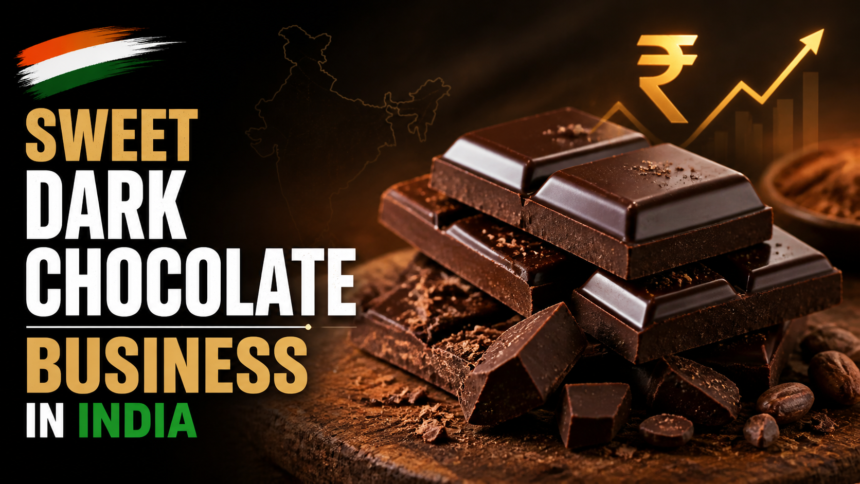
Sweet Dark Chocolate Business in India is gaining massive demand in 2025, as more people shift towards premium, low-sugar chocolate alternatives. Chocolate is one of the fastest-selling FMCG products, and dark chocolate offers higher profit margins with growing health-conscious buyers.
The key to succeeding in a Sweet Dark Chocolate Business in India is understanding your target customers and offering unique flavors.
It’s one of the fastest-moving FMCG products worldwide. And in India, the Market is heating up. The Indian chocolate industry was valued at ~USD 2.9 billion in 2024 and is expected to reach ~USD 5.5 billion by 2033, thanks to rising incomes, gifting culture, and people wanting more premium / healthier treats. IMARC Group
Here’s where the real opportunity lies: dark chocolate.
Unlike milk chocolate, dark chocolate is:
- Healthier (less sugar, more cocoa).
- Premium (people are willing to pay extra).
- Evergreen (sold year-round: festivals, gifting, daily indulgence).
From metro cities to smaller towns, demand is climbing. For young entrepreneurs, this is a rare mix of mass demand + premium margins — the perfect recipe for a small-town business with big potential.
Health Benefits That Sell Themselves
When you sell dark chocolate, you don’t just sell taste — you sell benefits. That makes your pitch stronger.
Proven health perks of Sweet Dark Chocolate Business in India:
- Antioxidant-rich: Flavonoids may improve heart health and blood circulation. (Persistence Market Research+2PMC+2)
- Better sugar balance: studies show that dark chocolate may reduce the risk of type 2 diabetes when consumed moderately. Verywell Health+1
- Brain booster: Cocoa compounds support mood and cognitive function.
- Stress relief: Even small amounts are linked with better mental well-being.
Marketing tip: Highlight “70% cocoa”, “antioxidant-rich”, or “sugar-free” on your packaging.It instantly makes your product look premium and health-friendly.
What the Industry Looks Like in India (2025)
Types of Chocolates You Can Make
Before we dive into the business plan, let’s talk product mix. You don’t have to stick to plain bars. Variety sells:
- Dark chocolate bars (50%–100% cocoa).
- Sweet dark chocolate (lower bitterness, broader appeal).
- Handmade chocolates with nuts, fruits, spices.
- Premium dark chocolate gift boxes (festivals, weddings).
- Organic dark chocolate (natural ingredients).
- Sugar-free or keto-friendly options (for health-focused buyers).
- Unique chocolate flavours — chilli dark, orange zest, coffee blends.
Step-by-Step Chocolate Business Plan
1. Market Research
Check demand in your city for Sweet Dark Chocolate Business in India. Are cafes, bakeries, or local stores stocking imported chocolates? That’s your signal.
2. Investment & Budget
You can start small with ₹8–15 lakhs.
- Space (500–800 sq. ft. workshop): ₹2–4 lakhs/year.
- Machinery (melanger, tempering unit, grinder, moulds): ₹4–6 lakhs.
- Raw materials: ₹80,000–₹1.5 lakhs for 1–2 months stock.
- Packaging & branding: ₹50,000–₹1 lakh.
- Licenses: ₹10,000–₹50,000.
- Working capital: ₹1–2 lakhs buffer.
Pro Tip: Start lean with 1–2 machines, test small batches, and scale as demand grows.
3. Raw Materials Sourcing
To make Sweet Dark Chocolate Business in India, you need a few basic ingredients:
- Cocoa powder
- Cocoa liquor (paste of cocoa nibs)
- Cocoa butter
- Sugar (or sugar substitutes for healthy variants)
- Lecithin (texture enhancer)
- Vanilla (flavor) or natural flavoring
- Add-ons: dry fruits, nuts, fillings for premium products
These can be either sourced from Indiamart suppliers or wholesalers in states like Kerala, Karnataka, or imported if you’re targeting premium markets.
4. Manufacturing Process
- Roasting & Winnowing: Cocoa beans are roasted to bring out flavor. Shells removed → cocoa nibs.
- Grinding: Nibs are ground into cocoa liquor (a thick paste).
- Mixing: Cocoa liquor blended with sugar, cocoa butter, and vanilla.
- Tempering & Moulding: Mixture refined and poured into moulds.
- Cooling & Packaging: Chocolates are cooled in refrigerators and packed in attractive boxes/wrappers.
You can create different variants — dark chocolate with nuts, fruit-filled bars, sugar-free options — to stand out in the Market.
5. Packaging & Branding
First impressions matter. Premium boxes, clean labels, and highlighting “dark”, “handmade”, or “organic” instantly boost perceived value from Sweet Dark Chocolate Business in India.
6. Licenses & Compliance
Before you start selling commercially, ensure compliance:
- FSSAI license (mandatory for food businesses).
- GST registration (for online/wholesale sales).
- Trademark (to protect your brand).
- MSME / Udyog Aadhaar registration (for subsidies & schemes).
- Pollution control board NOC (if factory scale).
7. Marketing & Sales Strategy
Small-town entrepreneurs often think chocolate sales are metro-only. Not true! Here’s how you can sell:
- Local Market: gift shops, bakeries, schools, event planners.
- E-commerce: Amazon, Flipkart, Meesho.
- Direct-to-Consumer: Instagram, WhatsApp stores, own website.
- Festivals & Occasions: Diwali, Raksha Bandhan, Valentine’s Day = peak chocolate sales.
- Highlight health angle: “70% cocoa”, “sugar-free”, “antioxidant rich” — these attract urban and health-conscious buyers.
- To expand your Sweet Dark Chocolate Business in India, consider offering customized gift boxes, mini sampling packs, and premium variants.
Marketing Hack: Use short reels, such as “How we make dark chocolate in our small factory” or
“Why dark chocolate is healthier than milk chocolate.” These go viral and build trust.
Profit Potential & Break-Even
- Margin per bar: ₹60–₹120 (depending on size/variant).
- Selling 1000 bars/month → ₹60,000–₹1,20,000 gross margin.
- During festive periods (such as Diwali, Valentine’s, and Raksha Bandhan), sales can increase by 2–3 times.
- Break-even: usually 2–3 years if marketed well and demand is steady
Updated Product Ideas + demand potential for 2025
Let me tweak the earlier product list with relevance to the Sweet Dark Chocolate Business in India angle (since lots of people want healthier, premium treats):
- Dark chocolate bars with nuts or dried fruits — higher margin, perceived value.
- Sugar-free/low sugar dark chocolate — emerging demand with health-aware people.
- Mini dark chocolate gift boxes — perfect for festivals, gifting.
- Dark chocolate sampling packs — small pieces for new customers to try.
Industry Outlook — Why 2025 Is the Right Time
- India’s young population = higher sweet consumption.
- Rising fitness trends → more demand for dark, organic, and sugar-free chocolate.
- The premium gifting Market is booming in smaller cities — people want affordable luxury items.
Global chocolate consumption habits are shifting towards dark & artisanal chocolates, and India is catching up.
The next 5 years are golden for anyone starting now.
Q1. How much money is needed to start a chocolate business in India?
₹8–15 lakhs for a small unit.
Q2. Can I start from home?
Yes, on a micro-scale. For commercial sales, you’ll need an FSSAI license and a proper setup.
Q3. Is dark chocolate profitable in India?
Yes, it offers higher margins than milk chocolate, with rising demand.
Q4. Do I need special training?
Basic training helps, but suppliers provide demos. Online courses are available too.
Q5. Who are the target customers?
Young professionals, health-aware buyers, gift markets, cafes, bakeries.
Q6. Can I call chocolate “healthy”?
Yes, if the cocoa content is ≥70%, the sugar content is low, and the ingredients are clean. Include a small disclaimer, “in moderation”.
Q8. Does the high cost of cocoa spoil profit?
It’s a risk. Cocoa prices fluctuate. But you can manage cost by buying in bulk, sourcing domestically, or even importing smartly. Use margins wisely.
Q9. Does the high cost of cocoa spoil profit?
It’s a risk. Cocoa prices fluctuate. But you can manage cost by buying in bulk, sourcing domestically, or even importing smartly. Use margins wisely.
Final Word: A Business That’s Both Sweet & Serious
Sweet Dark Chocolate Business in India isn’t just a luxury treat — it’s a serious business with long-term potential. With rising demand, modest investment, and creative marketing, even entrepreneurs in smaller towns can build profitable Sweet Dark Chocolate Business in India.
👉 Don’t aim to beat multinationals from day one. Start small, find your niche (healthier, artisanal, local), and grow steadily.
If you’ve got the ambition, this is one sweet path to achievement.