
You open YouTube, type “learn 2D animation for beginners free,” and suddenly your screen is filled with hundreds of tutorials. Some are 5 minutes, some are 2 hours long. One person says, “Start with the basics”; another jumps straight into character animation. And you just sit there, staring, thinking… Where do I even begin?
- Structured Roadmap (Overview of Phases)
- Phase 1: Getting Comfortable (Basics Without Overwhelm)
- Phase 2: First Movements (Learning Motion)
- Phase 3: Creating Real Scenes (Characters + Story)
- Phase 4: Polishing & Sharing
- 7-Day Quick Start Plan
- 30-Day Skill Growth Plan
- Daily Practice Habit System
- When You’re Ready to Level Up
- Beginner-Friendly Project Ideas
- Common Beginner Struggles
- Conclusion
Then comes the second thought, “What if I’m not even good at drawing?”
You see these amazing animations online, smooth movements, perfect characters, and it feels like maybe this is only for “talented” people. Maybe you’re already behind.
And honestly, this is where most people stop before they even start.
But here’s something no one tells you clearly:
You don’t need to be great at drawing to start animation. You don’t need expensive software. And you definitely don’t need to watch 50 tutorials before trying anything.
At Careergrowkaro, we’ve seen so many beginners stuck in this exact phase: confused, overwhelmed, and waiting for the “perfect starting point.” The truth is, there is no perfect starting point. There’s only a simple one.
Animation is not about drawing beautiful characters in the beginning. It’s about understanding movement; how things move, how timing works, and how small changes between frames create life. Even a simple bouncing ball can teach you more than hours of watching tutorials; and that’s exactly how you start to learn 2D animation for beginners free in the most practical way.
So if you’ve been overthinking, comparing yourself, or waiting to feel “ready,” this guide is for you.
Because yes, you can absolutely learn 2D animation for beginners free, starting today, with zero budget, zero experience, and zero pressure.
You just need the right approach.
Structured Roadmap (Overview of Phases)
Before you jump into random tutorials, let’s simplify everything. If your goal is to learn 2D animation for beginners for free, you need a clear path, not more confusion.
Think of animation like learning to ride a cycle. You don’t start with tricks. You first learn balance, then movement, and only after that do you try something advanced.
Same goes here
Phase 1: Getting Comfortable
This is your no-pressure starting zone.
You’re not trying to create anything impressive here. You’re just getting used to how animation works.
- Understanding what frames are
- Learning how movement happens between drawings
- Playing with simple shapes like circles and squares
The goal is simple: Get comfortable, not perfect.
This phase builds your foundation to learn 2D animation for beginners free without feeling overwhelmed.
Phase 2: First Movements
Now things start getting interesting.
Here, you’ll focus on basic motion, how objects move in real life.
- Bouncing ball
- Speed changes (fast vs slow)
- Smooth vs stiff movement
This is where you actually see animation happening for the first time.
And honestly, this phase is where most beginners finally feel:
“Okay… I can actually do this.”
Phase 3: Creating Real Scenes
Now you move from practice to creation.
- Simple characters (even stick figures)
- Basic actions like walking, jumping
- Small story scenes
You’re no longer just learning; you’re creating.
This is the stage where you truly begin to learn 2D animation for beginners free in a practical, real-world way.
Phase 4: Polishing & Sharing
This is where your work starts to look “real.”
- Cleaning rough animations
- Adding colors
- Exporting your work
- Sharing online
And most importantly, getting feedback.
Because growth doesn’t come from perfection, it comes from putting your work out there.
Phase 1: Getting Comfortable (Basics Without Overwhelm)
If you’re trying to learn 2D animation for beginners free, this is the most important phase and also the one people rush through.
Here, you’re not trying to impress anyone. You’re just understanding how animation actually works.
1. What to Focus On
Forget fancy drawings for now. Focus on:
- Frames (each small step of movement)
- Timing (how fast or slow something moves)
- Spacing (how far objects move between frames)
Animation is simply movement broken into steps.
2. Daily Actions
Keep it very simple:
- Draw basic shapes like circles or squares
- Move them slightly frame by frame.
- Change timing (fast vs slow) and observe the difference
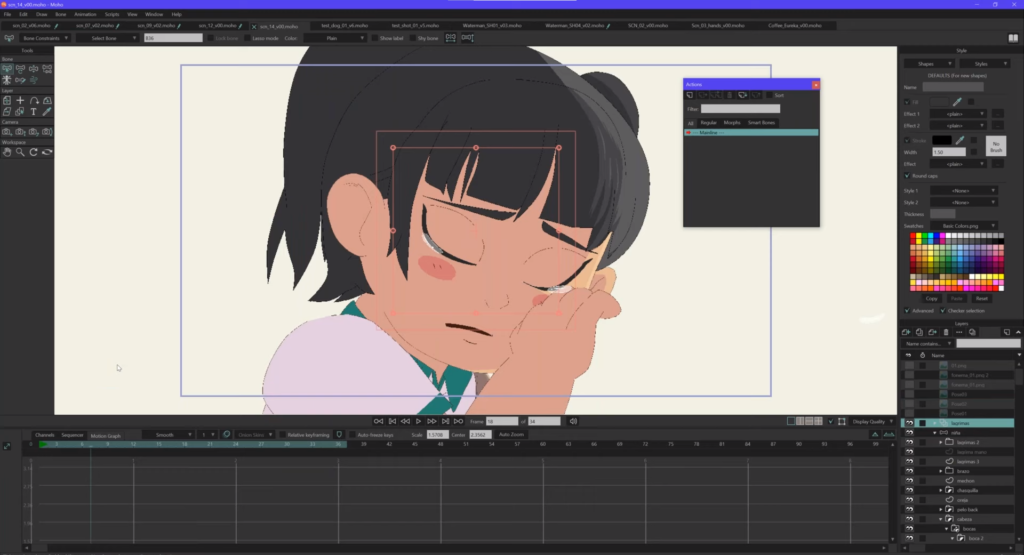
3. Free Tools
- Krita
- OpenToonz
- FlipaClip
If you feel confused, start with FlipaClip. It’s beginner-friendly and perfect to learn 2D animation for beginners free.
4. Time Required
5–7 days (30–45 minutes daily is enough)
Phase 2: First Movements (Learning Motion)
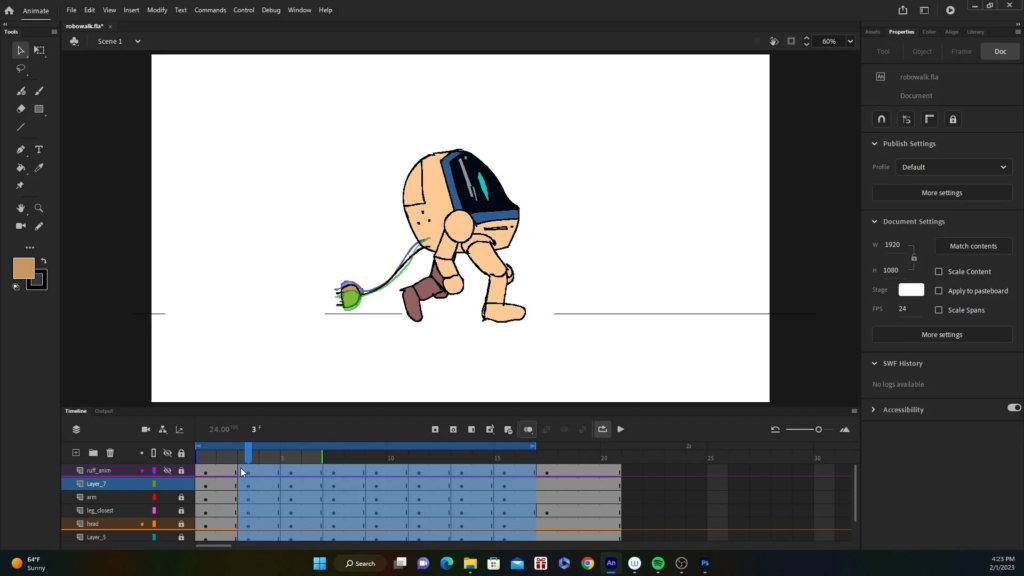
This is where things start to feel real. You’re no longer just moving shapes; you’re learning how motion behaves.
1. What to Focus On
- Timing and spacing in real motion
- Making movement feel smooth instead of robotic
2. Daily Actions
- Create a simple bouncing ball animation
- Try different speeds (slow bounce vs fast bounce)
- Repeat the same animation 2–3 times to improve
Repetition is what helps you learn 2D animation for beginners free and faster.
3. Tools
- FlipaClip
- Krita
4. Time Required
7–10 days
Phase 3: Creating Real Scenes (Characters + Story)
Now you move from practice to creation. This is where animation starts feeling exciting.
1. What to Focus On
- Simple characters (don’t overthink design)
- Basic storytelling (even 5-second scenes matter)
Daily Actions
- Draw a stick figure or simple character
- Animate basic actions like walking or jumping
- Create a tiny story (e.g., character slips, reacts, walks away)
Story makes your animation feel alive.
2. Tools
- Krita
- OpenToonz
3. Time Required
10–14 days
Phase 4: Polishing & Sharing
This is where your animation starts looking like something you can actually show.
1. What to Focus On
- Cleaning rough frames
- Exporting properly
- Getting feedback
2. Daily Actions
- Fix rough or shaky animations
- Add basic colors
- Export your animation as video or GIF
3. Tools
- Krita
- OpenToonz
4. Time Required
5–7 days
7-Day Quick Start Plan
If you’ve been overthinking and waiting for the“perfect time,” this is it. This plan is designed to help you learn 2D animation for beginners free and create your first real animation in just 7 days, no overwhelm, no complex tools.
Day 1: Understand the Basics
Focus: What animation actually is
- Open FlipaClip or Krita
- Draw a simple circle
- Duplicate it across 5–6 frames
- Slightly move it in each frame
You’re learning how movement works, the foundation of learn 2D animation for beginners free
Day 2: Play with Movement
Focus: Frame-by-frame motion
- Move the circle left to right
- Try fast vs slow movement
- Add more frames and see the difference
Don’t aim for smoothness yet; just understand motion.
Day 3: Timing Experiment
Focus: Speed control
- Create the same animation twice
- One fast
- One slow
- Observe how timing changes everything
This is where you start to truly learn 2D animation for beginners free
Day 4: Bouncing Ball (Your First Real Animation)
Focus: Gravity + motion
- Draw a ball dropping and bouncing
- Make it squash slightly on impact (optional)
This is the most important beginner exercise.
Day 5: Improve Smoothness
Focus: Refinement
- Add more frames between movements
- Fix jerky motion
- Replay and adjust
This is how you improve without tutorials while you learn 2D animation for beginners free
Day 6: Add Personality
Focus: Making it interesting
- Turn the ball into a character (add eyes, face)
- Add a small action (jump, react, roll away)
Now your animation starts telling a story.
Day 7: Export & Share
Focus: Completion
- Export as video or GIF
- Share it (Instagram, WhatsApp, or with friends)
This step matters the most. It builds confidence.
30-Day Skill Growth Plan
Now that you have a quick 7-day start, the next step is to build real consistency. Because honestly, doing something once feels exciting, but doing it for 30 days is what actually creates skill.
This 30-day plan is designed to help you learn 2D animation for beginners free in a structured, stress-free way so you’re not guessing what to do every day, and you keep moving forward without feeling stuck.
| Week | Focus Area | What to Learn | Daily Practice Tasks | Tools to Use |
| Week 1 | Basics | Frames, timing, spacing, how animation works | Draw simple shapes, move them frame by frame, and experiment with fast vs slow motionFlipaClip | Flipaclip / Krita |
| Week 2 | Motion | Smooth movement, timing control, spacing in motion | Create bouncing ball and pendulum, try speed variations, repeat animationsFlipaClip | Flipaclip / Krita |
| Week 3 | Characters | Simple character design, basic actions, storytelling | Draw stick figures, animate walking/jumping, and create small scenesKrita | Krita / Opentoonz |
| Week 4 | Project | Combining skills, polishing, exporting | Create a short animation (5–10 sec), refine frames, add colors, export videoKrita | Krita / Opentoonz |
If you follow this plan with even basic consistency, you’ll notice a huge shift, not just in your skills but in your confidence. What once felt confusing will start making sense. Movements will feel smoother, ideas will come faster, and most importantly, you’ll stop feeling like a beginner who’s just “trying.”
Remember, the goal isn’t perfection in 30 days. The goal is progress.
Because that’s how you truly learn 2D animation for beginners free, not by waiting, not by overthinking, but by showing up daily and creating, one small animation at a time.
Daily Practice Habit System
Now that you know what to practice, the next question is, how do you stay consistent without feeling overwhelmed?
Instead of spending hours randomly, you need a simple routine you can follow every day. This habit system is designed to help you learn 2D animation for beginners free in just 40 minutes daily, without burnout or confusion.
1. 10-Minute Sketching
This is your warm-up time. Don’t aim to create perfect drawings—just loosen your hand and get comfortable. Draw simple shapes, lines, or basic characters. The goal is to improve control and observation, not perfection. Even rough sketches help you understand structure and movement better. This small habit builds confidence and removes the fear of drawing, which is important when you’re trying to learn 2D animation for beginners free.
2. 20 Min Animating
This is the most important part of your practice. Focus on creating small animations like a bouncing ball, pendulum, or simple character movement. Don’t overcomplicate—repeat the same exercise until it feels smoother. This is where real learning happens because animation is about motion, not just drawing. By consistently animating every day, you start to naturally understand timing and spacing, which helps you truly learn 2D animation for beginners free.
3. 10 Min Reviewing
Most beginners skip this, but this is where improvement actually happens. Replay your animation and notice what feels off, jerky motion, uneven speed, or missing frames. Try to fix small mistakes instead of starting something new. You can even compare your work with real-life motion or references. This habit trains your eye and helps you improve faster, making your journey to learn 2D animation for beginners free much more effective and structured.
When You’re Ready to Level Up
Once you’ve followed the basics and started feeling comfortable, you’ll reach a point where simple exercises aren’t enough anymore. That’s a good sign; it means you’re growing. This is where you move beyond just trying to learn 2D animation for beginners free and start thinking like a creator.
1. Advanced Tools
Free tools are more powerful than most beginners think. Before jumping to paid software, explore deeper features in OpenToonz and Krita, like layers, camera movement, and timeline control. These alone can level up your work significantly.
- Explore deeper features in OpenToonz and Krita
- Try industry tools later like Adobe After Effects or Toon Boom (when you’re ready)
- Learn layers, camera movement, and advanced timelines
The goal isn’t to switch tools quickly; it’s to grow your skills first, then upgrade when needed.
2. Freelancing
You don’t need to wait until you’re “perfect” to start earning. If you can create simple animations, you already have a skill people need.
- Create a small portfolio (3–5 animations)
- Offer services like Instagram reels, explainer videos, or simple motion graphics
- Start on platforms like Fiverr or Upwork, or reach out to small creators
You don’t need to be perfect to start. You just need to be better than a beginner.
3. Content Creation
Content creation is one of the fastest ways to grow today. Post short animations on Instagram, YouTube Shorts, or reels. Don’t just post perfect work; share your progress too. People love watching improvement journeys.
- Post short animations on Instagram, YouTube Shorts, or Reels.
- Share your progress (people love learning journeys)
- Build a personal brand as you continue to learn 2D animation for beginners free
Your content can become your portfolio and even your income source.
Beginner-Friendly Project Ideas
Once you’ve practiced the basics, the best way to improve is by actually creating something. Projects help you apply what you’ve learned while keeping things fun and motivating, especially when you’re trying to learn 2D animation for beginners free.
1. Ball to Character Transformation
Start with a simple ball and slowly transform it into a character. For example, the ball can bounce, stretch, and then turn into a face or a full figure.
This project teaches you:
- Smooth transitions
- Timing and spacing
- Basic creativity
It’s perfect because you’re starting simple and gradually adding complexity while you learn 2D animation for beginners free.
2. Short Story Animation
Create a very small story, just 5 to 10 seconds long. It could be something like a stick figure slipping, reacting, and walking away.
This project helps you:
- Understand storytelling
- Practice character movement
- Add emotions to animation
You don’t need detailed drawings. Even stick figures can tell powerful stories when you learn 2D animation for beginners free.
3. Social Media Reel
Make a short, engaging animation specifically for Instagram or YouTube Shorts. It could be funny, relatable, or aesthetic.
This project teaches you:
- Fast-paced animation
- Hooking attention quickly
- Creating content people enjoy
Plus, this gives you something you can actually post, helping you build confidence as you learn 2D animation for beginners free.
Common Beginner Struggles
When you start trying to learn 2D animation for beginners free, these struggles are completely normal. In fact, almost every beginner goes through this phase; you’re not doing anything wrong.
1. “My animation looks bad.”
This is probably the most common thought. You play your animation, and it feels rough, weird, or just not “good enough.”
Here’s the truth: it’s supposed to look like that in the beginning.
Animation is not about making beautiful drawings at first; it’s about understanding movement. Even professional animators start with rough, messy frames. Instead of focusing on how it looks, focus on whether the motion feels right. Once the movement improves, the visuals will follow naturally as you continue to learn 2D animation for beginners free.
2. “I keep watching tutorials.”
It feels productive; you’re learning, right? But hours go by, and you haven’t actually created anything.
The fix is simple: stop consuming, start creating.
Watch one short tutorial, then immediately apply it. Even if your result isn’t perfect, you’ll learn more by doing than watching 10 videos. Animation is a skill you build with your hands, not just your eyes. This shift is crucial if you want to truly learn 2D animation for beginners free.
3. “I don’t improve.”
This usually comes after a few days or weeks when progress feels slow.
The real reason? Lack of consistent practice.
Doing animation once in a while won’t help. Even 30–40 minutes daily is enough if you stay regular. Improvement in animation is gradual: you won’t notice it daily, but after a few weeks, the difference becomes clear. Consistency is what separates someone who tries from someone who actually learns 2D animation for beginners free successfully.
Conclusion
If you’ve reached this point, one thing should be clear: you don’t need expensive tools, perfect drawing skills, or prior experience to start. What you really need is a clear path and the willingness to take small steps consistently.
Learning animation can feel overwhelming at first, especially with so much content online. But as you’ve seen, the process becomes simple when you break it into phases, follow a routine, and focus on doing instead of just watching. Whether it’s a bouncing ball or a short story, every small animation you create brings you one step closer to real improvement.
At Careergrowkaro, we’ve seen beginners transform their skills just by following a structured approach like this. The difference isn’t talent; it’s consistency and clarity. When you stop overthinking and start practicing daily, things begin to click naturally.
Remember, your first animation doesn’t need to impress anyone. It just needs to exist. Because once you create that first piece, you’re no longer someone who is “trying” to learn: you’re someone who is actually doing it.
So don’t wait for the perfect moment. Start today, keep it simple, and trust the process.
Because that’s how you truly learn 2D animation for beginners free, one small animation at a time.