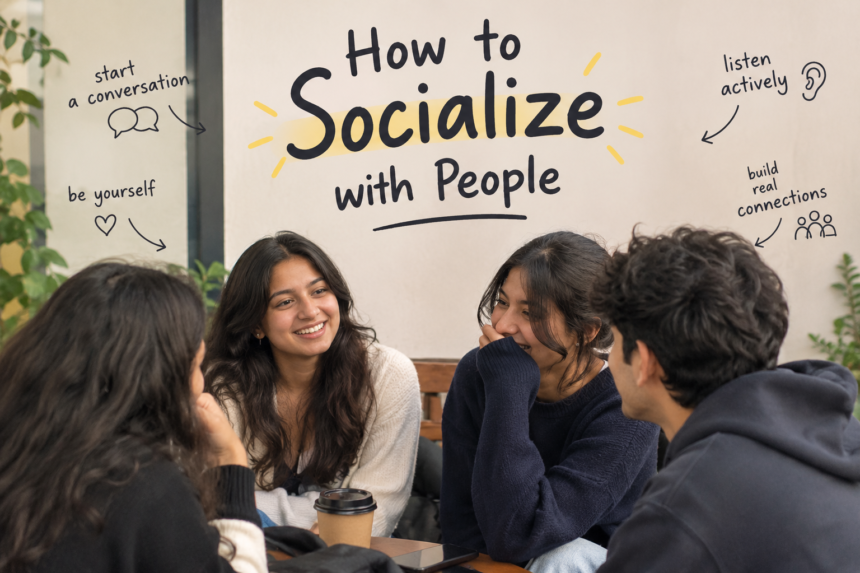
If you want to know how to socialize with people, here is the direct answer. Start small, start with one person, and give the conversation a job to do. You do not need a big personality. You need one small habit repeated daily, like saying hello first, asking one honest question, and listening properly. Do this for two weeks and socializing stops feeling like a performance. This guide from CareerGrowKaro breaks the whole process into steps you can use today, whether you are in a Tier 2 city hostel or a metro city office.
- What Does It Really Mean to Socialize With People
- Why Socializing Matters More Than Your Marksheet
- How to Socialize as an Introvert
- How to Socialize With People Without Being Awkward
- How to Socialize and Make Friends Fast
- How to Socialize With People at Work or During Internships
- Quick Reference Table for Common Social Situations
- Mistakes That Make Socializing Harder
- How CareerGrowKaro Helps You Build This Skill for Real Life
- FAQs on How to Socialize With People
- Conclusion
Most students think socializing is a talent. It is not. It is a skill, exactly like typing or cooking. And like any skill, it gets better with practice, not with pressure. Once you accept this, how to socialize with people stops feeling like a mystery and starts feeling like a checklist you can actually follow.
What Does It Really Mean to Socialize With People
Before jumping into how to socialize with people, let us clear one confusion. Socializing does not mean being the loudest person in the room. It does not mean cracking jokes every two minutes or knowing everyone’s birthday. Socializing simply means being able to start, hold, and end a conversation without it feeling forced.
Think of it like this. You already know how to socialize with people you are comfortable with, your best friend, your cousin, your neighbour’s dog even. The real skill is carrying that same comfort into rooms full of strangers, classmates you barely know, or a new office team.
CareerGrowKaro believes socializing is a career skill, not just a personality trait. Recruiters notice it in group discussions. Professors notice it in class participation. Clients notice it in the first five minutes of a call. So learning how to socialize with people is not a soft luxury, it is a hard requirement for growth.
Why Socializing Matters More Than Your Marksheet
Here is something nobody tells students clearly. You can have a great CGPA and still struggle in interviews, internships, and team projects if you never learned how to socialize with people. Skills open the door, but conversations decide whether you get invited in.
In India specifically, most opportunities travel through word of mouth. A referral for an internship, a recommendation for a scholarship, a tip about a walk-in interview, all of this comes from people who know you and trust you a little. That trust is built through basic socializing, not through your marks card.
A few honest reasons why learning how to socialize with people should be on your priority list:
- It builds your personal network before you even need one
- It improves how confident you sound in interviews and group discussions
- It reduces loneliness, which is a real problem for students living away from home
- It makes teamwork at college or office ten times smoother
- It directly supports the importance of communication in career success, which recruiters rank above degrees in many surveys
Research from Harvard also backs this up outside the career angle. The Harvard Study of Adult Development, running since 1938, has found that good relationships are the strongest predictor of long term happiness and health, more than money or fame. The CDC makes a similar point, listing strong social connection as one of the most overlooked factors in long term physical and mental health. So when you practice how to socialize with people, you are not just building a career, you are building a healthier life.
How to Socialize as an Introvert
Let us bust a myth first. Introverts are not broken extroverts. You do not need to become loud to learn how to socialize as an introvert. You just need a different strategy, one that respects your energy instead of draining it.
Here is how socially fit introverts actually do it.
1. Pick depth over crowd
Introverts do not enjoy small talk in big groups, and that is fine. Instead of trying to mingle with fifteen people at a college fest, aim for one real conversation. One good conversation beats ten shallow ones every single time.
2. Prepare two or three conversation starters
Introverts freeze not because they lack things to say, but because they get caught off guard. Keep two or three easy openers ready, like asking about someone’s hometown, their course, or what they thought of a recent class or event. This single trick solves half the anxiety around how to socialize as an introvert.
3. Use one-on-one settings first
Group settings feel loud and competitive for introverts. Start practicing how to socialize with people in smaller, quieter settings first, like a library, a canteen corner, or a walk after class. Confidence built here transfers naturally into bigger groups later.
4. Give yourself recovery time
Socializing costs introverts real mental energy. After a group activity, take twenty minutes alone to recharge. This is not avoidance, it is maintenance. Knowing how to socialize as an introvert also means knowing when to step back guilt free.
5. Remember, quiet does not mean weak
Some of the best listeners, mentors, and leaders are introverts. Being quiet in a room does not cancel your value. It usually means people trust you more, because you listen before you speak.
How to Socialize With People Without Being Awkward
Awkwardness usually comes from one thing, overthinking. Your brain tries to plan the perfect sentence, and while it is busy planning, the natural moment passes. Here is how to socialize with people without being awkward, step by step.
Step 1: Drop the pressure to be interesting
You do not need a funny story ready. You need curiosity. Ask people about themselves. Most humans enjoy talking about their own life, hobbies, and opinions. This one shift removes seventy percent of the pressure instantly.
Step 2: Use the two minute rule
Commit to just two minutes of conversation. Two minutes feels doable even for the most nervous person. Often, once you cross the two minute mark, the awkwardness disappears on its own and the chat continues naturally.
Step 3: Match energy, don’t force energy
If the other person is calm, stay calm. If they are excited, match a little excitement. Trying to force high energy when it does not fit the mood is the fastest way to feel awkward. Reading the room is a huge part of how to socialize with people smoothly.
Step 4: Accept silence, don’t panic over it
A short pause in conversation is normal. It is not a failure. New socializers panic during silence and blurt out something random, which actually creates more awkwardness. Let the pause breathe. Someone will pick up the thread, often you.
Step 5: Practice with low stakes people first
Talk to the delivery person, the shopkeeper, the auto driver, your building watchman. These low pressure chats are the best training ground for how to socialize with people without being awkward, because there is nothing to lose here.
A practical example. Rohit, a second year B.Com student from a Tier 3 town, used to avoid canteen tables with strangers. He started with one rule, ask the person next to him what they were eating and why they picked it. Small, silly, low pressure question. Within a month, he had a regular lunch group. That is the entire secret behind how to socialize with people without being awkward, small low pressure entry points.
How to Socialize and Make Friends Fast

Knowing how to talk to people is step one. Turning that into real friendships is step two. Here is how to socialize and make friends without waiting years for it to happen naturally.
- Show up consistently. Friendship grows through repeated small interactions, not one long deep conversation. Sit at the same spot, join the same group activity, attend the same club meeting.
- Remember small details. If someone mentions their sister’s wedding or a cricket match they are excited about, ask about it next time. This tiny memory move makes people feel valued.
- Be the one who initiates. Waiting for others to invite you is the slowest path. If you want to learn how to socialize and make friends quickly, be the person who sends the first message or suggests the first plan.
- Offer help before asking for it. Share notes, help someone shift their hostel bag, explain a concept after class. Helping builds trust faster than any conversation topic.
- Join structured groups. Clubs, hobby classes, NCC, sports teams, or a freelancing community for students give you a built in reason to talk to the same people again and again, which is exactly how friendships form.
If you are also trying to build professional relationships alongside personal ones, the same rules of how to socialize and make friends apply to networking. A LinkedIn connection or a college senior you helped once can turn into a referral later. Socializing and career growth are more connected than most students realize, something covered well in 10 practical career growth strategies for 2026.
How to Socialize With People at Work or During Internships
College socializing and workplace socializing are not the same game. In college, people forgive awkwardness easily. At work, first impressions carry more weight, so it helps to know how to socialize with people in a professional setting without sounding stiff or overly casual.
Here is a short version of how to socialize with people in an office or internship.
- Greet before you sit down. A simple good morning to your team sets a friendly tone for the whole day.
- Ask about work, not personal life, first. Once trust builds, personal chats come naturally on their own.
- Join the tea or lunch break group. These informal breaks are where most real workplace bonding happens, far more than formal meetings.
- Give credit generously. Mentioning a colleague’s help in front of others is one of the fastest ways to build goodwill.
- Follow up after help is given. A short thank you message the next day shows you value the relationship, not just the favour.
Interns and freshers who master how to socialize with people at work usually get remembered when a full time role opens up. Managers rarely promote the most silent performer in the room, they promote the one they trust and remember, and that trust starts with simple, consistent socializing.
Quick Reference Table for Common Social Situations
| Situation | What Feels Hard | Quick Fix |
| First day of college or job | Everyone already seems to know each other | Ask one person, “Is this also your first week?” |
| Group project with strangers | No idea how to start talking | Ask about their part of the work first |
| College fest or party | Too many people, no clear entry point | Find one person standing alone, start there |
| Awkward silence on a call | Fear of dead air | Ask a simple follow up question on their last point |
| Meeting seniors or recruiters | Fear of saying something wrong | Ask about their journey, people love sharing that |
Mistakes That Make Socializing Harder

Even with good intentions, a few habits quietly ruin how to socialize with people. Watch out for these.
- Checking your phone while someone is talking to you
- Only talking about yourself without asking anything back
- Trying to sound overly formal or fake polished
- Avoiding eye contact completely out of nervousness
- Giving one word answers that kill the conversation
- Comparing yourself to more talkative people instead of building your own style
Fixing even two of these mistakes speeds up your progress massively.
Struggling to hold a conversation without running out of things to say? Use CareerGrowKaro’s guide on building English communication skills to sound clear and confident in minutes, not months.
How CareerGrowKaro Helps You Build This Skill for Real Life
CareerGrowKaro is not just about jobs and resumes. Real career growth includes soft skills like confidence, communication, and yes, learning how to socialize with people the right way. A student who can walk into a room, introduce themselves properly, and hold a decent conversation always gets noticed faster in interviews and group discussions.
This is also why CareerGrowKaro regularly covers topics like public speaking tips for beginners and daily habits to build interview confidence, because socializing and career confidence grow together, not separately.
Even inspiring stories like how Rekha from Jhansi landed her first job through a digital course show one common thread. Every success story includes someone who learned to talk to the right people at the right time, ask the right questions, and build trust quickly. That is socializing in action, not luck.
Government platforms also recognize soft skills as job ready skills now, not extra add-ons. The National Skill Development Corporation (NSDC) works under the Ministry of Skill Development and Entrepreneurship to build India’s skilling ecosystem, and communication or interpersonal training is part of most of its employability programs.
FAQs on How to Socialize With People
1. How can I socialize with people if I have social anxiety?
Start with very short, low pressure conversations, like greeting a neighbour or asking a simple question at a shop. According to the National Institute of Mental Health, social anxiety improves with gradual exposure rather than avoidance, so small repeated interactions genuinely help over time.
2. How to socialize as an introvert without feeling drained?
Pick one-on-one settings instead of large groups, keep conversations shorter, and give yourself quiet recovery time afterward. Introverts do not need to avoid socializing completely, they just need a slower, quieter pace.
3. How to socialize and make friends in a new college or city?
Join a club, sit in the same spots regularly, and be the first one to say hello. Consistency beats one perfect conversation, friendships build through repeated small interactions.
4. How to socialize with people without being awkward in group settings?
Focus on asking questions instead of trying to sound interesting. Let silences pass naturally without panicking, and match the group’s energy instead of forcing your own.
5. Does socializing actually help with career growth?
Yes. Most internships, referrals, and job leads travel through personal networks. Recruiters also judge communication and confidence heavily during group discussions and interviews, both built through regular socializing.
Conclusion
Learning how to socialize with people is not about becoming someone else. It is about showing up as yourself, one honest conversation at a time. Start small, ask genuine questions, listen more than you speak, and give yourself permission to be a little awkward while you learn. That awkward phase is temporary, the confidence that follows is not.
To recap quickly, how to socialize with people comes down to three habits. Start conversations first instead of waiting. Ask real questions instead of performing small talk. And show up again and again, because socializing is built through repetition, not one lucky conversation.
Whether you are figuring out how to socialize as an introvert, trying how to socialize and make friends in a new city, or simply learning how to socialize with people without being awkward, the method stays the same, practice in small doses, forgive yourself for the awkward moments, and keep showing up. That is really the whole secret behind how to socialize with people, and CareerGrowKaro is here to help you build it one small step at a time.
CareerGrowKaro’s advice is simple, treat socializing as a skill you train, not a personality you either have or don’t. Explore more CareerGrowKaro guides on communication and confidence, and take one small social step today. Your next opportunity might just start with a simple hello.