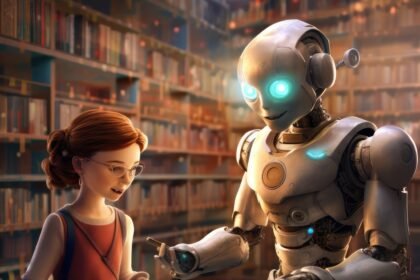
The explosion of AI education in India has been so rapid that even non-technical students are acquiring the deeper skills necessary to excel in modern workplaces. AI as a technology has gone from being an optional extra to being a core skill for the future. Almost every area of human endeavor has been affected by AI, from the learning process to production to creativity, and 2025 marks the beginning of a new era when AI-trained professionals will always be superior to their traditional counterparts. This transformation has created unprecedented AI career paths for non-technical backgrounds across every industry.
- Why AI Skills Matter for Non-Tech Careers
- Benefits AI Career Paths for Non-Technical Backgrounds
- AI Skills That Boost Non-Tech Careers
- How AI Career Paths for Non-Technical Backgrounds Are Booming in 2025
- How Students & Early-Career Professionals Can Build AI Skills
- Challenges and Misconceptions
- Conclusion
- Frequently Asked Questions
- Related Resource
Employers are putting an AI-literate staff high on the list of their priorities—not because machines are taking over the jobs, but because AI is enhancing the productivity of people. At present, more than 70% of the recruiters in the world give priority to the candidates with the knowledge of AI tools. The need for the upskilling is so high that the learning opportunities range from online bootcamps to artificial intelligence course syllabus modules, and the latter is expanding more for non-tech learners.
In this comprehensive guide, we’ll explore AI career paths for non-technical backgrounds that are in high demand, showing you exactly how to break into these AI career paths for non-technical professionals.
Why AI Skills Matter for Non-Tech Careers
Understanding why AI career paths for non-technical backgrounds are thriving starts with recognizing how AI transforms everyday work.
1. Shift from Manual Work to AI-Assisted Roles
The workplace of the future, which is set for 2025, is acquiring a whole new character due to the fact that tasks such as research, documentation, drafting, communication, and data analysis that used to take a lot of time and effort are now done within minutes with the help of AI.
The use of AI in daily operations leads to the situation where the understanding of AI tools by the professionals results in their being treated as the most desirable ones, thus making AI literacy a crucial consideration in hiring, promotions, and performance evaluations.
This efficiency boost is precisely why AI career paths for non-technical backgrounds are becoming so lucrative.
2. AI Adoption Across Non-Tech Sectors
The integration of AI is a speedy transformation of non-technical sectors. Marketers have come to depend on AI for both content and analytics, HR has adopted it for screening and onboarding, the finance department forecasts and reports through AI, the operations department has already begun automating processes, the sales team generates leads through predictive tools, and customer support is now receiving instant replies via AI-driven chatbots.
3. Why Gen Z Benefits the Most
Generation Z is the quickest group to adopt and acquire AI skills, thus getting the upper hand in their studies and careers early on. Nevertheless, the organizations are giving priority to staff recruitment of the skilled labor in AI, while the early AI-adopting Gen Z are the ones having the greatest benefits in this regard. Consequently, these are the individuals who will have the smoothest transitions from part-time to full-time positions and later on professional growth. Early adoption gives Gen Z a significant advantage in securing AI career paths for non-technical backgrounds.
Benefits AI Career Paths for Non-Technical Backgrounds
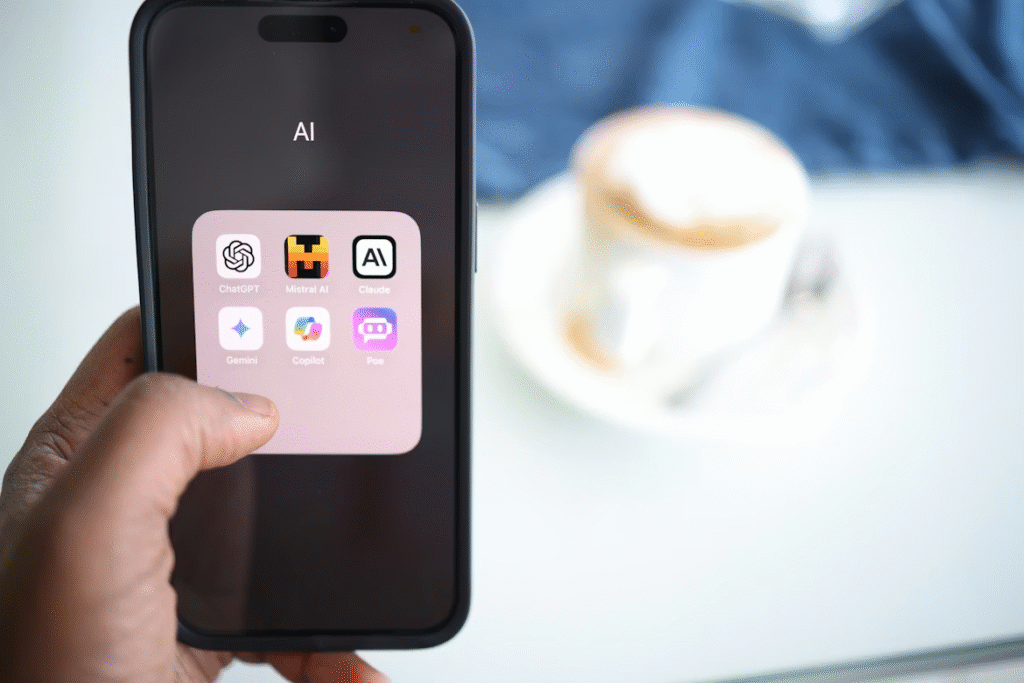
A frequently asked query pops up: Is artificial intelligence a good career?
Taking into account the increasing demand, competitive salaries, and opportunities across sectors, AI career paths for non-technical backgrounds are among the best options in 2025.
Moreover, even tech city Bangalore, India’s AI center, is experiencing a surge in AI jobs, which in turn creates space for non-tech workers who assist AI departments.
Let’s examine why AI career paths for non-technical backgrounds offer such compelling advantages in 2025.
1. Higher Employability
One of the main reasons candidates with AI skills are singled out in the recruitment process is that they need a shorter training period and are able to immediately jump on the bandwagon of the modern office tools. Employees from different departments now want to see applicants in their teams who can handle AI as part of their daily work. This is especially true for AI career paths for non-technical backgrounds, where basic AI literacy creates immediate value.
Major benefits:
- Recognized and welcomed by hiring managers in all fields
- Shorter period of induction and training
- Even minimal prompting gives an advantage over the competition
2. Faster Promotions
AI-powered employees are around to accomplish their tasks quicker, take on larger volumes of work, and produce results that are more precise. It is thus that they gain the reputation of being trustworthy problem-solvers, and their ascent to the leadership ranks is hastened.
Reasons for quicker promotions:
- Quicker job performance with higher precision
- Capacity to mechanize the repetitive tasks
- Viewed as productive and innovative
3. Higher Salary Packages
Professionals in AI career paths for non-technical backgrounds frequently receive a 20-40% salary hike since they are more productive and thus able to contribute significantly to teamwork and organizational growth.
Justifications for the increased salary:
- Higher productivity and accuracy
- Results produced in shorter timeframes
- Regarded as employees with great impact
4. Strong Creative Advantage
AI functions as a creative collaborator, supporting the artistic process in different areas like brainstorming, writing, designing, and even planning. It not only promotes the movement of ideas but also accelerates the execution process at the same time.
Advantages of AI concerning creativity:
- Produces scripts, captions, and slideshows
- Aids in brainstorming and plotting tactics
- Raises the standard of design and content
5. A Future-Proof Skillset
The use of AI tools has not come as a replacement for humans but rather as an augmentation of human capabilities. The AI-driven professionals who embrace the use of AI from the beginning will also be the ones to be considered modern, flexible, and even more powerful in a job market that is changing so fast.
The future-proofing benefits are as follows:
- Be among the first to benefit from the changes in technology
- Be able to switch to the new tools and workflow with ease
- Become someone who cannot be replaced because of the AI-enhanced productivity
AI Skills That Boost Non-Tech Careers

Many professionals are surprised to learn how accessible AI career paths for non-technical backgrounds have become. Let’s explore the key skills that unlock these AI career paths for non-technical backgrounds:
1. Prompt Engineering Basics
Prompt engineering is the root cause of AI usage that is more than just effective. It simply means that the user has to know how to talk and communicate with the AI tools to get accurate and relevant outputs. Even beginners start with simple guides like Artificial Intelligence for Dummies before gradually moving toward hands-on, real-world tools.Mastering prompts is foundational for all AI career paths for non-technical backgrounds.
Examples:
- Marketing teams generate social media captions and ad concepts.
- HR professionals create job descriptions and interview questions.
- Sales and admin departments are the ones who prepare proposals or do client communication.
- Academics are the ones who use AI to condense research or compile notes.
2. AI-Powered Data Interpretation
Data skills are increasingly important in AI career paths for non-technical backgrounds. AI is now a non-technical professional’s best friend when it comes to data interpretation. The basic operation of modern AI like ChatGPT (in the data analysis mode), Excel AI, and others automates the complete data analysis process by doing tasks like cleaning data, spotting trends, making visuals, and providing simple explanations of the results.
Examples:
- A finance intern has the role of checking budgets and drawing trend lines.
- A business analyst’s task includes the preparation of quick dashboards.
- An operation team is using AI-aided insights for getting the processes done more smoothly.
3. Automation Skills
Zapier, Make.com, and Notion Automations are just a few examples of the automation tools that help professionals get rid of the monotony of tasks. The repetitive tasks, such as sending emails, updating sheets, or scheduling reminders, can now be done automatically.
Examples:
- The HR department puts the process of sending follow-up emails to candidates on automation.
- Wrap up those reporting workflows in the operations department with automation.
- The marketing department’s social media scheduling is automated.
- This saves 4–5 hours weekly, thus increasing overall productivity.
4. AI Content Creation & Editing
AI is the content creator’s best friend as it works across AI-powered text, design, and video. The likes of Canva AI, ChatGPT, Descript, and Adobe Firefly are the ones that assist in brainstorming and scriptwriting, editing, and visual design, respectively.
Examples:
- Content creators come up with blog posts and captions more quickly.
- Teachers prepare teaching units and printables.
- Businessmen make logos and flyers right away.
5. AI-Powered Decision Making
AI programs allow specialists to reach well-grounded conclusions by giving them accurate predictions, market trends, and financial advice.
Examples:
- Customer service groups are calculating potential customers’ conversions.
- Accounting groups are projecting the revenues of the next quarter.
- Executives are evaluating the pros and cons of different plans fast.
How AI Career Paths for Non-Technical Backgrounds Are Booming in 2025
Even though artificial intelligence engineer jobs are technical, the AI systems they build empower millions of non-tech workers daily.
1. Marketing & Advertising
AI is no longer an option in marketing.
To help the pros, AI is used for:
- Campaign ideas generation
- SEO content writing
- Posting schedule
- Real time ads optimization
- Audience behavior understanding
Example:
AI helps marketers to finish their reports in just one day.
2. Human Resources
AI boosts HR processes by:
- Filteringresumes
- Drafting job posts
- Creating onboarding paperwork
- Assessing employee productivity
Example:
Screening applicants takes minutes instead of hours.
3. Finance & Business Operations
- AI tools are very helpful in areas such as:
- Budgeting
- Forecasting
- Management information systems (MIS) reporting
- Cost analysis
Example:
The duration for the finance departments to produce dashboards is reduced by 90% thanks to artificial intelligence.
4. Education & Training
The increasing use of artificial intelligence in the education sector in India has made teachers utilize the AI in the following ways:
- Customizing study plans
- Creating notes
- Producing tests
- Writing student reports
AI makes curriculum planning easier and takes a lot of time off from administration.
5. Entrepreneurship & Small Businesses
AI becomes a facilitator for small enterprises in the absence of big groups.
Start-ups apply AI in:
- Posting on social media
- Planning the strategy
- Creating the brand
- Analyzing the competitors
- Predicting the finances
Examples:
AI takes one entrepreneur’s effort to do the jobs needed for 3-4 people.
How Students & Early-Career Professionals Can Build AI Skills

Building skills for AI career paths for non-technical backgrounds doesn’t require a computer science degree just consistent practice with the right tools. Universities and privately owned institutions have already incorporated ai course syllabus modules and modified artificial intelligence course syllabus frameworks particularly for novices.
Learn how non-tech learners can develop AI competencies:
1. Learn Prompting
- Initially, the process of directing AI tools through precise and orderly means should be practiced until the user is able to do it daily.
- Platforms such as ChatGPT or Gemini should be used for practicing once a day.
- Furthermore, take no-cost online classes in order to get the hang of prompts, context, and refinement.
- There is a direct correlation between prompts and the quality of writing, ideas, analysis, and communication.
2. Explore AI Tools
- Not only will you learn about the platforms but also their strengths through different tools.
- ChatGPT, Canva AI, Notion AI, Miro AI, and Copilot are some of the AI tools that you should try using.
- If you want to use the AI for writing, designing, organizing, and planning, see which one is the best.
- The exploration of various tools will enable you to gain digital confidence early.
3. Apply AI in Daily Tasks
- Use AI for creating presentations, summaries, and notes and carrying out research.
- Email drafting, poster designing, or the brainstorming of creative ideas can all be done with AI.
- You have to apply AI in internships or coursework if you want to gain hands-on experience.
- Frequent use of AI will lead to higher efficiency, speed, and accuracy.
4. Build an AI-Powered Portfolio
- Let it be known how AI enhanced your real work, not just theory.
- You could also provide before-after samples, visuals generated by AI, and/or dashboards.
- Moreover, present case studies clarify ways in which AI improved your output.
- Practical AI application proof is what employers value.
5. Stay Updated With AI Trends
- AI newsletters, LinkedIn creators, and YouTube educators are some examples of people and sources to follow.
- Most importantly, keep up with the tools, features, and industry cases that are being used.
- Watch short tutorials to keep improving your workflow.
- Being updated will keep you flexible and ready for the future.
Challenges and Misconceptions
Learners don’t need advanced or technical AI testing courses; basic tools are enough to begin.
- AI Will Replace Jobs: AI does not substitute workers, but it does take over certain processes and thus humans can work on strategy and the big picture and even the intrepid partners of AI will declaimed as winners not losers.
- AI Is Too Hard to Learn: AI tools are tailored for novices, do not demand the knowledge of programming languages or attendance of high-level AI courses, and still produce magnificent results when basic prompts are applied.
- Ethics and Responsible Use: AI must be your assisting tool—not your replacement—hence always carry out checks, make corrections and refrain from copying to uphold your reputation as an expert.
- Human Judgment Still Matters: Inasmuch as AI is devoid of emotional and situational comprehension, it is humans who will make the last calls, thus assuring the best results via the combination of AI and human intelligence.
Conclusion
AI education in India is revolutionizing the entire working case of students, professionals, and graduates, especially those in non-tech roles. The variety of AI career paths for non-technical backgrounds continues to expand as more industries recognize the value of AI-literate professionals. This trend is not simply making the technical skill of AI a niche but rather spreading it across various domains like marketing, HR, finance, operations, and even education making it an essential competency. People who control AI tools grow in their careers quicker, build better portfolios, become more attractive for jobs, adapt to the changing job descriptions faster, and gain long-term career stability.
Frequently Asked Questions
1. Is having a technical background necessary to learn AI for non-technical roles?
No, many new AI applications and tools are now accessible to non-technical users, and programming skills are not mandatory. Just learning the basics of prompting and getting familiar with the tools will open up AI applications for a person in areas such as marketing, HR, and finance.
2. Will AI take non-tech jobs away in the future?
AI will do away with certain tasks that are monotonous—but not entire jobs. Workers who have the knowledge of AI tools will always be more productive, more strategic, and more valuable, and this is what will, in reality, save them from being fired instead of the opposite.
3. Which AI tools would be the most suitable for beginners to start working with?
The most suitable ones turn out to be ChatGPT, Google Gemini, Canva AI, Notion AI, and Microsoft Copilot. Beginners can use these without facing any restrictions at all. They stand out as the top recommendations for new users.
4. What AI skills are especially wanted in non-tech roles?
The most prominent skills are prompt engineering, AI-supported data interpretation, content creation with AI, rudimentary automation, and making decisions supported by AI. All these skills will enable the professionals to work quicker and deliver top-notch results.
Related Resource
AI Skills in 2025: Powerful Future-Proof Careers You Must Master Now
Career Guidance in 2025 : Should You Choose a Job, Startup, or Higher Studies After Graduation?
Top Latest Government Schemes for Students and Young Professionals in 2025