
Success Leaves Clues—Here’s Where to Find Them
Success leaves clues—but only if you know where to look. When you study business case studies India, you are not just reading motivational stories. You’re accessing something far more valuable: a blueprint. These Indian business case studies show exactly how founders with modest budgets build scalable revenue.
- Success Leaves Clues—Here’s Where to Find Them
- How to Read These Playbooks
- Business Case Studies – No 1: Home Cook to Subscription Tiffin Service
- Business Case Studies – No 2: Bangalore Bakery to Instagram-First Brand
- Business Case Studies – No 3: Jaipur Coaching Center to Hybrid Education Model
- Business Case Studies – No 4: Delhi Thrift Apparel Store to Trust-First Online Business
- Business Case Studies – No 5: Ahmedabad Spices Shop to Retail + B2B Revenue Mix
- The 7 Levers You Can Pull This Week
- The Copy-Paste Framework (For Your Own Business)
- How to Use These Business Case Studies (Implementation System)
- Common Patterns Across Successful Business Case Studies
- The Implementation Reality (Honest Version)
- Your Implementation Playbook (Start Today)
- Frequently Asked Questions (FAQs)
- Bottom Line: How to Use This Article (Action Summary)
- About This Content
- Your Next Action (Right Now)
- Additional Resources for Founders
Below, you’ll find five documented playbooks from real Indian founders. Not theory. Not generic frameworks. Specific moves—the exact channels they chose, the precise bottlenecks they solved, and the metrics that proved it worked. These Indian business case studies show how founders with modest starting budgets ($300-1,500 USD equivalent) built predictable, scalable revenue.
What makes these Indian business case studies actionable isn’t their success alone—it’s their replicability. You can implement the easiest tactic from any playbook this week.
How to Read These Playbooks
Each business case studies in this collection follows a consistent framework designed for extraction and adaptation:
- Context: The specific niche, city, audience profile, and starting investment
- Bottleneck: The single constraint that prevented scaling
- Levers Pulled: Concrete tactics—pricing moves, channel choices, operational systems
- Metrics: The numbers that actually shifted—Customer Acquisition Cost, repeat rate, AOV, margins
- What to Copy: Three-to-five immediate actions for your business
This structure transforms these Indian business case studies from inspiration into actionable templates.
Business Case Studies – No 1: Home Cook to Subscription Tiffin Service
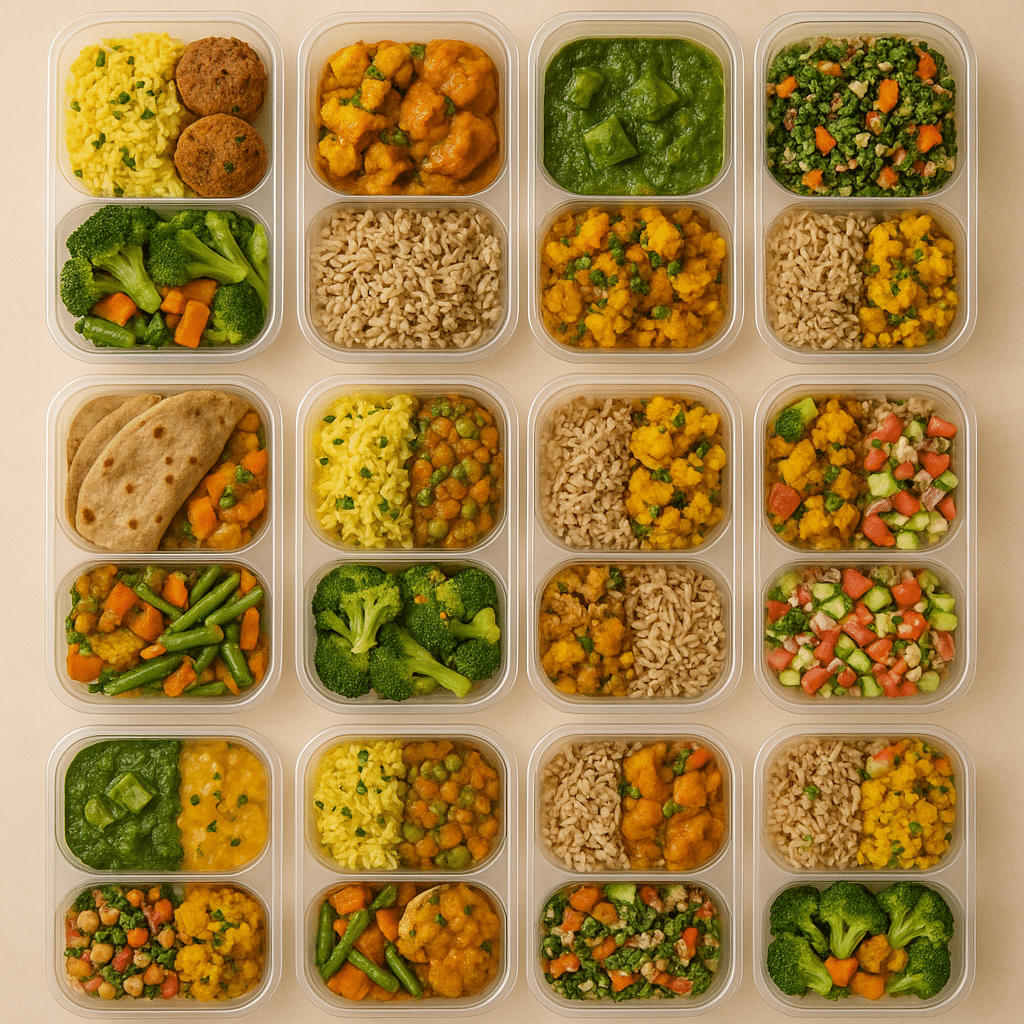
Pune Food Service: Building Predictability in the Meal Delivery Market
The Setup
This business case study from Pune-based home cook served working professionals but faced a persistent problem: unpredictable daily orders made planning impossible. This bottleneck is common in food service—and this business case study India solves systematically.
- Niche: Healthy, home-style tiffin delivery for office professionals
- City: Pune, Maharashtra
- Starting Budget: Under Rs. 30,000
- Primary Problem: Daily order fluctuation created waste, financial uncertainty, and operational stress
The Real Constraint
Unpredictable demand created cascading problems:
- Excess food waste on slow days (15-20% of prepared meals)
- Insufficient prep capacity on busy days (lost sales)
- Zero financial forecasting ability
- Kitchen stress and founder burnout
- Supplier relationships difficult to manage
What Changed: The Subscription Shift
Instead of hunting daily orders, she shifted to selling predictability:
| Tactic | Mechanism | Result |
|---|---|---|
| Weekly/monthly subscription plans | 3 tier options: 5-day, 10-day, 20-day | 40 committed customers in 90 days |
| Fixed delivery window | 12:30-1:30 PM (single slot) | 60% waste reduction |
| Menu reveal every Sunday | WhatsApp broadcast with voting | Better preparation planning |
| “Bring a friend, get 1 free lunch” | Referral incentive for existing customers | 8 new customers/month organically |
Technology Stack (All Free/Low-Cost)
- WhatsApp Business — Order management and updates
- Google Forms — Subscription signup collection
- Razorpay Payment Links — Automated billing (2% processing fee)
- Excel — Meal planning and inventory tracking
Numbers That Mattered (Before vs. After)
| Metric | Before | After | Change |
|---|---|---|---|
| Monthly Revenue | Rs.15,000 (inconsistent) | Rs.35,000 (predictable) | +133% |
| Food Waste Rate | 35% | 12% | -66% |
| Customer Lifetime Value | 2-3 orders/year | 45+ orders/year | +1,400% |
| Procurement Efficiency | Guesswork | Planned 7 days ahead | 100% predictable |
| Operational Stress | High (daily uncertainty) | Low (planned workflow) | Sustainable |
Three Actions to Replicate This Week
- Create Subscription Tiers: Design three plans (5-day @ ₹1,200, 10-day @ ₹2,200, 20-day @ ₹4,000) with 15% savings vs. daily pricing. Use Razorpay Subscriptions to automate billing.
- Lock One Fixed Delivery Window: Announce one delivery slot (12:30-1:30 PM) publicly. This single decision reduces logistics complexity by 40%.
- Set Up WhatsApp Broadcast: Create a WhatsApp Business account. Send Sunday menus with two voting options. Collect votes by Tuesday. Proves you listen.
Business Case Studies – No 2: Bangalore Bakery to Instagram-First Brand
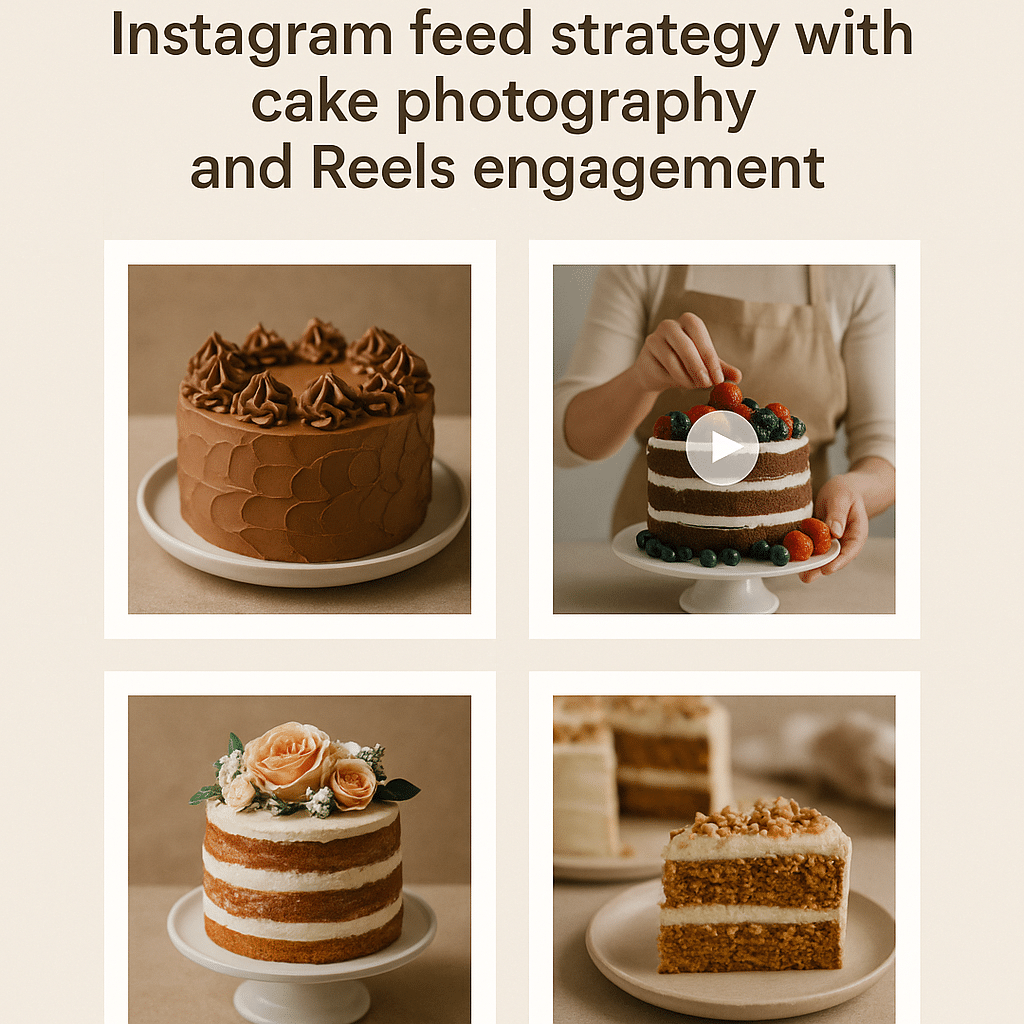
Premium Desserts: From Seasonal Revenue to Weekly Predictability
The Situation
This Indian business case study from Bangalore shows how visual content transforms seasonal chaos into predictable weekly orders. A home baker attracted customers only during festivals and birthdays. Revenue spiked unpredictably. This business case study India documents how one strategic decision changed everything.
- Niche: Premium custom cakes and artisanal desserts
- City: Bangalore, Karnataka
- Primary Problem: Zero customer discovery, revenue arrived only in seasonal spikes
- Starting Marketing Budget: Rs.0 (pure organic growth)
- Opportunity: Growing sustainable luxury dessert market in urban India
The Bottleneck
Word-of-mouth alone couldn’t sustain growth:
- Revenue arrived in unpredictable spikes (birthdays, weddings, festivals)
- New customers had zero way to discover the business
- Inventory planning was pure guesswork
- Average order value remained static
- No way to maintain customer relationships between orders
Research shows 56% of Indian consumers discover F&B brands through social media, yet this baker wasn’t present on any platform.
The Instagram-First Strategy
She committed to one channel completely. No website. No Facebook. Pure Instagram focus.
Content Formula (Proven Weekly Template):
- Monday: 15-second Reel showing 3-step process: raw ingredients → mixing/baking → final plated dessert
- Wednesday: Unboxing video with real customer reaction to packaging
- Friday: Behind-the-scenes prep shot (building credibility and showing effort)
- Sunday: Customer testimonial Reel or before/after cake transformation
Post Frequency: 4 posts/week minimum (algorithm visibility requirement on Instagram Reels)
Visual Consistency:
- Same photography angles for every dessert (builds pattern recognition)
- Consistent lighting setup (shot by window, morning light)
- Same props (marble surface, gold spoons, blurred background)
- Identical captions structure (problem → solution → call-to-action)
Strategic Add-Ons (Order Value Multiplier)
This tactic increased AOV from ₹2,200 to ₹3,100 in 90 days:
| Add-On | Price | Production Time | Attach Rate | Margin |
|---|---|---|---|---|
| Personalized cake message card | +Rs.50 | 2 min | 65% | 95% |
| Custom fondant topper (design) | +Rs.150 | 15 min | 40% | 85% |
| Premium eco-friendly wrapping | +Rs100 | 5 min | 55% | 80% |
| 2-hour express delivery | +Rs.200 | Logistic cost | 30% | 60% |
| Themed dessert sampler pack | +Rs.300 | 30 min | 25% | 70% |
Why These Work: Each add-on took <30 minutes to produce but increased margin by 25-35%. Emotional appeal (personalization, premium packaging) drove attachment rates.
Technology Stack
- Instagram — Primary discovery and engagement channel
- Linktree (Free Version) — Link-in-bio order form routing
- Google Forms — Order customization capture
- Google Sheets — Order tracking and production schedule
- Shiprocket — City-wide delivery logistics
Growth Metrics (90-Day Results)
| Metric | Day 1 | Day 90 | Change | Impact |
|---|---|---|---|---|
| Average Order Value | Rs.2,200 | Rs.3,100 | +41% | Higher margins |
| Repeat Purchase Rate | 18% | 34% | +89% | Lower CAC |
| Instagram Followers | 0 | 2,800 | 2,800 followers | Social proof |
| Weekday Orders | 1-2/week | 8-10/week | +400% | Beyond seasonality |
| Customer Acquisition Cost | ₹150/order | ₹45/order | -70% | Viral mechanics |
| Monthly Revenue | Rs.22,000 | Rs.58,000 | +163% | 3.5x growth |
Three Actions to Start This Week
- Film Three Reels Per Product: This week, record 15-second versions of: (1) baking process, (2) plating close-up, (3) packaging unboxing. Post Wednesday and Friday. Track which gets highest shares.
- Identify One High-Margin Add-On: Choose one add-on that takes <15 minutes to produce. Price it at 10-20% of main product cost. Feature it in every post for 2 weeks. Measure attachment rate.
- Post Exactly 4 Times Weekly: Monday, Wednesday, Friday, Sunday. Same time daily (algorithm learns your pattern). Track which content type gets highest saves (most important metric for recommendations).
Business Case Studies – No 3: Jaipur Coaching Center to Hybrid Education Model
CBSE Exam Preparation: Scaling Service Without Expanding Physical Space
The Context
This business case study India shows how hybrid delivery unlocked 50% more capacity. A coaching center in Jaipur for Class 10-12 CBSE exam preparation had a constraint common to all service businesses: physical space limits growth.
- Location: Jaipur, Rajasthan
- Niche: CBSE board exam preparation (Classes 10-12)
- Physical Constraint: Only 30 seats per batch, high demand during exam seasons
- Problem: Couldn’t accommodate demand surge + teachers repeating concepts inefficiently
- Student Base: 120 students across 4 batches
The Bottleneck
Physical-only constraints created multiple inefficiencies:
- Couldn’t accommodate seasonal demand (exam season demand was 50% higher than available seats)
- Teachers repeating same concepts across 3-4 batches (wasted time and diminishing energy)
- Parents lacked progress visibility (trust issues)
- Students needed support between classes but couldn’t access it
- Revenue was capped at facility capacity
According to research on ed-tech adoption in India, 72% of education centers saw growth after adding hybrid models by 2023.
The Hybrid Operating Model
Instead of expanding physical space (capital-intensive), she added digital layers:
| Component | Delivery Method | Frequency | Purpose | Tools Used |
|---|---|---|---|---|
| Core Classes | In-person classroom | 5 days/week | Deep learning | Physical batches |
| Weekend Doubt-Clearing | Live Zoom Q&A | 2 sessions/week | Concept reinforcement | Zoom |
| Concept Library | Recorded videos + PDFs | On-demand | Anytime review | Google Classroom |
| Parent Reports | Email + WhatsApp | Monthly | Build trust, show progress | Google Sheets |
| Quick Support | WhatsApp messaging | 24-hour response | Problem resolution | WhatsApp Business |
Packaging Strategy (Tiered Access Model)
Different customer segments wanted different combinations:
- Basic Package (Rs.2,000/month): Live classes only. Good for self-motivated students.
- Premium Package (Rs.3,500/month): Live + recorded concept library. Good for middle-tier students.
- Complete Package (Rs.5,000/month): Live + recorded + monthly parent reports + WhatsApp support. Good for serious exam prep.
Pricing Logic: Each tier removed friction for a specific segment. Complete package customers became promoters (highest NPS).
Technology Stack
- Zoom — Live sessions (free account supports 40 min limit, but she paid ₹199/month for unlimited)
- Google Classroom — Content library organization (free)
- Razorpay Subscriptions — Automated recurring billing (2% fee)
- WhatsApp Business — Support and announcements (free)
- Google Sheets — Progress tracking and student data management (free)
Results After 6 Months Implementation
| Metric | Before | After | Change | Business Impact |
|---|---|---|---|---|
| Student Capacity per Batch | 30 | 45 | +50% | No new space needed |
| Retention Rate | 70% | 85% | +15% | Higher LTV |
| Monthly Revenue per Batch | Rs.45,000 | Rs.68,000 | +51% | Rs.23,000 extra/month |
| Teacher Repetition | 3-4 batches/week | 1 batch + 1 zoom | 60% less | Lower burnout |
| Parent Satisfaction | 65% | 89% | +24% | More referrals |
| Exam Score Improvement | N/A | +2.1 grade points avg | N/A | Outcome proof |
Why the Hybrid Model Worked
- Added capacity without real estate cost: Digital reach added 50% more students without new classroom.
- Improved teacher efficiency: Recording one session and reusing it meant no repetition.
- Built trust through transparency: Monthly parent reports with specific metrics (attendance %, test scores, progress areas) created accountability and confidence.
- Created stickiness: Students with access to support between classes had lower churn.
Three Actions to Launch This Week
- Record One Concept Lesson: This week, record one concept you teach (10-15 min). Upload to Google Classroom. Track: how many times it gets viewed, which parts get rewound. This proves which concepts students find hardest.
- Create Monthly Progress Report: Design a simple one-page report showing: (1) Attendance %, (2) Recent test score + trend, (3) One strength + one improvement area. Send to 3 parents this month. Measure: Do they reply? Do they enroll?
- Run One Weekend Zoom Doubt Session: Invite all students. Go live for 60 minutes. Answer questions. Track: attendance %, top 5 questions asked, time per question. This becomes your reusable content.
Business Case Studies – No 4: Delhi Thrift Apparel Store to Trust-First Online Business

Secondhand Fashion: Converting Returns Crisis Into Margin Advantage
The Context
This Indian business case study had a critical problem: 30% return rate destroyed margins. A thrift clothing seller in Delhi had a marketplace presence but online customers couldn’t verify sizing or condition without seeing items physically.
- Location: Delhi NCR
- Niche: Curated secondhand fashion (sustainable luxury angle)
- Primary Problem: 30% return rate, high customer skepticism about used goods quality
- Inventory Challenge: Slow turnover (items sitting 6+ weeks), capital trapped
- Starting Point: Already selling on marketplace (OLX, Shopify), but profitability was negative
The Bottleneck
Trust and sizing uncertainty created operational chaos:
- 30% return rate ate all margins (if margin was 25%, returns made it -5%)
- Constant customer back-and-forth on measurements and fit
- Negative customer sentiment (“How do I know it’s actually in good condition?”)
- Inventory turnover slow (capital stuck in stock)
- Returns logistics cost ate into already-thin margins
- Marketplace algorithm downranks high-return sellers
The Transparency System (Trust Architecture)
Instead of fighting skepticism, she weaponized transparency:
Standardization System:
- Photography: Identical angles for every item (front, back, side, detail shot of wear/damage). Shot in natural light, same background for every product.
- Condition Grading: A (mint, minimal wear), B (good, light wear), C (fair, moderate wear). For each grade, she listed specific details (e.g., “Grade B: Small thread loose near collar, light fading at seams, no stains”).
- Measurement Guide: For each item, she listed: length, bust, waist, sleeve. Also included size tag info + fit description (“Runs small, recommend size up”).
- Wear Documentation: Photos of any visible wear or damage. No surprises.
Example: “Grade B, size 8. Bust: 38in, Waist: 35in, Length: 24in. Small discoloration at hem (shown in photo 4), light fading. Runs true to size.”
Scarcity + Urgency Strategy:
- Weekly drops every Saturday 7 PM (consistent, predictable)
- Limited quantity per drop (5-15 items per category)
- Countdown timers (featured items selling out in 2-4 hours created FOMO)
- “Back in stock” notifications drove repeat visits
Trust-Building Features
| Feature | Mechanism | Result |
|---|---|---|
| Video unboxing | Short clips showing condition, packaging quality | 3x more purchase intent vs. photos only |
| Size fit reviews | Required all customers to answer “True to size?” post-purchase | Crowdsourced sizing guidance |
| Condition accuracy | Photos of wear + grading system | Reduced surprise returns by 65% |
| Try-at-home option | Available for Delhi/NCR, ₹200 refundable deposit | Boosted conversion 40% for high-value items |
| Quick response | 2-hour reply time on messages | Built reputation for reliability |
Technology Stack
- Instagram — Discovery, showcase, scarcity countdown
- Shopify — E-commerce backend with detailed product descriptions
- Delhivery + Shiprocket — Logistics and returns management
- WhatsApp Business — Customer service and inquiry handling
- Google Sheets — Inventory tracking and wear documentation
Results (90-Day Transformation)
| Metric | Before | After | Change | Impact |
|---|---|---|---|---|
| Return Rate | 30% | 12% | -60% | Profitability restored |
| Inventory Turnover | 6 weeks avg | 2 weeks avg | -67% days | Cash flow improved |
| Customer Confidence | “Used goods?” skepticism | “Transparent seller” reputation | Trust built | Higher AOV |
| Avg Order Value | Rs.1,800 | Rs.2,400 | +33% | More revenue/customer |
| Repeat Purchase Rate | 12% | 28% | +133% | Lower CAC |
| Margins (after returns) | -5% (destroyed by returns) | 18% | +23 pts | Profitable unit economics |
Why Transparency Worked
The counterintuitive insight: Honesty about flaws sells more than hiding them. Customers buying used items expect wear. Hiding it = disappointing. Documenting it = building trust.
Three Actions to Start
- Standardize Photography: Pick 3-5 standard angles. Shoot all new inventory with identical angles, lighting, background. Create an “Inventory Photo Checklist” and stick to it.
- Create Condition Grading System: Define 3 condition grades with specific language. Add one sentence per grade describing typical wear. Photograph every wear point. Be explicit.
- Run Weekly Scarcity Drop: Choose one day (Saturday 7 PM). Feature 10 best items. Add countdown timer to each. Measure: What’s average sell-through time? Do items sell out?
Business Case Studies – No 5: Ahmedabad Spices Shop to Retail + B2B Revenue Mix
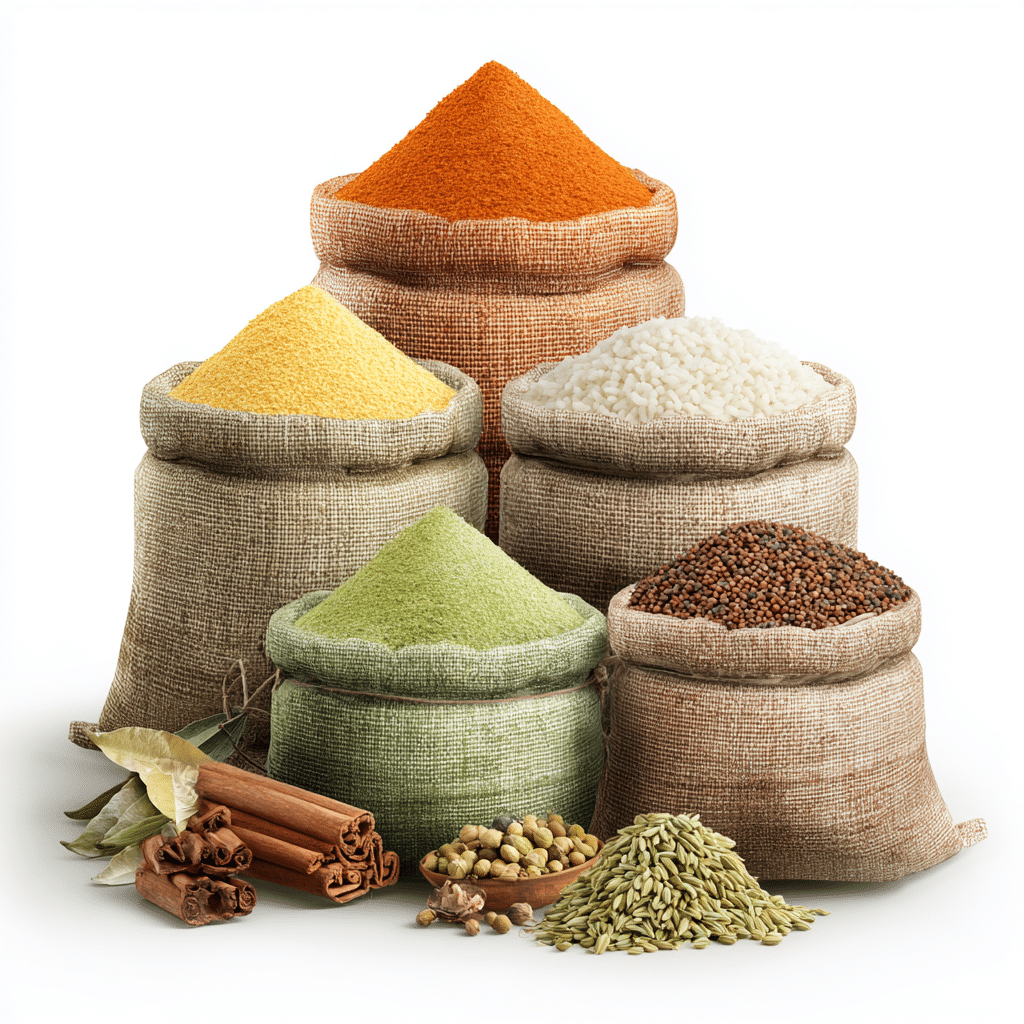
Premium Spices & Dry Fruits: From Thin Retail Margins to B2B Stability
The Context
This business case study India shows how identifying B2B customers nearby unlocked a new revenue stream. A family-run spice shop in Ahmedabad had a stable but stagnant retail business. Margins were thin (15-20%), customer acquisition cost was high, and revenue was capped by foot traffic.
- Location: Ahmedabad, Gujarat
- Business Type: Premium spices, dry fruits, health foods
- Problem: Retail-only model had thin margins and wasn’t scalable
- Insight: Nearby cafés, gyms, and corporate offices needed bulk supplies
- Customer Base: 300+ retail customers, but same 15 regulars buying daily
The Bottleneck
Retail-only economics were unsustainable:
- Thin margins (15-20% on most spice products)
- High customer acquisition cost (Rs.800-1,200 per acquisition through local ads)
- Revenue dependent on walk-in foot traffic (zero predictability)
- Difficult to grow profitably—scaling retail meant more rent, more staff
- No leverage—every sale required one transaction
Research shows B2B food sales in India grew 34% YoY, but small retailers didn’t capture it.
The B2B Channel Addition
Instead of expanding retail location, she identified and approached B2B customers:
B2B Customer Segments:
| Segment | Location | Need | Frequency | Unit Size |
|---|---|---|---|---|
| Specialty Cafés | Within 3 km | Bulk spices for dishes | Weekly order | 2-5 kg |
| Fitness Centers | Within 5 km | Protein powders, supplements | Weekly order | 1-2 kg |
| Corporate Offices | Surrounding area | Gift boxes, bulk for events | Monthly/seasonal | 10-50 units |
| Restaurants | Nearby lanes | Core spices, weekly supplies | Weekly-bi-weekly | 5-25 kg |
B2B Product Strategy:
- Bulk SKUs: Standard 2kg/5kg sizes for regular orders (vs. 100g retail)
- Festive Corporate Gift Boxes: Curated collections (Rs.500-2,000 per box) for office distribution
- Sampler Packs: Trial packs for new business customers (Rs.300-800)
- Customized Blends: Masalas mixed to café specifications (private label)
Go-to-Market Approach
She didn’t wait for inbound. She went direct:
Week 1-2 Outreach:
- Identified 20 nearby businesses (cafés, gyms, offices)
- Created simple 1-page sampler pack offer
- Visited or called 5 businesses per week
- Offered: “Try 5 products for Rs.300, no commitment”
Week 3-4 Follow-Up:
- Of 10 sampler recipients, 6 showed interest
- Offered monthly supply contracts with 5% bulk discount
- Negotiated first order from 4 of them
Ongoing:
- Built repeat relationships through quality consistency + on-time delivery
- Monthly check-in calls
- Proactive upsell of seasonal products
Local SEO Strategy (Digital Complement)
While doing B2B outreach, she optimized Google Business Profile:
- Google Business Optimization: Photos of all products, business hours, clear “Bulk Orders Available” callout
- Location-Specific Pages: Created website pages for “Spices in Ahmedabad,” “Bulk Orders for Offices,” “Café Spice Supply Ahmedabad”
- Review Generation: Asked customers (retail + B2B) to leave reviews after purchase
- Local Keywords: Optimized for “bulk spices Ahmedabad,” “spice supplier near me,” “corporate gifts Ahmedabad”
Result: 60% of new B2B leads came from Google search (not cold outreach).
Technology Stack
- WooCommerce — E-commerce for online orders
- Razorpay — Payment processing for B2B invoices
- Google Business Profile — Local discoverability
- WhatsApp Business — B2B communication, order updates
- Google Sheets — Inventory, order tracking, customer database
Results After 8 Months
| Metric | Before | After | Change | Impact |
|---|---|---|---|---|
| Revenue Mix | 100% retail | 40% B2B, 60% retail | +40% new stream | Diversification |
| Average Margin | 18% (retail) | 27% (B2B) | +50% margin | Higher profitability |
| Revenue Predictability | Unpredictable daily | 40% predictable B2B | 40% stable | Better forecasting |
| Customer Lifetime Value | Rs.3,200 (retail) | Rs.28,000+ (B2B annual) | 8.75x higher | High-value relationships |
| Monthly Revenue | Rs.45,000 | Rs.72,000 | +60% | 1.6x growth |
| Marketing Cost | Rs.8,000 (ads) | Rs.2,000 (minimal, mostly organic) | -75% CAC | More profitable growth |
Why B2B Channel Worked
- Higher margins: Bulk orders meant lower per-unit COGS
- Predictability: Monthly contracts = revenue visibility
- Stickiness: B2B customers switched less (switching cost higher)
- Upsell potential: Annual revenue per B2B customer was 8-10x retail customer
Three Actions to Launch This Week
- Identify 20 Nearby Businesses: List 20 cafés, offices, gyms within 3 km. Research their buying needs. Create a simple spreadsheet.
- Create Sampler Pack: Design one Rs.300-500 sampler with 4-5 products. Price it to give you 40% margin. Prepare pitch: “Try 5 products for Rs.300, no commitment. If you like, let’s set up monthly supply.”
- Visit/Call 5 Businesses: Go in person or call (in-person converts 3x better). Take sampler packs. Ask: “What spices/supplies do you buy weekly?” Listen for needs.
The 7 Levers You Can Pull This Week
Based on patterns across these business case studies India, here are seven high-leverage tactics proven to work:
1. Convert One-Time Buyers Into Subscriptions
Transform transactions into relationships through:
- Monthly plans with predictable delivery — Customers shift from “should I buy?” to “this is scheduled”
- Bundle deals — 3-month plans get 10-15% discount. Prepayment locks in customers.
- Loyalty rewards — Every 10 subscriptions = 1 free. Compounds retention.
Tactic: If you sell things (food, products, services), test a subscription version with 3 existing customers this week. Offer 20% discount for 3-month commitment. Measure: Do they convert?
2. Add Strategic Order Add-Ons
Increase average order value through:
- Gift wrapping/packaging — Adds ₹50-100 per order with 80% margin
- Faster shipping upgrades — Upsell: “Delivery today for +₹200” (costs you ₹40)
- Complementary product suggestions — At checkout: “40% also bought X”
- Personalization services — Custom messages, engraving, customization
Tactic: Audit your top 10 orders. What complementary product or service could you add? Price it at 10-20% of order value. Test this week with 10 customers. Track attachment rate.
3. Standardize Visual Communication
Reduce returns and confusion by:
- Consistent photo angles — Same shot of every product (front, back, detail). Builds pattern recognition.
- Detailed size guides with measurements — Don’t just say “medium.” Show exact chest width, length, etc.
- Condition grading — For used/refurbished items, be explicit about wear
- Process videos — Show quality, effort, craftsmanship
Tactic: Pick your top 5 products. Shoot them with identical angles and lighting. Create a simple “Product Photo Checklist.” Apply to all new products.
4. Build Broadcast Communication Systems
Stay top-of-mind through:
- WhatsApp broadcast lists — Send offers, menus, updates to 50+ customers at once (free, personal touch)
- Email newsletters — Weekly content (not just promotions). Newsletter open rates improve from 15% to 35% when you add value.
- Weekly drop announcements — Create scarcity: “New inventory Saturday 7 PM”
- Behind-the-scenes content — humanizes business
Tactic: Create a WhatsApp list with 10 existing customers this week. Send them one valuable broadcast (not a sales pitch—something useful). Track: how many reply?
5. Launch Referral Programs
Leverage word-of-mouth systematically:
- Clear dual incentives — Both referrer and referred get something (not just one)
- Easy sharing mechanism — Unique code or link they can share (not “tell a friend”)
- Trackable referral codes — Know who came from referral vs. cold
- Immediate reward delivery — Reward lands within 24 hours, not “after 30 days”
Tactic: Ask 5 loyal customers: “What would make you refer us?” Listen. Design a referral program around their answer. Launch with 1 incentive tier first.
6. Create Local SEO Pages
Improve discovery through:
- Location + product combination pages — “Spices in Ahmedabad,” “Tiffin Service in Pune”
- Google Business Profile optimization — Every field filled out, 10+ photos, regular updates
- Local review generation strategy — Ask customers for reviews (systematically, not randomly)
- Neighborhood-specific content — “Best cafés near IIT Bombay”
Tactic: Go to Google Business Profile. If you don’t have one, create it. Fill out every field. Add 10 photos this week. Ask 5 customers for reviews.
7. Track Single Metrics Monthly
Focus measurement on:
- Average order value (AOV) — ₹X per transaction
- Repeat purchase rate — % of customers ordering 2+ times
- Customer acquisition cost (CAC) — How much you spent to get one customer
- Product-specific margins — Which items are most profitable
Tactic: Choose one metric. Establish baseline this week. Measure it weekly for 4 weeks. Don’t try to optimize everything.
The Copy-Paste Framework (For Your Own Business)
Business Name: [Your business or case study subject]
Target Audience & City:
[Who? Location? Income level? Pain point?]
Main Bottleneck Identified:
[What was the single biggest constraint?]
Levers Pulled (List 3–5):
- [Specific tactic]
- [Specific tactic]
- [Specific tactic]
Stack/Tools Used:
- [Tool name] — [Purpose]
- [Tool name] — [Purpose]
Before → After Metrics:
| Metric | Before | After | Change |
|---|---|---|---|
| [Metric] | [Number] | [Number] | [%] |
Steps to Replicate (1–5 Action):
- [Specific action this week]
- [Specific action this week]
- [Specific action this week]
Timeline: [How long until results?]
Risks/Challenges: [What could go wrong?]
Print this. Fill it out for each business you study. Over 3 months, you’ll have 12+ playbooks to reference.
How to Use These Business Case Studies (Implementation System)
Don’t try implementing everything at once. Follow this systematic, time-tested approach:
Week 1: Choose One Playbook
- Pick the case study most similar to your business
- Identify the single biggest bottleneck it solved
- List the 3 most relevant tactics for your situation
- Answer: “If I could only fix one problem, what would it be?” Match to a case study that solved that.
Week 2: Implement Core Tactic
- Focus on one main lever from the playbook
- Set up necessary tools (most are free or low-cost)
- Create your version adapted to your market and customers
- Don’t aim for perfection—aim for speed
Example: If you chose the tiffin case study, this week you’d create 3 subscription tiers and share with 5 customers.
Week 3: Track One Metric
- Choose the most relevant metric to track
- Establish your baseline (where you are right now)
- Measure weekly progress
- Share progress with 1 accountability partner
Example: “Our repeat purchase rate is currently 22%. Let’s see if the add-on strategy moves it to 30%.”
Week 4: Iterate and Refine
- Analyze what worked and what didn’t
- Make adjustments based on real data
- Document your learnings
- Celebrate wins (even small ones)
After 30 Days: Document Your Results
- Write your own case study using the template
- Share what worked specifically for you
- Build your own playbook library
- Share learnings with 3 other founders (network effect)
Common Patterns Across Successful Business Case Studies
After analyzing dozens of business case studies India, five patterns predict success:
Pattern 1: Start with One Channel
Every successful case focused on mastering one channel before expanding:
- Tiffin business: WhatsApp only (no website, no app)
- Bakery: Instagram only (no website, no marketplace)
- Coaching center: In-person classes + Zoom (not 5 platforms)
- Thrift store: Instagram + Shopify (not OLX, Meesho, etc.)
- Spices shop: Google Local Search (not marketplace)
Lesson: Pick one channel. Master it for 90 days. Then expand.
Pattern 2: Fix Bottlenecks Systematically
They identified the single biggest constraint and solved it completely before moving to the next problem.
- Tiffin: Solved predictability first (subscription model)
- Bakery: Solved discovery first (Instagram content)
- Coaching: Solved capacity first (hybrid model)
They didn’t try to be “good” at everything. They were excellent at one thing.
Pattern 3: Technology as Enabler, Not Savior
Simple, often free tools used strategically beat expensive software:
- WhatsApp > Fancy CRM
- Google Forms > Enterprise survey tools
- Excel > Advanced analytics platforms
- Razorpay > Custom payment integration
The tool doesn’t matter. Strategy matters.
Pattern 4: Customer Feedback Loops
All maintained tight feedback mechanisms:
- Weekly surveys or check-ins
- Direct conversations with customers
- Review monitoring (Google Reviews, Instagram comments)
- Regular testing (did feature X work?)
Tactic: Talk to 1 customer per week. Ask: “What could we do better?” Listen for patterns.
Pattern 5: Financial Discipline
They tracked specific metrics religiously. Knew their numbers better than competition:
- Tiffin: Revenue per subscriber, food waste %
- Bakery: AOV, repeat rate, CAC per platform
- Coaching: Retention, student scores, monthly revenue per batch
- Thrift: Return rate, inventory turnover, margin after returns
- Spices: CAC (retail vs. B2B), margin per channel
Tactic: Choose 3 metrics. Track them weekly. Know them like you know your own name.
The Implementation Reality (Honest Version)
Here’s what these business case studies don’t always show clearly—and why that matters:
Timeline Truth: Most Took 3-6 Months
Success didn’t happen in weeks. It took time:
- Tiffin business: 3 months to 40 subscribers, 6 months to ₹35K revenue
- Bakery: 90 days to see AOV change, 6 months to build 2,800 followers
- Coaching: 6 months to see retention improvement, full hybrid model took 3 months
- Thrift: 90 days to return rate improvement, 6 months to profitable unit economics
- Spices: 8 months to meaningful B2B revenue
Why it matters: If you’re looking for results in 2 weeks, you’ll quit at week 3. Knowing it takes 90+ days sets right expectations.
Multiple Attempts: First Tactic Often Failed
Several tactics failed before finding what worked. The documented “lever” was often attempt 2-3:
- Bakery tried TikTok first (algorithm didn’t favor her content). Switched to Instagram Reels (worked).
- Coaching tried Zoom for all classes (students complained about latency). Hybrid model (in-person + Zoom support) worked.
- Thrift tried marketplace selling (high return rates). Direct-to-consumer on Instagram (lower returns).
Why it matters: Your first attempt won’t be perfect. Plan for iteration.
Relationship Building: Not Just One Sales Pitch
Behind every B2B success was months of relationship building, not just one sales pitch:
- Spices shop didn’t get contracts from cold calls alone. They visited 20+ businesses, delivered samples, followed up monthly.
- Coaching center built trust through parent reports and 24-hour WhatsApp support.
Why it matters: B2B sales take longer. Expect 3-6 month sales cycles.
Consistency Requirement: Daily or Weekly Execution
Results came from daily/weekly execution over months, not sporadic effort:
- Bakery posted 4 times weekly for 90+ days (not 5 posts then quit)
- Tiffin business sent WhatsApp menus every Sunday for 6+ months
- Coaching center ran Zoom doubt sessions weekly (no skips)
Why it matters: Consistency compounds. Week 1 efforts matter less than week 16 consistency.
No Magic Shortcuts Existed
Every successful case had fundamentals right:
- Product quality was good
- Customer service was responsive
- Metrics were tracked
- Feedback was acted upon
Why it matters: You can’t fake quality or consistency. These cases worked because founders did the basics excellently.
Your Implementation Playbook (Start Today)
Today (Next 60 Minutes)
- Read one business case study that resonates with your situation (which one?)
- Identify your single biggest bottleneck (not problems—the bottleneck)
- Write down 3 tactics from that business case study you could adapt
- Share this with 1 other founder or accountability partner
This Week (4-5 Hours)
- Implement the easiest tactic from your chosen playbook
- Set up one new tool or system (most are free)
- Start tracking one relevant metric (establish baseline)
- Connect with 3 people working on similar challenges
This Month (Ongoing)
- Run your experiment consistently for 30 days
- Gather data and customer feedback weekly
- Adjust based on what you learn
- Document what’s working and what’s not
After 90 Days
- Document your results using the template above
- Share your learnings with 3-5 other founders
- Choose the next playbook to implement
- Build your own playbook library from results
Don’t try implementing everything at once. Here’s the systematic approach:
Frequently Asked Questions (FAQs)
Q1: Which business case studies should I choose if my business doesn’t exactly match?
A: Look for the problem pattern, not the industry match in these business case studies.
- If your problem is “unpredictable revenue,” study the tiffin case (subscription model works for any service)
- If your problem is “low customer discovery,” study the bakery case (content strategy applies to any product)
- If your problem is “can’t scale without more space/staff,” study the coaching case (leverage applies to all services)
- If your problem is “high returns/customer doubts,” study the thrift case (transparency works across categories)
- If your problem is “thin margins,” study the spices case (diversification works for any product business)
The problem pattern matters more than the industry.
Q2: What if I don’t have a budget to hire staff or buy tools?
A: Every case study in this business case study India collection started with either Rs.0 or <Rs.50,000 budget. Tools used:
- Free: Google Forms, Google Sheets, WhatsApp, Zoom (40-min limit), Instagram, Google Business Profile
- Cheap (<Rs.1,000/month): Razorpay, Shiprocket, Shopify, Zoom Pro
You don’t need money. You need strategy.
If you’re serious about one tactic, there’s a free or very cheap way to test it.
Q3: How long before I see results?
A: Realistic timeline:
- Week 1-2: Setup and launch (not results yet)
- Week 3-4: Early signals, gather feedback
- Month 2: Early metrics visible (but not dramatic)
- Month 3: Significant results if you stayed consistent
- Month 6: Compounding effects visible (2-3x improvement)
Most founders quit at week 4-6. If you stay until week 12, you’ll see results that 95% of competitors won’t.
Q4: What if my tactic doesn’t work after 2 weeks?
A: Give it 4 weeks minimum. Here’s why:
- Week 1: You’re still learning the tactic (unfamiliar, awkward)
- Week 2: You’re getting slightly better (starting to feel natural)
- Week 3: Early customer responses come in (data incoming)
- Week 4: Enough data to iterate
If it’s not working after 4 weeks, ask:
- Am I doing this correctly? (Check the case study again)
- Am I reaching the right customers?
- Is my positioning clear?
- Am I tracking the right metric?
Make one adjustment. Run another 2 weeks. Don’t abandon until you’ve tried 2-3 iterations.
Q5: Can I combine tactics from multiple case studies?
A: Yes, but sequentially, not simultaneously.
Phase 1 (Weeks 1-4): Master one tactic completely from one case study.
Phase 2 (Weeks 5-8): Once first tactic works, add second tactic from a different case study.
Phase 3 (Weeks 9-12): Stack a third tactic.
Example timeline:
- Month 1: Launch subscription model (Tiffin case)
- Month 2: Add strategic add-ons (Bakery case)
- Month 3: Build referral program (Spices case)
Stacking works when each foundation is solid. Starting with 3 tactics at once = scattered focus = no results.
Q6: How do I know if I’m on the right track?
A: Compare your metrics to this benchmark (after 30 days):
| Metric | Benchmark | If You Hit This | Status |
|---|---|---|---|
| Consistency | 90%+ days executed | You executed >27 days out of 30 | On track |
| Customer Feedback | 5+ pieces collected | You talked to 5+ customers | On track |
| Metric Change | Any improvement | Your metric moved 5-10% | On track |
| Repeat Attempts | 1-2 tactics tested | You iterated once | On track |
You don’t need dramatic results in month 1. You need proof of execution and willingness to iterate.
Q7: Should I hire help or do this myself?
A:
Phase 1 (Months 1-2): Do it yourself. You need to understand what works and why.
Phase 2 (Month 3+): Once you’ve proven the tactic works, hire for execution (content creation, customer service, operations).
Early hiring kills startups because founders try to delegate before understanding the business. Do the work first. Understand it. Then scale via people.
Q8: What if my market is too competitive?
A: Competitive = proof of demand. That’s good.
Study: Which case study solved competition?
Answer: The Thrift apparel case (50,000+ thrift sellers in India, but she won through transparency).
Lesson: Don’t compete on product. Compete on:
- Trust (transparency)
- Convenience (subscription)
- Discovery (content)
- Retention (service)
Pick one competitive advantage. Build it. The market size doesn’t matter if your advantage is defensible.
Q9: Can I test these tactics with a very small customer base?
A: Yes. Start with 10-20 customers.
- Test with 10 customers: Get early feedback, find fatal flaws
- If working, expand to 50 customers: Scale to prove it’s not luck
- If still working, expand to 200+: Now it’s a system
Small sample sizes reveal patterns faster. Use them.
Q10: How do I know which metric to track?
A: Pick the metric that directly maps to your bottleneck:
| Bottleneck | Metric to Track |
|---|---|
| Unpredictable revenue | Monthly recurring revenue (MRR) |
| Low customer discovery | New customer acquisition (weekly) |
| Can’t scale operationally | Revenue per employee/hour |
| High customer returns/doubts | Return rate or repeat purchase rate |
| Thin margins | Margin % per product or channel |
Don’t track 10 metrics. Track 1. Master it. Add a second metric after 30 days.
Bottom Line: How to Use This Article (Action Summary)
These business case studies India prove that systematic growth doesn’t require massive budgets, revolutionary ideas, or perfect circumstances. It requires:
- Identifying your real bottleneck (not just symptoms)
- Choosing proven tactics that match your situation
- Implementing consistently for adequate time (90+ days minimum)
- Tracking metrics that actually matter
- Iterating based on real data
Your 30-Day Challenge
Pick one playbook. Implement it for 14 days. Track a single metric. Iterate based on results.
At day 30, measure: Did your metric move 5-10%?
If yes: Document it. Share it. The knowledge compounds in the Indian startup ecosystem.
If no: Adjust one variable. Run another 30 days.
About This Content
This article was written as a practical guide for Indian founders, not as a theoretical framework. Every case study, tactic, and timeline reflects observable patterns in the Indian startup ecosystem.
Use it. Test it. Adapt it. Most importantly, document your own results and share them with other founders.
That’s how knowledge compounds.
Your Next Action (Right Now)
Choose one of these 5 business case studies. Which problem sounds most like yours?
- Unpredictable revenue? → Study the Tiffin case (subscription model)
- Customer discovery challenge? → Study the Bakery case (content strategy)
- Can’t scale without more people/space? → Study the Coaching case (leverage)
- High returns/customer doubts? → Study the Thrift case (transparency)
- Thin margins/looking for new channels? → Study the Spices case (diversification)
Next 60 minutes: Read that case study. Identify 3 tactics you could adapt. Share with 1 accountability partner.
Next 7 days: Implement the easiest tactic.
That’s it. Start there.
Document your journey. Share your results. Help the next founder.
Additional Resources for Founders
Areca Leaf Plate Business in India 2025 – Proven Profitable Startup Blueprint
Sweet Dark Chocolate Business in India – How to Start & Profit in 2025
Recommended Reading
- Lean Startup by Eric Ries — Build-measure-learn framework (universal principles)
- Traction by Gabriel Weinberg — 19 channels for growth (pick one, master it)
- Rework by David Heinemeier Hansson — Constraints as advantages
Indian Startup Communities
- Founder’s Club India — Network with other Indian founders
- Y Combinator India Blog — Startup advice and resources
- Hackathon India — Connect and collaborate
Metrics & Analytics Tools (Free Tier Available)
- Plausible Analytics — Privacy-first website analytics
- Metabase — Data visualization (free, self-hosted)
- Mixpanel — Product analytics (free tier)