The primary reason beginners find animation difficult is because they tend to overthink all aspects of their work.
- How to Create Animated Video for Beginners in Real Life
- Step 1: Choose the Type of Animation to Create Animated Video for Beginners
- Step 2: Write a Simple Script & Storyboard
- Step 3: Best Tools to Create Animated Video for Beginners
- Step 4: Design Characters & Scenes (Without Skills)
- Step 5: Animate Step-by-Step
- Step 6: Add Voiceover, Music & Sound
- Step 7: Export & Share
- 7-Day Plan to Create Animated Video for Beginners
- Free Resources for Assets
- 3 Beginner-Friendly Video Ideas
- How AI Helps in 2026
- Conclusion
They dedicate their time to watching tutorials while they assess different tools and store design ideas and design the perfect video. The moment they need to begin the work, they become frozen. They remain stuck because they cannot answer questions about which software to use and their video appearance and whether they need design abilities.
You can create your first animated video without using expensive software or professional equipment or any design expertise. The present-day tools that beginners need to use most operate through simple drag-and-drop functions, which require no previous animation experience.
Your capacity to maintain small tasks consistently over time matters more than any instrument you possess.
At Careergrowkaro we discovered that the first person who learns animation will become successful because he starts with incomplete skills while his counterpart takes time until he achieves perfect results.
This guide will help you create animated video for beginners step by step
We will show you a practical and straightforward method to create animated video for beginners without using complex technical concepts. You will gain knowledge about the complete process, including execution methods and necessary tools, while discovering common errors to avoid that real creators encounter.
You will gain complete animation understanding through this guide that will enable you to produce your initial animated video with complete confidence.
Stop your excessive thinking process to begin our work together through deep breathing. You’ll be ready to create animated video for beginners with confidence.
How to Create Animated Video for Beginners in Real Life
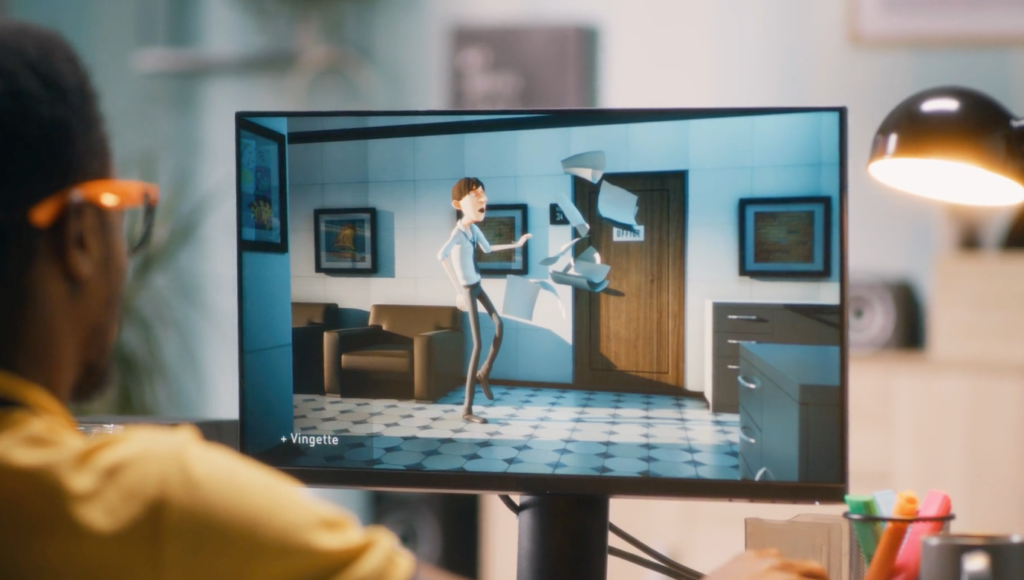
Let’s simplify things.
Animation might look complicated from the outside, but in real life, creators follow a very clear and repeatable workflow. Whether it’s a beginner making Instagram reels or a brand creating ads, the process is almost always the same:
Idea → Script → Visuals → Animation → Sound → Export
First comes the idea. This is the message or story you want to share. It doesn’t need to be big, just clear. For beginners, even a simple topic like “3 study tips” works perfectly.
Next is the script. This is where you write what your video will say. Keep it short and easy. Most beginners skip this step and directly jump into animation; that’s where things get messy. A clear script helps you create animated video for beginners in a structured and stress-free way.
Then comes visual planning. You decide what will appear on screen for each line. This can be rough, just basic boxes or notes. No need for perfect drawings. This step makes it easier to create animated video for beginners without confusion or rework later.
After that, you move to animation. This is where you bring your visuals to life using simple movements like fade, slide, or zoom. You don’t need complex effects to make it look good.
Then you add sound: voiceover, music, and small sound effects. This step makes your video feel complete and engaging, helping you create animated video for beginners that looks polished and professional.
Finally, you export your video and share it.
The biggest secret?
Creators don’t try to do everything at once. They follow this step-by-step flow, and that’s exactly how you should create animated video for beginners too.
Step 1: Choose the Type of Animation to Create Animated Video for Beginners
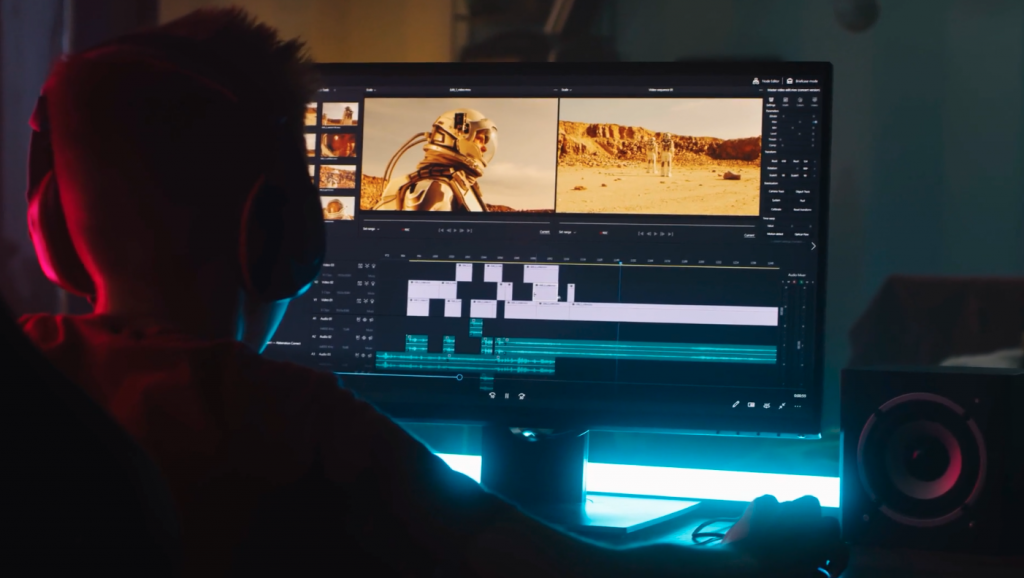
Start simple. Pick ONE animation style and stick with it for your first project.
Don’t try to explore everything at once; it will only confuse you and slow you down.
When beginners try multiple styles together (like characters + motion graphics + effects), the video becomes messy and unfinished. Your goal right now is not to experiment—it’s to complete your first video.
A. Beginner-Friendly Types
- 2D Animation (Characters & Cartoons): Good for storytelling, but slightly harder for beginners.
- Whiteboard Animation: Looks like hand-drawn sketches. Great for explainers and educational content.
- Motion Graphics (Text + Icons): Easiest and most popular. Perfect for reels, YouTube Shorts, and presentations.
- Slideshow Animation: Simple images with transitions. Best for absolute beginners.
B. Tools You Can Use
- Canva: easiest drag-and-drop option
- Animaker: good for character animations
- Powtoon: great for presentations
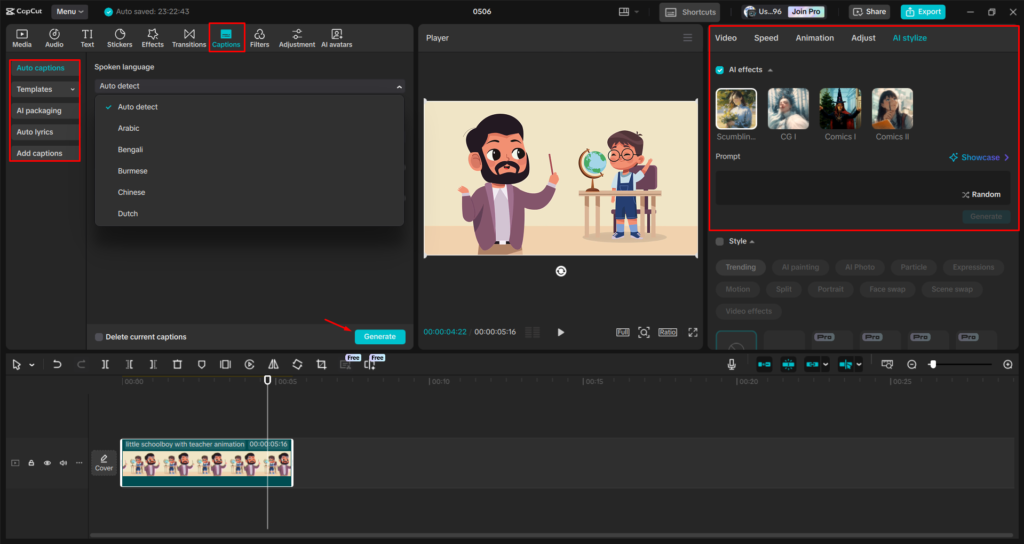
- CapCut: simple and powerful for mobile editing
C. Real Tip
If you’re just starting, go for motion graphics or slideshow animation.
They require less effort and less time and still look professional, making it easier to create animated video for beginners without feeling overwhelmed.
Character animation may look exciting, but it involves more control, timing, and patience than most beginners expect.
This is the easiest way to create animated video for beginners without confusion.
Step 2: Write a Simple Script & Storyboard
Before you open any animation tool, write exactly what your video will say.
This step saves you hours.
Most beginners skip scripting and jump straight into editing. Then they get stuck—because they don’t know what comes next. A clear script acts like a roadmap. It tells you what to show, what to say, and how your video will flow, making it much easier to create animated video for beginners smoothly.
A. How to Do It
Keep it simple and short:
- Use small sentences (easy to animate and easy to understand)
- Stick to one idea per scene
- Aim for 30–60 seconds total length
B. Basic Structure:
- Scene 1: Problem (grab attention)
- Scene 2: Solution (main content)
- Scene 3: Ending (summary or call-to-action)
C. Example:
“Struggling to focus while studying?”
→ Show problem
“Try the 25-minute focus method.”
→ Show solution
“Start today and see results!”
→ Ending
D. Tools You Can Use
- Google Docs (easy and clean)
- Notion (good for organizing ideas)
- Pen & paper (honestly, still one of the fastest ways)
Step 3: Best Tools to Create Animated Video for Beginners
A. Best Tools for Beginners
Choosing the right tool can make your work easy or frustrating. As a beginner, you don’t need powerful software; you need something simple and easy to control. Using the right tool helps you create animated video for beginners faster and easier.
Here are some tried-and-tested tools:
| Goal | Tool |
| Easy animations | Canva |
| Character animation | Animaker |
| Social media videos | CapCut |
| Whiteboard style | Doodly |
These tools are beginner-friendly, drag-and-drop based, and don’t require coding or design experience.
B. How to Choose the Right Tool
Don’t overthink this. Just choose based on your device:
Using a laptop? → Go with Canva or Animaker
Using a mobile? → CapCut or Canva works best
Also, think about your goal:
Want quick reels? → CapCut
Want simple explainer videos? → Canva
Want characters talking? → Animaker
Pick ONE tool and stick with it for your first project.
C. Real Insight (Not Usually Told)
Every tool feels confusing in the beginning.
Even Canva, which looks simple, can feel overwhelming on Day 1. That’s normal.
Instead of trying to “learn everything,” focus on just 3 things:
- Adding elements
- Applying animation
- Exporting video
That’s enough to create your first animated video.
Step 4: Design Characters & Scenes (Without Skills)
Here’s something most beginners don’t realize:
You don’t need to “design” anything from scratch.
In real projects, even professionals use ready-made assets to save time. So instead of struggling with drawing or designing, your job is simple; pick, place, and arrange to create animated video for beginners more efficiently.
Think of it like building with Lego blocks, not creating the blocks. These assets help you create animated video for beginners without design skills and make the whole process faster.
Using ready-made elements also allows you to create animated video for beginners that looks clean and professional without extra effort.
A. Free Resources You Can Use
- Freepik: icons, illustrations, vectors
- Storyset: ready-made animated characters
- Pixabay: free images and videos
- Pexels: aesthetic photos and clips
Download assets that match your topic and style.
B. How to Do It
- Choose one color theme (2–3 colors max)
- Use same style icons (don’t mix cartoon + realistic)
- Keep backgrounds clean and minimal
- Add only what is necessary for each scene
Example:
If your video is about study tips → use books, desks, students (same style)
Step 5: Animate Step-by-Step
Now comes the most exciting part, bringing your scenes to life.
This is where your static visuals turn into an actual video. But here’s the truth: animation is not about doing complex movements; it’s about making things feel smooth and clear. Simple animations are enough to create animated video for beginners professionally.
Start with the basics:
- Add your elements to the timeline
- Use simple animations like:
- Fade in (smooth entry)
- Slide (left/right movement)
- Zoom (slight scale effect)
You don’t need anything fancy. These three alone can create a clean and professional video.
A. Basic Flow
Add background (color or image)
- Add text (main message)
- Add icons/images (support visuals)
- Apply animation to each element
Work scene by scene, not everything at once.
B. Beginner Trick
Use pre-made animation presets available in tools like Canva or CapCut.
Why?
Because they are already timed and balanced. You don’t have to manually adjust speed, direction, or timing.
This saves time and avoids beginner mistakes.
Step 6: Add Voiceover, Music & Sound
This is the step where your video stops feeling “basic” and starts feeling real and engaging.
Without sound, your animation feels empty. With the right sound, even a simple video can feel professional. Good audio is essential to create animated video for beginners that feels complete.
A. Voiceover Options
You have two easy options:
- Record on your phone
- Find a quiet room
- Speak slowly and clearly
- Keep phone close to your mouth
- Use AI voice tools
- Just paste your script
- Choose a natural voice
- Download and add to your video
AI is great if you’re shy or don’t have a good mic.
B. Free Music Sources
- YouTube Audio Library
- Pixabay Music
Choose soft background music that matches your video mood.
Step 7: Export & Share
Once everything looks and sounds good, it’s time to export your final video. Exporting correctly ensures you create animated video for beginners ready for social media.
A. Best Export Settings
- Format: MP4
- Quality: 1080p (Full HD)
These settings give you good quality without making the file too heavy.
B. Where to Share
- Instagram Reels
- YouTube Shorts
Start posting your work. That’s how you improve.
C. Final Tip
Before uploading, always watch your full video once.
Check:
- Any spelling mistakes?
- Audio syncing properly?
- Smooth transitions?
Small errors can ruin a great video.
7-Day Plan to Create Animated Video for Beginners
If you try to do everything in one day, you’ll feel overwhelmed and quit.
That’s why real creators break the process into small, manageable steps. This 7-day plan is designed to help you stay consistent and actually finish your first project, making it easier to create animated video for beginners without feeling overwhelmed.
Follow this plan to create animated video for beginners in just 7 days
Day 1: Idea + Script
- Pick a simple topic and write your script.
- Keep it short (30–60 seconds). Don’t overthink—just focus on clarity.
Goal: Know exactly what your video will say.
Day 2: Storyboard
- Break your script into scenes.
- Draw rough boxes and decide what will appear in each scene.
Goal: Visual plan ready (even if it looks messy).
Day 3: Choose Tool + Learn Basics
Pick one tool (like Canva or CapCut).
Spend time learning only the basics:
- Add text
- Add elements
- Apply animation
Goal: Understand how your tool works.
Day 4: Design Scenes
- Collect icons, images, or characters.
- Create all your scenes without animation.
Goal: All visuals ready.
Day 5: Animate
Now add motion to your scenes:
- Fade, slide, zoom
- Keep it simple and clean
Goal: Complete animation.
Day 6: Add Sound + Edit
- Add voiceover and music and fix timing.
- Adjust audio levels and check flow.
Goal: Video feels complete and smooth.
Day 7: Export + Post
- Export in 1080p and upload.
- Don’t wait for perfection; just post it.
Goal: Finish and publish your first video.
Free Resources for Assets
These resources make it easier to create animated video for beginners without spending money.
1. Icons & Vectors: Freepik, Flaticon
The platforms Freepik and Flaticon enable users to search for pre-existing design elements that they can use in their animation projects. You can search for your topic by entering educational fields or business domains or social media platforms and then download the corresponding icons. To maintain your video style uniformity, you should select icons that belong to the same design collection. Beginners can quickly build professional-looking scenes through these platforms, making it easier to create animated video for beginners with clean and consistent visuals.
2. Characters: Storyset
Storyset provides beginners with an ideal platform that enables them to use pre-made characters for their video projects without needing to create their own character designs. The platform delivers contemporary animated illustrations, which users can modify through color and style alterations. The platform allows you to select characters who fit your subject matter and use them directly in your scenes, making it easier to create animated video for beginners without design skills. The implementation of these elements creates content that resonates with viewers while maintaining their interest and helps you create animated video for beginners that feels engaging and story-driven.
3. Music: Pixabay, YouTube Audio Library
Pixabay Music and the YouTube Audio Library provide users with complimentary background music, which they can legally incorporate into their video projects. The collection includes different musical tracks, which range from peaceful to high-energy and motivational styles. You should select music that fits your video atmosphere while maintaining low volume levels, which allows your voice to remain audible. The proper background music selection delivers emotional content, which enables your animation to achieve a professional and complete presentation.
4. Videos & Images: Pexels
Pexels serves as a dependable platform that provides users with complimentary stock video and image content. The visuals can function as background elements or secondary video content for your animation project. The platform proves useful for producing slideshow presentations and requires authentic visual elements instead of artistic representations. The platform lets you find content through topic searches while choosing content that meets your requirements. The application of consistent and appropriate visuals throughout your video enhances its professional appearance and viewer engagement.
3 Beginner-Friendly Video Ideas
1. “A Day in My College Life” (Story-Style)
Don’t overthink this—just break your day into 4–5 simple parts.
Example: Morning → Class → Break → Study → Chill time
Write 1 line for each scene:
- “Woke up late again.”
- “Back-to-back lectures”
In your tool (like Canva/CapCut), add:
- Background (classroom, books, etc.)
- Text for each moment
- Simple slide or fade animation
Tip: Keep it relatable, not perfect.
Real life = better engagement.
2. “3 Study Tips That Actually Work”
Start by writing 3 simple tips you actually use.
Example:
- Study for 25 minutes
- Keep phone away
- Revise before sleeping
Now create 3 scenes:
Add a title: “3 Study Tips That Work.”
One tip per scene
Use icons (clock, phone, book)
- Keep each tip under 5–7 seconds.
- Use the same animation style for all 3 tips.
3. “My First Internship Experience”
Think of this like telling a short story.
Break it into:
- “How I got it”
- “What I did”
- “What I learned”
Write 1–2 lines for each part.
In your video:
- Use simple text and icons.
- Add soft background music
- Highlight keywords (like “first day,” “nervous,” and “learned a lot”)
Tip: Don’t try to sound perfect—sound real.
How AI Helps in 2026
AI tools are transforming how we create animated video for beginners in 2026. With AI, anyone can create animated video for beginners faster than ever before.
- AI Script Generators → Write Faster
The AI tool creates a complete script from your concept within three seconds after you enter your subject. The tool creates an organized structure, which results in time savings while eliminating all confusion that first-time users experience when they need to find their initial words.
- AI Voiceovers → No Mic Needed
You don’t need a professional mic or recording setup anymore. Your script transforms into clear audio through AI voice tools, which produce natural-sounding results. This solution works well for people who experience shyness, absence of a silent environment, or need to maintain identical vocal tones throughout their video content.
- Auto-Animation Tools → Animate in One Click
The current market provides multiple tools that enable users to create automatic animation through their existing functions. The tool creates instant visual effects through its system, which requires users to input text or design components. The system enables newcomers to create professional-grade animations through basic procedures that complete their work without using advanced methods.
- Text-to-Video Tools → Convert Ideas into Visuals
Your written script transforms into a complete video that includes visual elements and different scenes and animated content through text-to-video AI tools. The program provides substantial speed improvements for users who begin their work from zero. The output allows you to edit and personalize the content until it matches your desired style.
Conclusion
Now you know exactly how to create animated video for beginners step-by-step. The creation of your initial animated video project may appear daunting at first but actual implementation shows that it follows an easy-to-understand sequence of steps.
- You don’t need expensive software.
- You don’t need professional design skills.
- And you definitely don’t need to wait until you feel “perfect.”
The most important thing you must do is to begin with minor tasks while maintaining your daily work schedule.
You learned the entire process of creating beginner-friendly animated videos through the training that starts with selecting basic animation techniques and progresses to script development and scene creation and basic animation implementation and final video export. This is the same process many creators follow, just simplified for you. Anyone can create animated video for beginners with the right process and consistency.
At Careergrowkaro, we always emphasize one thing: execution matters more than perfection.
Your first video might not look amazing—and that’s completely okay. What matters is that you complete it. The second video becomes easier for you to create after finishing your first video, and your third video will be better than your second video.
Animation as a skill exists within practice because learning comes from active engagement.
So don’t wait for the “right time.”
Don’t overthink tools or styles.
Open a tool, follow the steps, and create your first animated video today.
Because the only way to improve… is to start.
Start today and create animated video for beginners without overthinking.