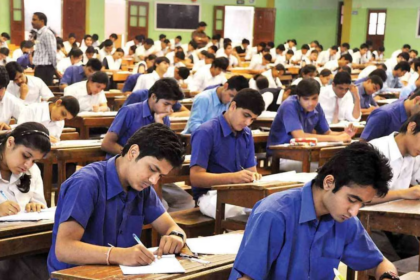
The UPSC age limit is one of the first things every aspirant must check before starting UPSC preparation. If you miss this, all your hard work could go to waste at the application stage itself. So here is the direct answer right away: the minimum age for UPSC is 21 years and the maximum is 32 years for General category. SC/ST candidates get up to 37 years. OBC candidates get up to 35 years. EWS candidates follow the General category limit of 32 years. Female candidates get the same base limit but extra relaxation based on their category.
- UPSC Age Limit for General Category
- UPSC Age Limit for OBC
- UPSC Age Limit for SC and ST
- UPSC Age Limit for EWS
- UPSC Age Limit for Female Candidates
- Attempt Limits by Category
- Special Age Relaxations You Should Know
- How to Calculate Your Age Eligibility Step by Step
- FAQs on UPSC Age Limit
- What Should You Do Next?
Read this full guide. It covers every category, every exception, every edge case, and tells you exactly what to do based on your age and category right now.
What is the UPSC Age Limit in 2026?
Every year, UPSC releases its official notification for the Civil Services Examination, commonly called UPSC CSE. The UPSC age limit is clearly stated in this notification. The age is always calculated as on 1st August of the exam year.
So if the notification is for the 2026 exam, your age will be calculated as on 1st August 2026. You must have completed 21 years by this date. And you must not have crossed the upper age limit for your category.
Simple enough on paper. But the real confusion starts when people mix up categories, attempt counts, and relaxation rules. Every year, thousands of students fill out the application form incorrectly, get rejected, and then wonder what went wrong.
This guide will make sure that does not happen to you.
One important clarification before we go further: the UPSC age limit applies to the Civil Services Examination only. Other UPSC exams like CAPF, CDS, NDA, or Engineering Services have different age limits. Always read the specific notification for whichever exam you are targeting.
UPSC Age Limit for General Category

The UPSC age limit general category is the starting point. Every other category is compared against this baseline.
- Minimum UPSC age limit: 21 years
- Maximum UPSC age limit: 32 years
- Number of attempts: 6
This means a General category candidate can apply for UPSC only when they are between 21 and 32 years of age. Once you cross 32 years (as on 1st August of the exam year), you are no longer eligible. No exceptions under normal rules.
The maximum UPSC age limit is inclusive. So if you are exactly 32 years old on 1st August 2026, you are still eligible. But if you turn 33 before or on that date, your window is closed.
General category candidates also have a maximum of 6 attempts. Both conditions, the age limit and the attempt limit, must be satisfied together. You cannot apply for the seventh time even if you are still within the age limit.
Here is something that surprises many aspirants: UPSC does not allow you to “save” attempts. Every time you sit in the examination hall for Prelims, that counts as one attempt. Good strategy means you use each attempt wisely, not carelessly.
The General category is the strictest in terms of both age and attempts. If you belong to this category, start your preparation early and plan your attempts with discipline. There is no room for casual attempts here.
UPSC Age Limit for OBC
The UPSC age limit for OBC candidates comes with an upper age relaxation of 3 years over the General category.
- Minimum UPSC age limit: 21 years
- Maximum UPSC age limit: 35 years (32 plus 3 years relaxation)
- Number of attempts: 9
This is a meaningful advantage. An OBC candidate born in 1990 who missed the ideal preparation window in their early 20s still has enough time to prepare seriously and apply.
Many successful IAS and IPS officers today cleared UPSC in their early to mid 30s using this relaxation window. The extra 3 years is not a luxury, it is a real and legitimate benefit that the government has provided to help candidates from socially and educationally backward classes.
But here is something that many OBC aspirants miss entirely: to avail this relaxation, you must have a valid OBC certificate that is not older than 1 year from the date of application. The certificate must be from a competent authority, which is usually the District Magistrate or an officer authorised under the Scheduled Castes and Scheduled Tribes Orders. The certificate must specifically mention “non-creamy layer” status.
If your family income has crossed the creamy layer threshold, which is currently Rs. 8 lakh per year from all sources, you will be treated as General category for UPSC purposes. In that situation, you get only 32 years and 6 attempts, not 35 and 9.
So before you plan your UPSC journey banking on OBC relaxation, verify your creamy layer status first. Visit your tehsildar or district office, check your income documents, and get a fresh certificate. It sounds like a small admin task but it determines your entire eligibility window.
UPSC Age Limit for SC and ST
The UPSC age limit for SC and ST candidates is the most relaxed among all categories.
- Minimum UPSC age limit 21 years
- Maximum UPSC age limit: 37 years (32 plus 5 years relaxation)
- Number of attempts: Unlimited within the age limit
Yes, SC and ST candidates have no cap on the number of attempts as long as they are within the age window of 37 years. This is a substantial advantage that recognises the historical and social barriers faced by these communities.
A candidate from SC or ST can keep attempting every year from 21 to 37 without worrying about running out of attempts. That is potentially 16 or 17 exam cycles, depending on when they start.
However, this should not be misread as a reason to delay or become complacent. UPSC is one of the most competitive examinations in the world. Having more attempts is only useful if each attempt is better than the last one, with improved preparation and strategy.
A few important technical details for SC and ST candidates:
The SC and ST certificate must be issued by a competent authority. Caste-based relaxation applies only to Central Government services notified by UPSC. Your caste must be listed in the Central List of SC or ST, not just the state list.
This is a critical distinction. Some castes are recognised in state lists but are not included in the Central Government list. If you apply claiming SC or ST benefit based on a caste that is only in the state list, your application may be rejected after verification. Get this checked before you apply.
UPSC Age Limit for EWS
The UPSC age limit EWS category is one of the newer additions to the reservation framework. The Economically Weaker Sections reservation was introduced in 2019 through the 103rd Constitutional Amendment.
- Minimum UPSC age limit: 21 years
- Maximum UPSC age limit: 32 years (same as General category)
- Number of attempts: 6 (same as General)
EWS candidates currently do not receive any age relaxation over the General category. The benefit under EWS reservation is primarily in terms of seat reservation, which is 10% horizontal reservation in vacancies, not in terms of age or attempt relaxation.
This comes as a surprise to many aspirants who assume that EWS means extra age benefit similar to OBC. It does not, at least not as per current UPSC rules. So if you belong to the EWS category, plan your preparation the same way a General category candidate would when it comes to age and attempt strategy.
To avail the EWS benefit, you need a valid EWS income and asset certificate from a competent authority. The format is prescribed by the Government of India and is typically issued by a Tehsildar or Sub-Divisional Officer. The annual income of your family from all sources, including agriculture, business, salary, and profession, must be below Rs. 8 lakh.
There are also property-related conditions. Families that own agricultural land of 5 acres or more, residential flats of 1000 sq. ft. or more, or residential plots of 100 sq. yards or more in notified municipalities are excluded from EWS even if their income is below the threshold. Always check the full official criteria before claiming EWS status.
UPSC Age Limit for Female Candidates
This is one of the most misunderstood topics in UPSC age limit. The UPSC age limit for female candidates is a subject of a lot of confusion online, and a lot of that confusion comes from incorrect information circulating on social media and coaching centre notes.
Let us set the record straight.
Female candidates do not get a blanket extra relaxation simply for being women under standard UPSC rules. Their age limit depends entirely on their category:
- Female, General: 32 years, 6 attempts
- Female, OBC (Non-Creamy Layer): 35 years, 9 attempts
- Female, SC or ST: 37 years, unlimited attempts
- Female, EWS: 32 years, 6 attempts
However, there is a specific situation where women get additional age relaxation regardless of category. A woman who is a widow, or who is divorced, or who is judicially separated from her husband and has not remarried is eligible for a higher age limit:
- General widow or divorcee: up to 35 years
- OBC widow or divorcee: up to 38 years
- SC or ST widow or divorcee: the 37-year limit already applies, so no additional relaxation is needed in most cases
This relaxation requires documentary proof such as a death certificate of the husband, a divorce decree from a court, or a judicial separation order. You must submit these documents along with your application.
If you are a female aspirant from SC, ST, or OBC background, your category-based relaxation already gives you a higher limit. You benefit from whichever relaxation is more favourable in your case.
Attempt Limits by Category
Let us put all the attempt and age information in one place for easy comparison.
| Category | Maximum UPSC Age Limit | Maximum Attempts |
| General | 32 years | 6 |
| OBC (Non-Creamy Layer) | 35 years | 9 |
| SC | 37 years | Unlimited |
| ST | 37 years | Unlimited |
| EWS | 32 years | 6 |
| PwBD General | 42 years | 9 |
| PwBD OBC | 45 years | 9 |
| PwBD SC or ST | 47 years | Unlimited |
| Ex-Servicemen General | 37 years | As per age |
| Defence Service Personnel | 37 years | 9 |
One critical clarification on attempt counting: an attempt is counted when you physically appear in the UPSC Prelims examination hall. If you fill out the application form but do not attend the Prelims, it is NOT counted as an attempt. This is a major relief for candidates who apply but cannot appear due to illness, travel, or other reasons.
Special Age Relaxations You Should Know
Beyond the main categories, UPSC provides age relaxation in a few specific situations. These are less commonly discussed but very important for those who qualify.
Persons with Benchmark Disability (PwBD): Candidates with a minimum 40% disability as defined under the Rights of Persons with Disabilities Act 2016 get 10 additional years over their category limit. A General PwBD candidate gets up to 42 years. An OBC PwBD candidate gets up to 45 years. SC or ST PwBD candidates get up to 47 years.
Ex-Servicemen: The age relaxation for ex-servicemen is calculated based on the number of years served in defence forces, subject to a ceiling. In general, ex-servicemen can get up to 37 years or more depending on their specific service record and category.
Central Government Civilian Employees: In certain cases, Central Government employees with a defined service period may be eligible for up to 5 years of age relaxation.
ECO and SSCO candidates: Emergency Commissioned Officers and Short Service Commissioned Officers from the defence forces who have served at least 5 years may be eligible for additional relaxation. Specific rules apply.
These are specialised situations. If you fall into any of these groups, CareerGrowKaro strongly recommends reading the official UPSC CSE notification in full or consulting a career expert who handles defence or disability-based eligibility queries.
How to Calculate Your Age Eligibility Step by Step

This sounds basic, but it is where many students make avoidable mistakes. Follow these steps carefully.
Step 1: Identify the reference date. UPSC calculates age as on 1st August of the exam year. For UPSC CSE 2026, the reference date is 1st August 2026.
Step 2: Take your date of birth from your Class 10 board certificate. UPSC does not accept Aadhaar, passport, or birth certificate as standalone age proof. Your Class 10 board marksheet or certificate is the only accepted document.
Step 3: Calculate your completed age as on 1st August 2026. If you were born on 20th September 1993, you would be 31 years old on 1st August 2026 because your 32nd birthday falls on 20th September 2026, which is after the reference date. You are eligible under General category.
Step 4: Apply your category relaxation if applicable. If you are OBC, add 3 years. If you are SC or ST, add 5 years.
Step 5: Count your previous attempts. Each year you sat in the Prelims examination hall counts as one attempt. Even if you failed Prelims, even if you did not qualify for Mains, it still counts.
Step 6: Confirm that both your age and attempts are within the allowed limit. Both must be satisfied simultaneously.
This six-step process sounds simple but every year hundreds of applications are rejected because of mistakes in one of these steps. Do not be casual about it.
Not sure if you are still eligible for UPSC this year? Use CareerGrowKaro’s free guide to know more about UPSC and other exams.
FAQs on UPSC Age Limit
Q1: Can I apply for UPSC if I am 33 years old under General category?
No. The maximum UPSC age limit for General category is 32 years as on 1st August of the exam year. If you have turned 33 before this date, you are not eligible under General category. However, if you belong to OBC, SC, ST, or a special relaxation category like PwBD or ex-serviceman, you may still be eligible. Check your category carefully and verify with the official notification.
Q2: Does the UPSC age limit apply to all services covered under the Civil Services Examination?
Yes. The age limits mentioned in the UPSC CSE notification apply to all services including IAS, IPS, IFS, IRS, and all other Group A and Group B Central services covered under the examination. There is no separate age limit for individual services within the same notification.
Q3: My OBC certificate was issued 18 months ago. Can I use it for UPSC 2026?
No. UPSC requires an OBC certificate that is issued within one year from the date of application. A certificate issued 18 months ago is not valid. You need to get a fresh one from a competent authority before submitting your UPSC application form.
Q4: I filled the UPSC Prelims form last year but did not appear for the exam. Is that counted as an attempt?
No. According to UPSC rules, an attempt is counted only when a candidate actually appears in the Prelims examination. Submitting the application form without attending the exam does not count as an attempt. You still have that attempt available for future years.
Q5: Is there a minimum marks requirement in graduation to apply for UPSC?
No. There is no minimum marks requirement. Even if you have a third division or pass class graduation degree, you are eligible. Final year students can also apply provisionally, subject to submitting proof of their degree at a later stage during the selection process.
Q6: What is the only accepted document to prove date of birth for UPSC?
UPSC accepts the Secondary School Certificate (Class 10) or the Secondary School Examination marksheet issued by a recognised board such as CBSE, ICSE, or state boards as proof of date of birth. Aadhaar card, passport, or birth certificate are not accepted as standalone age proof.
What Should You Do Next?
Now that you know everything about the UPSC age limit, the next step is action, not more reading.
If you are below 21: Start building your foundation now. Read NCERT books from Class 6 to 12 across History, Polity, Geography, and Economy. Develop a daily newspaper reading habit. Build your writing skills. Time is your biggest asset right now and you have more of it than any other category of aspirant.
If you are between 21 and 26 (General or EWS): You are in the ideal preparation window. Apply, attempt, and iterate. Every attempt teaches you where you are weak and what needs improvement. Do not hold back because of fear of wasting an attempt. Fear costs you more than any failed attempt.
If you are between 27 and 32 (General or EWS): You are approaching the end of your window. Every year now counts heavily. Get a structured study plan. Identify your weak areas. Consider mentorship or guidance from someone who has cleared the exam or has deep coaching experience.
If you are OBC and under 35: You still have meaningful time ahead of you. But the extra 3 years is a safety net, not a reason to slow down. Treat every year as urgent.
If you are SC or ST and under 37: You have the widest window of all. Unlimited attempts within 37 years is a genuine advantage. But remember, unlimited attempts without quality preparation is still a losing strategy. Plan well, prepare with depth, and use your attempts strategically.
Whatever your situation and wherever you are in your journey, CareerGrowKaro is here to help. Whether you need UPSC preparation resources, a clear career roadmap, or help understanding government schemes that can support you financially during your preparation, we have got content built specifically for aspirants like you.
The UPSC examination is genuinely tough. But it is not impossible. Thousands of aspirants from small towns, modest backgrounds, and government schools crack it every single year. The rules are the same for everyone. Now that you know the UPSC age limit rules inside out, you have one less thing to worry about.
Go prepare. Go attempt. Go grow.