

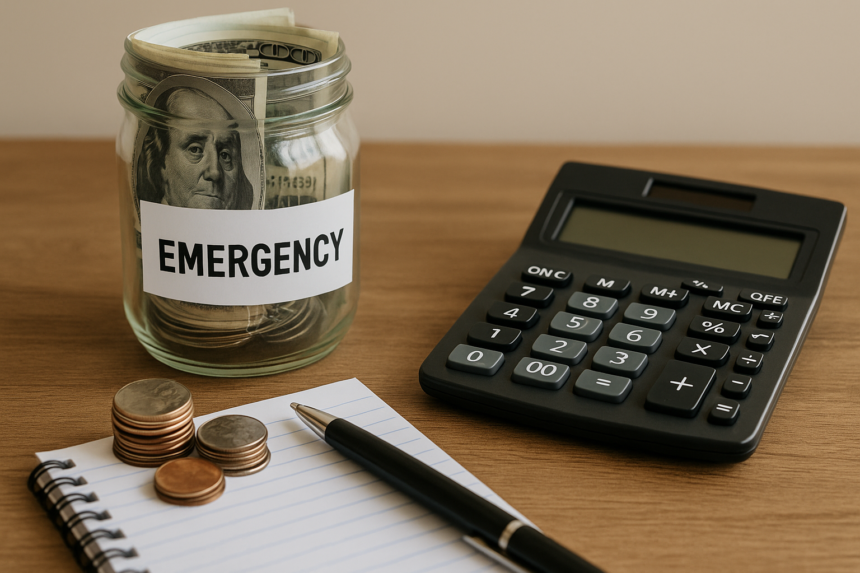
An emergency fund calculator helps you find how much money you need for unexpected situations like job loss, medical bills, or family emergencies.
- What is an emergency fund calculator?
- Why Do You Need an Emergency Fund?
- How to Use an Emergency Fund Calculator (Step-by-Step)
- Emergency Fund vs Savings vs Investment: What’s the Difference?
- Where Should You Keep Your Emergency Fund?
- How to Build Emergency Fund Fast (Even With Low Income)
- Real Indian Example(Relatable Story)
- Magic Box (CTA)
- Frequently Asked Questions
- Conclusion
Simple formula:
Monthly expenses × 6 = Emergency fund
If your monthly expenses are ₹20,000, your emergency fund should be ₹120,000.
Start small: save ₹500–₹2000 monthly and build it step by step.
Next step: Calculate your monthly expenses today and multiply by 6.
If you don’t have savings, one emergency can break your entire financial plan. That’s why using an emergency fund calculator is the smartest first step. It helps you quickly figure out how much money you need to stay safe during tough times like job loss, medical emergencies, or sudden expenses.
At CareerGrowKaro, we’ve seen many Tier 2/3 students and fresh earners struggle because they skip this basic habit. They jump into investing or spending without building a safety net. But the truth is simple: before anything else, you need an emergency fund, and an emergency fund calculator makes this easy and clear.
In this guide, you will:
- Calculate your exact amount using an emergency fund calculator
- Build your fund even with low income
- Avoid common mistakes beginners make
This emergency fund calculator approach will give you clarity and confidence.
Next step: Keep a pen or notes app ready; you’ll calculate your fund in the next section.
What is an emergency fund calculator?

What
An emergency fund calculator is a simple tool or method that helps you calculate how much money you should save to handle unexpected situations. Instead of guessing, this tool gives you a clear target based on your lifestyle and expenses.
For students and fresh earners, an emergency fund calculator removes confusion and tells you exactly how much safety money you need.
Why
Using an emergency fund calculator is important because:
- Low savings habit: In India, less than 20% of young people save regularly
- Rising medical costs: Even a small treatment can cost ₹10,000–₹50,000
- Job uncertainty: Layoffs and unstable income are common today
Without an emergency fund, people depend on the following:
- Credit cards (high interest)
- Personal loans
- Borrowing from friends/family
An emergency fund calculator helps you avoid this financial stress.
How
An emergency fund calculator works on two simple inputs:
- Monthly expenses
- Rent or PG
- Food
- Travel
- Phone/internet
- Basic personal needs
- Number of months
- Students → 3 months
- Job holders → 6 months
- Freelancers → 6–9 months
Quick Insight: The emergency fund calculator is not about saving a huge amount instantly; it’s about knowing your target and building it step by step.
Why Do You Need an Emergency Fund?

What
An emergency fund is your financial backup, money kept aside only for unexpected situations. It protects you when your income stops or sudden expenses come. Using an emergency fund calculator helps you decide how much backup you actually need instead of guessing.
Why it matters
An emergency fund is not optional; it’s a basic survival tool. Here’s why:
- Job loss or delay in salary: If you lose your job, your expenses don’t stop. An emergency fund calculator ensures you have enough money to survive 3–6 months without panic.
- Medical emergencies: Even a small hospital visit can cost ₹10,000+. Without savings, people take loans. With the help of an emergency fund calculator, you can plan for such situations in advance.
- Family responsibilities: Sudden travel, emergencies at home, or urgent needs require instant cash. An emergency fund calculator helps you stay prepared.
- Avoid debt traps: Without an emergency fund, people rely on credit cards or personal loans with high interest. The emergency fund calculator helps you avoid this completely.
Example
Rohit from Indore was working in a small company earning ₹22,000/month. Suddenly, he lost his job.
Luckily, he had already used an emergency fund calculator and saved ₹90,000.
He managed his rent, food, and expenses for 4 months without borrowing money.
If he didn’t have this fund, he would have the following:
- Taken a loan at 18–24% interest
- Depended on others
- Faced mental stress
Key Insight: An emergency fund calculator doesn’t just give you a number; it gives you peace of mind and independence.
How to Use an Emergency Fund Calculator (Step-by-Step)

Using an emergency fund calculator is simple, but most people skip steps and get the wrong number. Follow this exact process to get an accurate result from your emergency fund calculator and build a strong safety net.
Step 1: List Your Monthly Expenses
What to do: Start by writing all your essential monthly expenses. This is the base of your emergency fund calculator.
Include only needs, not wants:
- Rent / PG
- Food / groceries
- Travel (bus, metro, fuel)
- Phone & internet
- Family support or EMIs
Example: Rahul from Kota spends:
- Rent: ₹6,000
- Food: ₹4,000
- Travel: ₹1,500
- Internet: ₹500
Total = ₹12,000
This ₹12,000 becomes the input for your emergency fund calculator.
Important: Do NOT include:
- Shopping
- Swiggy/Zomato orders
- OTT subscriptions
Action: Open your notes and calculate your exact monthly expenses for your emergency fund calculator.
Step 2: Choose Number of Months
What to do: After calculating your monthly expenses, the next step in using an emergency fund calculator is deciding how many months your fund should cover. This depends on your income stability, responsibilities, and risk level.
Recommended Emergency Fund Duration
| Situation | Income Stability | Recommended Months | Why This Range? |
| Student | Low income / dependent | 3 months | Covers basic needs during sudden expenses or delays in support |
| Fresher Job | Moderate stability | 6 months | Protects against job loss or salary delays |
| Freelancer / Self-employed | Unstable income | 6–9 months | Income is irregular, so higher safety is needed |
| Sole Earner (Family dependent) | High responsibility | 9+ months | Family depends on you, so extra buffer is critical |
Example:
If you are a fresher earning ₹20,000/month with ₹15,000 expenses, your emergency fund calculator should use 6 months.
₹15,000 × 6 = ₹90,000 target fund
Why this matters: The number of months you choose directly impacts your financial safety. A stable job needs a smaller buffer, but unstable income demands a larger one. That’s why your emergency fund calculator must match your real-life situation, not a generic number.
Action: Look at your situation honestly, pick the correct number of months, and update your emergency fund calculator target now.
Step 3: Multiply (Core Formula)
What to do: Now apply the formula:
Emergency Fund = Monthly Expenses × Months
This is the main calculation inside every emergency fund calculator.
Example:
Monthly expenses = ₹12,000
Months = 6
Emergency fund = ₹12,000 × 6 = ₹72,000
Your emergency fund calculator result = ₹72,000
Insight: This number is your survival amount, not your savings goal, not investment.
Action: Multiply your numbers now and write your final emergency fund calculator result.
Step 4: Adjust for Risk
What to do: A smart emergency fund calculator always adjusts for your life situation.
Add buffer if:
- No stable job → add 2 extra months
- Family depends on you → increase fund
- Irregular income → choose higher months
Example: If your fund was ₹72,000 and your job is unstable:
Add 2 months → ₹12,000 × 8 = ₹96,000
Now your updated emergency fund calculator value is ₹96,000.
Why this matters: Life is unpredictable. A basic emergency fund calculator number is good, but a buffered one is safer.
Action: Adjust your emergency fund calculator amount based on your risk level.
Step 5: Start Saving (Execution Step)
What to do: Now convert your emergency fund calculator result into small, achievable goals.
Break it down:
- ₹1,000 per week
- ₹3,000 per month
- Save bonuses or extra income
Example:
Target = ₹72,000
Saving ₹3,000/month → 24 months
Pro Tip:
- Use auto-debit
- Keep money in a separate account
- Don’t touch it
Your emergency fund calculator is useless unless you act on it.
Action: Start saving your first ₹500–₹1,000 today towards your emergency fund calculator goal.
Emergency Fund vs Savings vs Investment: What’s the Difference?
Many students and fresh earners get confused between saving, investing, and building an emergency fund. But all three have different purposes. Before you jump into investing, your first priority should be to use an emergency fund calculator and build your safety net.
| Feature | Emergency Fund | Savings | Investment |
| Purpose | Emergency use (unexpected events) | Short-term goals (travel, gadgets) | Wealth growth (long-term) |
| Risk | Zero risk | Low risk | Medium to high risk |
| Liquidity | High (instant access) | Medium (may take time) | Low (locked or market-dependent) |
| Return | Low | Low | High (but not guaranteed) |
Before thinking about returns, focus on safety. Use an emergency fund calculator to build your base, then move to savings and investments.
If you haven’t created your emergency fund yet, calculate your amount today and make it your first financial goal.
Where Should You Keep Your Emergency Fund?
What Does “Right Place” Mean?
Your emergency fund should be kept where it is:
Safe → No risk of losing money
Liquid → You can withdraw instantly
Accessible → Available anytime (24/7)
The goal is not high returns, but quick access during emergencies.
Next step: Check where your current savings are kept. Is it easily accessible?
Best Options in India (Safe + Liquid)
1. Savings Account
- Money is available instantly via ATM/UPI
- Zero risk
- Ideal for immediate emergencies
Example: Keep at least 1–2 months of expenses here.
Next step: Open a separate savings account for your emergency fund.
2. Fixed Deposit (Breakable FD)
- Slightly higher interest than savings account
- Can be withdrawn anytime (with small penalty)
- Safe and reliable
Example: Keep 2–4 months of expenses in FD.
Next step: Create a short-term FD in your bank app.
3. Liquid Mutual Funds
- Better returns than savings account
- Money can be withdrawn within 24 hours
- Low risk (but not zero risk)
Example: Good for long-term emergency fund storage.
Next step: Research a basic liquid fund and invest a small amount.
What to Avoid (High Risk or Low Liquidity)
1. Stocks
- Value can drop anytime
- Not suitable for emergencies
2. Crypto
- Highly volatile
- No guarantee of value
3. Long Lock-in Investments
- PPF, ELSS, or long FDs
- You cannot withdraw quickly
These options defeat the purpose of an emergency fund.
Next step: Move any emergency money out of risky or locked investments.
Example
Neha from Jaipur split her emergency fund smartly:
Savings account → ₹30,000
FD → ₹50,000
When her mother had a medical emergency, she withdrew money instantly without stress or loans.
How to Build Emergency Fund Fast (Even With Low Income)
1. Start Small (Don’t Wait for Big Income)
Most people delay saving because they think “I’ll start when I earn more.” That’s a mistake. An emergency fund calculator shows your final target, but you don’t need that full amount today. Even ₹500 per week is enough to begin. The goal is to build consistency, not perfection.
When you start small, your brain adapts to saving as a habit. Over time, you can increase the amount. The earlier you start using an emergency fund calculator, the faster you reach your goal. Small steps today create big financial security tomorrow.
Action: Start saving ₹500 this week toward your emergency fund calculator target.
2. Use Auto-Debit (Make It Automatic)
Saving manually requires discipline, but automation removes that effort. Set an auto-debit from your bank account so a fixed amount gets saved every month. This ensures you never skip saving, even if you forget.
Your emergency fund calculator gives you a target; auto-debit helps you reach it without stress. Even ₹1,000/month automatically saved can build a strong fund over time. Think of it like paying yourself first. This is one of the easiest ways to follow your emergency fund calculator plan without depending on motivation.
Action: Set up an auto-transfer today right after your salary or pocket money arrives.
3. Cut Just 2 Expenses (Not Everything)
You don’t need to sacrifice your entire lifestyle. Just cutting 1–2 unnecessary expenses can free enough money to build your emergency fund. Look at your spending, food delivery, subscriptions, and impulse shopping. If you save ₹100 daily from these, that’s ₹3,000/month.
Your emergency fund calculator becomes achievable when you redirect small wasteful expenses into savings. This is practical and sustainable, especially for students and fresh earners. Instead of earning more immediately, optimize what you already have using your emergency fund calculator goal as motivation.
Action: Identify 2 expenses to cut today and redirect that money into savings.
4. Increase Income (Speed Up the Process)
If your income is low, increasing it even slightly can accelerate your emergency fund journey. You don’t need a full-time second job. Try freelancing, part-time work, tutoring, or online gigs. Even ₹2,000–₹5,000 extra monthly can drastically reduce the time needed to reach your emergency fund calculator goal.
Many Tier 2/3 students use side hustles to build their fund faster. Your emergency fund calculator gives you clarity, but extra income gives you speed. The combination of both creates financial stability much quicker.
Action: Pick one small income source and start this week.
5. Use Windfalls (Shortcut Method)
Unexpected money is your biggest advantage. Gifts, bonuses, internships, or festival money should not be spent fully. Instead, put at least 50–80% into your emergency fund. This can fast-track your progress without affecting your regular income.
Your emergency fund calculator target may feel big, but windfalls can help you reach it faster. Many people ignore this step and delay their progress. Smart savers use every extra rupee to strengthen their safety net. This is one of the fastest ways to complete your emergency fund calculator goal.
Action: Next time you receive extra money, save most of it immediately.
Final Insight: Building an emergency fund is not about earning more; it’s about starting smart. Your emergency fund calculator gives you direction, but your daily actions decide your speed.
Final Action: Start today with any amount, even ₹100, and stay consistent.
Real Indian Example(Relatable Story)
Priya, a 22-year-old student from Bhopal, started her first internship earning ₹12,000/month.
She didn’t believe in savings initially. Most money went into shopping and outings.
One day, her father needed urgent medical help. She had ₹2,000 in her account.
She had to borrow money from relatives.
After that, she used an emergency fund calculator and found her monthly expenses were ₹8,000.
Target fund = ₹8,000 × 6 = ₹48,000
She started saving ₹1,500/month + internship bonuses.
Within 2.5 years, she built ₹50,000.
Now:
- No stress during emergencies
- No borrowing
- More confidence
Magic Box (CTA)
Problem:
You don’t know how much to save or where to start.
Solution:
Use CareerGrowKaro Emergency Fund Planner
- Calculates your exact amount
- Gives monthly saving plan
- Suggests income ideas
CTA:
Start your emergency fund plan today with CareerGrowKaro and secure your future.
Frequently Asked Questions
1. How much emergency fund should I have in India?
You should have 3–6 months of expenses saved. If your job is unstable or you are a freelancer, aim for 6–9 months. This ensures you can survive without income during emergencies.
2. Can I build an emergency fund with low income?
Yes. Start small, with ₹500 or ₹1000 monthly. Consistency matters more than amount. Even small savings build a strong fund over time.
3. Should students also have an emergency fund?
Yes. Even students need at least 3 months of expenses saved for emergencies like medical issues or sudden needs.
4. Can I use my emergency fund for travel or shopping?
No. An emergency fund is only for real emergencies. Using it for wants defeats its purpose.
Conclusion
An emergency fund calculator is your first step toward financial stability. It gives you a clear number, removes confusion, and helps you prepare for real-life uncertainties like job loss or medical emergencies. You don’t need a high income to start, just consistency and the right approach. Begin with small savings, build step by step, and keep your fund in safe, accessible places.
At CareerGrowKaro, we focus on practical strategies that actually work for students and fresh earners in India. Instead of jumping directly into investments, build your foundation first. Your emergency fund is not just money; it’s your peace of mind and independence.
Final Action: Use an emergency fund calculator today, set your target amount, and start saving, even if it’s just ₹500. Your future self will thank you.