
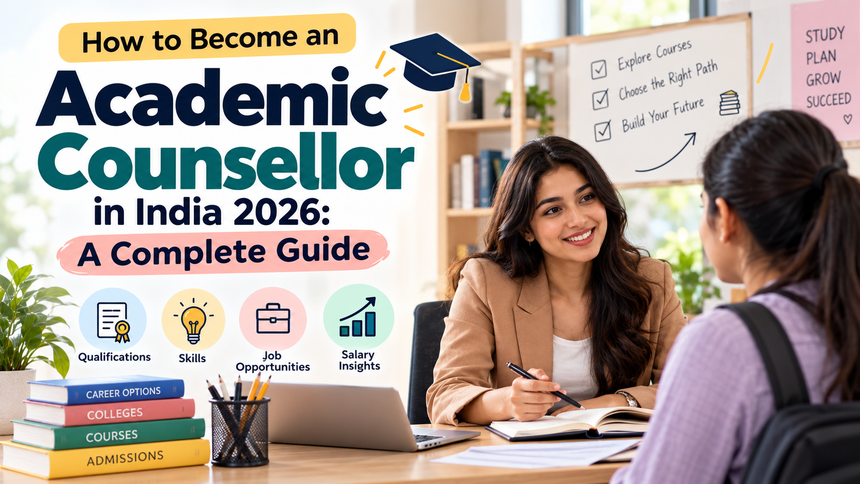
Choosing the right course, college, and educational pathway can be challenging for students. An academic counsellor helps students make informed decisions by understanding their interests, explaining available educational opportunities, and guiding them through admission processes. As more students seek personalized academic guidance, academic counsellor jobs are becoming an option for graduates interested in building a career in the education sector. If you are wondering how to become an academic counsellor, understanding the qualifications, skills, and responsibilities associated with this role is a good place to start.
If you enjoy communicating with people, solving problems, and helping students achieve their academic goals, this profession could be worth exploring. Understanding how to become an academic counsellor can help you identify the right qualifications, develop essential skills, and prepare for relevant job opportunities. In this guide, we will cover educational requirements, key responsibilities, essential skills, salary expectations, and career growth prospects in India.
Whether you are a fresher or an experienced professional considering a career change, knowing how to become an academic counsellor can help you plan your next steps. You can also explore CareerGrowKaro Jobs to discover relevant vacancies and identify opportunities that match your qualifications and career goals.
What Is an Academic Counsellor?
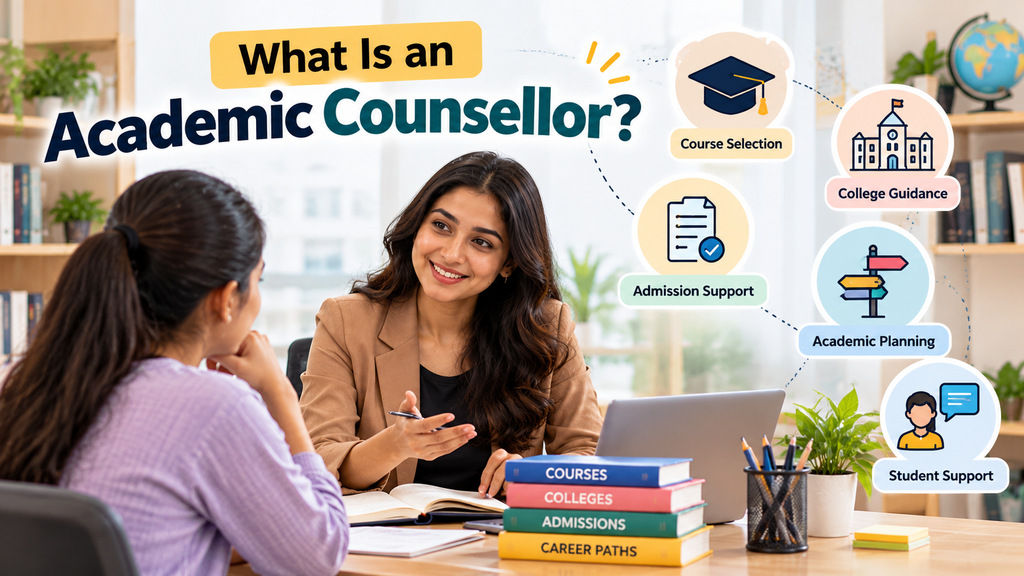
An academic counsellor is a professional who guides students in making informed decisions about their education. They help students understand their academic strengths, explore suitable courses, and navigate admission procedures. Academic counsellors may work in schools, colleges, coaching institutes, and educational technology companies to provide guidance based on students’ interests and academic goals.
The role of an academic counsellor is important because students often need support when choosing educational programmes or planning their next academic steps. Their guidance helps students understand available opportunities and make decisions that align with their interests and qualifications.
The responsibilities of an academic counsellor may include:
- Course selection: Helping students identify suitable courses and educational programmes based on their interests and qualifications.
- Academic guidance: Explaining educational pathways and helping students make informed decisions about further studies.
- Admission assistance: Providing information about admission procedures, eligibility criteria, application deadlines, and required documents.
- Student support: Understanding students’ academic concerns and helping them explore appropriate solutions.
- Educational information: Sharing details about colleges, universities, courses, and learning opportunities.
If you are exploring how to become an academic counsellor, reviewing the responsibilities associated with each role can help you identify positions that match your interests and skills.
What Are the Roles and Responsibilities of an Academic Counsellor?
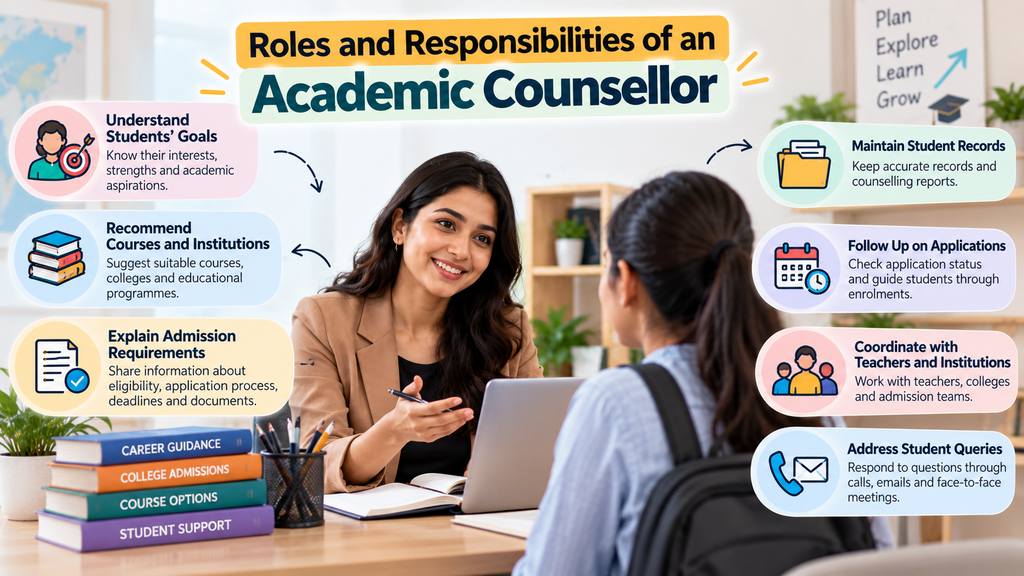
An academic counsellor helps students make informed educational decisions by understanding their needs, providing relevant information, and guiding them through academic opportunities. The roles and responsibilities of an academic counsellor may vary depending on whether they work in a school, college, coaching institute, or edtech company. However, their primary goal is to help students identify suitable educational pathways and make the admission process easier.
Here are the key responsibilities of an academic counsellor:
- Understanding Students’ Academic Goals and Interests: Academic counsellors interact with students to understand their academic backgrounds, interests, strengths, and future goals. This helps them provide guidance that aligns with individual needs.
- Recommending Suitable Courses and Institutions: They help students explore relevant courses, colleges, universities, and educational programmes based on their qualifications, interests, and preferences.
- Explaining Admission Requirements: Counsellors provide information about eligibility criteria, entrance examinations, application deadlines, required documents, and admission procedures to help students complete the application process correctly.
- Maintaining Student Records and Counselling Reports: They maintain accurate records of student interactions, academic preferences, applications, and counselling sessions. These records help track progress and ensure effective communication.
- Following Up on Applications and Enrolments: Academic counsellors contact students to check their application status, provide updates, resolve concerns, and guide them through the next steps of the admission process.
- Coordinating with Teachers and Admission Teams: They communicate with teachers, administrative staff, educational institutions, and admission departments to obtain accurate information and address student concerns.
- Addressing Student Queries: Counsellors respond to questions through phone calls, emails, online meetings, and face-to-face interactions. They explain educational options clearly and help students resolve doubts about courses and admissions.
Understanding these academic counsellor responsibilities can help aspiring professionals prepare for the role and identify the skills they need to develop. Strong communication, organisation, problem-solving, and interpersonal skills are particularly valuable for managing these tasks effectively.
How to Become an Academic Counsellor in India
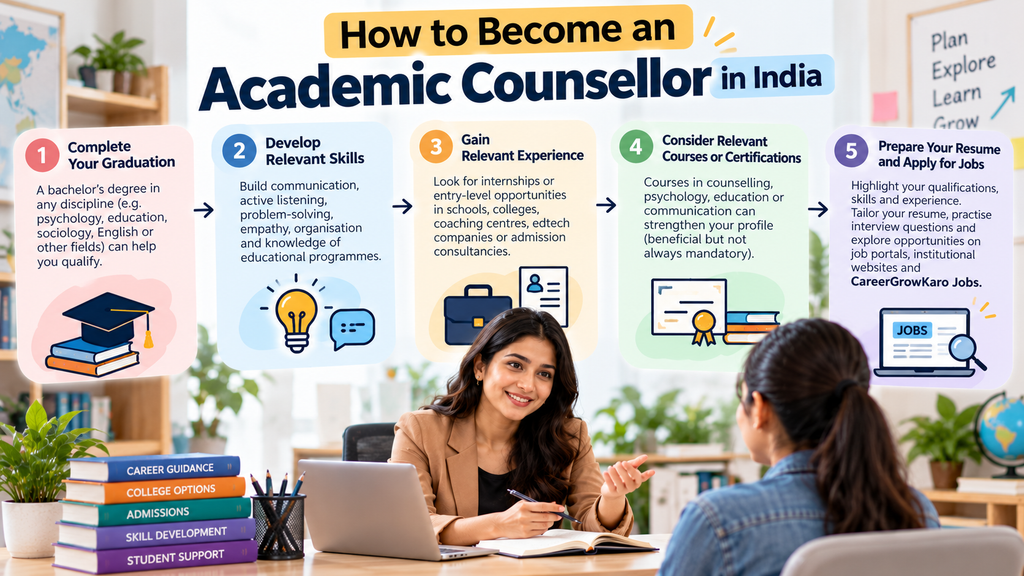
Building a career in academic counselling requires a combination of educational qualifications, communication skills, practical experience, and knowledge of the education sector. If you enjoy helping students make informed decisions about their studies, this profession can offer opportunities across schools, colleges, coaching institutes, and edtech companies.
If you are wondering how to become an academic counsellor, follow these five steps to understand the qualifications you need, the skills you should develop, and how to find suitable job opportunities in India.
Step 1: Complete Your Graduation
The first step towards becoming an academic counsellor is to complete a bachelor’s degree from a recognized university. If you are researching how to become an academic counsellor, start by checking the educational requirements of potential employers. Many employers accept graduates from different academic backgrounds, although some may prefer candidates with qualifications related to education, psychology, or counselling.
Relevant educational backgrounds include:
- Psychology: Helps develop an understanding of student behavior, learning patterns, and individual needs.
- Education: Provides knowledge of teaching methods, learning processes, and educational systems.
- Sociology: Helps candidates understand social factors that influence educational choices and opportunities.
- English: Develops communication, comprehension, and writing skills that are useful when interacting with students and parents.
- Other disciplines: Graduates in business, economics, humanities, and other fields may also qualify for general academic counselling positions.
Specific educational requirements vary by employer and job role. Therefore, check the eligibility criteria before applying for academic counsellor positions.
Step 2: Develop Relevant Skills
Having a degree is important, but employers also look for candidates who can communicate effectively, understand student concerns, and provide accurate educational information. When researching how to become an academic counsellor, focus on developing the skills needed to guide students and address their academic concerns.
Focus on building these essential skills:
- Communication and active listening: Explain educational options clearly and understand students’ questions, concerns, and preferences.
- Problem-solving and decision-making: Help students evaluate different courses and institutions based on their qualifications and goals.
- Empathy and interpersonal skills: Build trust with students and parents while understanding their individual circumstances.
- Organization and time management: Manage appointments, application deadlines, student records, and follow-up calls efficiently.
- Knowledge of educational programmes: Understand different courses, admission procedures, eligibility requirements, and educational pathways.
- Digital literacy: Use email, spreadsheets, video conferencing tools, and student management systems to manage daily responsibilities.
You can strengthen these skills through internships, online learning, practical assignments, and regular interaction with students.
Step 3: Gain Relevant Experience
Practical experience helps you understand the day-to-day responsibilities of an academic counsellor. As part of learning how to become an academic counsellor, consider internships and entry-level positions that provide exposure to student interaction, educational guidance, and admission procedures.
Here are some ways to gain experience:
- Apply for internships: Look for internships at schools, colleges, coaching centres, edtech companies, and admission consultancies.
- Explore student support roles: Positions involving student engagement, customer support, or educational assistance can help you develop relevant communication skills.
- Consider teaching assistance: Working as a teaching assistant or helping students with their academic queries can provide useful exposure to student needs.
- Gain admission-related experience: Assisting with applications, documentation, enrolments, and student enquiries can help you understand admission procedures.
- Apply for entry-level positions: Search for trainee counsellor and academic counsellor openings that accept candidates without extensive experience.
When applying for academic counsellor jobs for freshers, highlight transferable skills and practical experience, even if your previous role was not directly related to academic counselling.
Step 4: Consider Relevant Courses or Certifications
Additional courses can help you build subject knowledge and demonstrate your interest in academic counselling. If you are exploring how to become an academic counsellor, consider relevant courses that complement your educational background and help you understand student needs.
Consider exploring courses in the following areas:
- Counselling: Learn the fundamentals of student interaction, active listening, and guidance.
- Psychology: Understand human behaviour, motivation, and factors that influence learning.
- Education: Develop knowledge of learning methods, educational systems, and student development.
- Communication: Improve verbal communication, professional writing, and interpersonal skills.
- Career guidance: Learn about educational pathways, career exploration, and helping students evaluate their options.
Before enrolling in a course, review its syllabus, duration, fees, and credibility. Also, check the requirements of the employers you intend to approach, as some specialised counselling positions may require specific qualifications.
Step 5: Prepare Your Resume and Apply for Jobs
Once you have the required qualifications and skills, the next step is to prepare your resume and start applying. Understanding how to become an academic counsellor also involves identifying suitable vacancies and presenting your qualifications effectively to potential employers.
Follow these tips to improve your applications:
- Highlight relevant qualifications: Mention your degree, relevant coursework, and certifications.
- Showcase transferable skills: Include communication, problem-solving, organisation, and student engagement skills.
- Include internships and experience: Describe relevant responsibilities, projects, and achievements.
- Customise your resume: Match your skills and experience to the requirements listed in each job description.
- Prepare for interviews: Practise answering questions about your interest in academic counselling, handling student queries, and recommending suitable educational options.
- Search for relevant vacancies: Explore job portals, school and college websites, edtech company career pages, and CareerGrowKaro Jobs to discover suitable openings.
Read each job description carefully before applying to ensure that your qualifications and skills match the employer’s requirements.
Following these steps can help you prepare for a career in academic counselling. Focus on developing relevant skills, gaining practical experience, and applying for positions that align with your qualifications and career goals.
Where Can Academic Counsellors Work?
Academic counsellors can find employment in various parts of the education sector, including schools, colleges, coaching institutes, edtech companies, and admission consultancies. Their responsibilities may differ depending on the organisation, the students they support, and the educational programmes they handle.
If you are exploring academic counsellor jobs, understanding these workplaces can help you identify opportunities that match your qualifications, interests, and career goals.
1. Schools and Colleges
If you are researching how to become an academic counsellor, schools and colleges are potential workplaces to consider. These institutions employ academic counsellors to help students make informed educational decisions, understand their interests, address academic concerns, and explore suitable learning opportunities.
Their responsibilities may include:
- Providing academic guidance and student support.
- Helping students select appropriate subjects, courses, and educational programmes.
- Assisting students with academic planning and further education options.
- Communicating with teachers, parents, and administrative staff to address student concerns.
2. Coaching Institutes
Coaching institutes offer another employment opportunity for individuals exploring how to become an academic counsellor. These organisations hire counsellors to guide students preparing for competitive examinations, entrance tests, and other academic assessments.
Their responsibilities may include:
- Explaining available coaching programmes and examination preparation courses.
- Helping students understand programme structures, schedules, and eligibility requirements.
- Providing information about course fees, study options, and enrolment procedures.
- Responding to student and parent queries about preparation programmes.
3. EdTech Companies
For those interested in how to become an academic counsellor, edtech companies can provide opportunities to work in digital education and online learning. These organisations may offer online courses, test preparation programmes, skill development courses, and other educational services.
Common responsibilities include:
- Conducting online counselling sessions with prospective and enrolled students.
- Recommending suitable courses based on students’ educational needs and learning goals.
- Providing learner support and answering questions about course features.
- Assisting students with enrolment and explaining programme details.
Edtech companies may also offer remote or hybrid positions, depending on their operational requirements.
4. Universities and Admission Consultancies
Understanding how to become an academic counsellor can also help you explore opportunities at universities and admission consultancies. These organisations employ counsellors to help students understand admission requirements and navigate the application process. Some focus on domestic education, while others assist students interested in studying abroad.
Academic counsellors in these workplaces may:
- Explain admission procedures, eligibility criteria, and application deadlines.
- Help students understand documentation requirements and application steps.
- Provide information about universities, academic programmes, and available study options.
- Assist students exploring domestic or international education opportunities, depending on the organisation’s services.
5. Online Counselling Platforms
Online counselling platforms are another option for candidates researching how to become an academic counsellor. These platforms connect students with counsellors through websites, mobile applications, video calls, and other digital communication channels, allowing students to access academic guidance remotely.
Typical responsibilities include:
- Conducting virtual counselling sessions.
- Answering questions about courses, educational pathways, and academic planning.
- Helping students evaluate available learning opportunities.
- Following up with students to address their concerns and provide additional information.
Exploring these workplaces can help you understand the range of academic counsellor career opportunities available in India. Before applying, review the job description, required qualifications, work arrangements, and responsibilities to determine whether a position suits your career goals.
Conclusion
Becoming an academic counsellor can be a rewarding career choice for individuals who enjoy helping students make informed educational decisions. A bachelor’s degree, strong communication skills, empathy, and knowledge of educational programmes can help you prepare for this role. Gaining practical experience through internships and entry-level positions can also improve your chances of finding suitable opportunities.
If you are exploring how to become an academic counsellor, focus on developing relevant skills, strengthening your resume, and gaining experience in student support or admission-related activities. Understanding how to become an academic counsellor also involves researching employer requirements, preparing for interviews, and applying for positions that match your qualifications and career goals.
Ready to take the next step? Explore CareerGrowKaro Jobs to discover relevant vacancies, connect your skills with potential employers, and begin your journey towards a career in academic counselling. Learning how to become an academic counsellor can help you plan your career path and take practical steps towards entering the education sector.
FAQs
1. How to Become an Academic Counsellor After Graduation?
To understand how to become an academic counsellor after graduation, start by developing communication, problem-solving, and interpersonal skills. Gain relevant experience through internships or entry-level positions in schools, colleges, coaching institutes, or edtech companies. Prepare a resume highlighting your qualifications and skills, and apply for suitable vacancies.
2. What Qualifications Are Required to Become an Academic Counsellor?
If you want to learn how to become an academic counsellor, a bachelor’s degree is a common requirement for entry-level positions. Graduates from fields such as psychology, education, sociology, English, and other disciplines may be eligible, depending on the employer. Some specialised positions may require additional qualifications or certifications.
3. Can Freshers Apply for Academic Counsellor Jobs?
Yes, freshers can apply for suitable entry-level academic counsellor positions. Learning how to become an academic counsellor involves developing communication skills, understanding educational programmes, and gaining practical experience through internships or student support roles. Employers may also provide training to help new candidates understand their responsibilities.
4. What Skills Are Required to Become an Academic Counsellor?
Understanding how to become an academic counsellor includes developing strong communication, active listening, empathy, problem-solving, and organisational skills. Knowledge of educational programmes, admission procedures, and digital tools can also help professionals guide students effectively.
5. What Is the Salary of an Academic Counsellor in India?
When researching how to become an academic counsellor, it is important to understand the potential salary. Earnings vary depending on experience, qualifications, location, and employer. Freshers generally start in entry-level positions, while experienced professionals may earn more as they take on senior counselling or management responsibilities.
6. Where Can I Find Academic Counsellor Jobs in India?
If you are exploring how to become an academic counsellor, you can search for vacancies on job portals, educational institution websites, and edtech company career pages. You can also explore CareerGrowKaro Jobs to find relevant opportunities that match your qualifications and career interests.
7. Is Academic Counselling a Good Career Option in India?
For individuals interested in helping students make educational decisions, learning how to become an academic counsellor can be a useful starting point. The profession offers opportunities across schools, colleges, coaching institutes, and edtech companies. Career growth depends on your skills, experience, performance, and the requirements of your chosen organisation.