


Financial literacy for youth means knowing how to earn, save, spend, and invest money wisely. Start with 3 simple steps: track your monthly income and expenses, save at least 20% regularly, and avoid unnecessary debt. Even if you earn ₹5,000, managing it smartly builds long-term wealth. The earlier you start, the easier financial freedom becomes.
Next step: Write down your last 30 days’ expenses today.
Most students in Tier 2/3 cities earn or receive money but don’t know where it actually goes. By the middle of the month, the balance is low, and there’s confusion about what went wrong. This is exactly why financial literacy for youth is important. Without understanding money basics, you may struggle to save, fall into small debt traps, or miss chances to grow your income. The problem isn’t low income; it’s lack of clarity and planning.
Financial Literacy for Youth helps you take control of your money with simple habits like tracking expenses, budgeting, and saving consistently. These are not complicated skills; you just need the right system and discipline.
At CareerGrowKaro, we focus on making money management simple and practical for students so they can build both skills and financial stability together. In this guide, you’ll learn easy, real-life steps to manage your money better, even if you’re starting with a small amount.
Next step: Take 2 minutes and list everything you spent money on in the last 3 days.
What is Financial Literacy for Youth?

Financial literacy for youth means having the knowledge and skills to manage your money smartly: how you earn, spend, save, and invest. It is not about earning a lot of money; it is about using whatever you have in a better way. When you understand financial literacy for youth, you start making conscious decisions instead of spending blindly.
In simple terms, financial literacy for youth = control over your money.
Why it matters:
Most students think money problems happen because of low income, but the real issue is lack of awareness. Studies show that nearly 78% of Indian youth lack basic financial knowledge, which leads to poor money decisions.
Without financial literacy for youth, you may
- Spend without thinking and run out of money early
- Depend on friends or family for extra cash
- Fall into small debt traps like borrowing or BNPL
- Miss chances to save or grow your money
But with financial literacy for youth, you
- Build savings habits early
- Reduce financial stress
- Make smarter decisions about spending and investing
- Create a stable future over time
How it looks in real life:
When you apply financial literacy for youth, your daily behavior changes:
- You know exactly how much money you earn or receive
- You track where your money is going
- You plan your spending instead of reacting
- You save a fixed amount before spending anything
- This doesn’t require a big income, just better habits.
Example:
Riya, a student from Indore, receives ₹3,000 as monthly pocket money. Earlier, she used to spend randomly on food delivery, shopping, and small expenses. By the end of the month, she always had zero balance.
After learning financial literacy for youth, she changed her approach:
- She saves ₹600 (20%) as soon as she gets money
- Plans ₹2,000 for needs and ₹400 for wants
- Tracks daily spending
Within a month, she stopped running out of money and even started building small savings.
Next step: Write down your total monthly income (allowance, stipend, freelancing). If you don’t know this number, you can’t manage your money.
How to Start Financial Literacy as a Student?
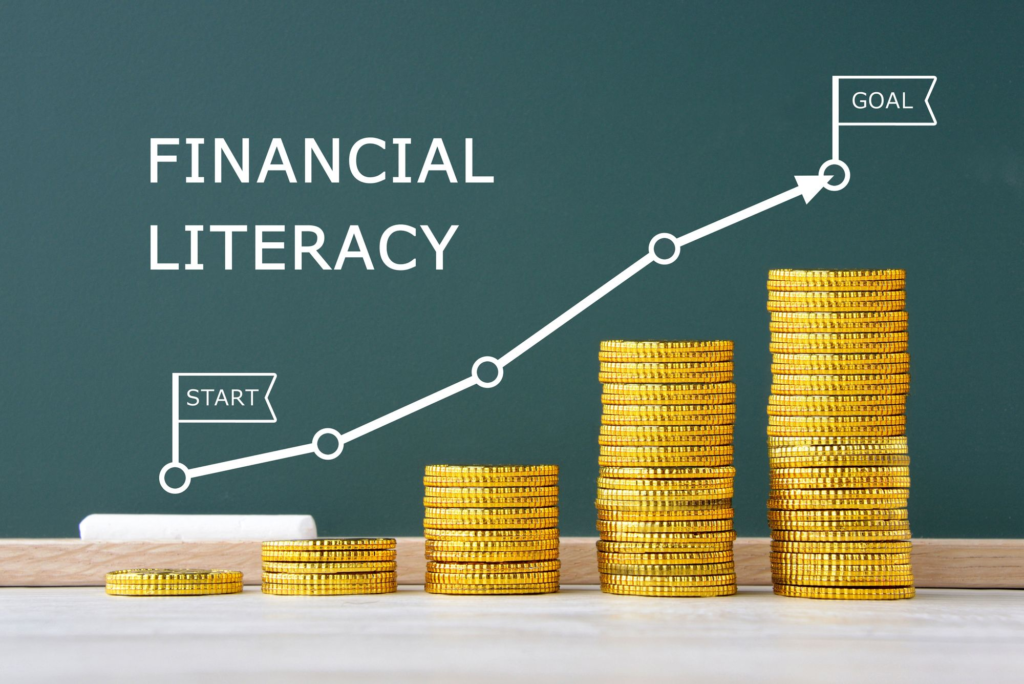
Now that you know the basics, the next step is to take action. Follow these simple steps to start building strong money habits today.
1. How do you track your money?
Explain:
The first step in financial literacy for youth is awareness. If you don’t track your money, you will always feel broke without knowing why. Tracking shows you exactly where your money is going and highlights wasteful spending habits.
How:
- Write all income sources (pocket money, stipend, freelancing)
- Note every daily expense (even ₹10 chai)
- Categorize into food, travel, shopping, etc.
Example:
₹100 chai + ₹200 snacks daily = ₹300/day → ₹9,000/month. Most students don’t realize this until they track it.
Tracking builds the foundation of financial literacy for youth because it creates clarity and control.
2. How do you budget your money?
Explain:
Budgeting means planning your money before you spend it. A strong budget is a core part of financial literacy for youth because it prevents overspending and ensures savings.
How (Simple Rule):
| Category | Percentage | Example (₹5,000 income) |
| Needs | 60% | ₹3,000 |
| Wants | 20% | ₹1,000 |
| Savings | 20% | ₹1,000 |
Why it works:
- Gives clear spending limits
- Stops impulsive expenses
- Makes saving automatic
With proper budgeting, financial literacy for youth becomes practical, not theoretical.
3. How do you save money consistently?
Explain:
A key rule of financial literacy for youth is to save first and spend later. Most students save only what’s left, which is usually nothing. Consistent saving builds financial security over time.
How:
- Save immediately after receiving money
- Use a separate account or UPI wallet
- Start small (₹20–₹50 daily)
Example:
Saving ₹50/day = ₹18,250/year. Even small amounts grow big with consistency.
This habit is the strongest pillar of financial literacy for youth because it creates discipline and long-term stability.
4. How do you avoid debt traps?
Explain:
Debt is one of the biggest dangers when you lack financial literacy for youth. It feels easy in the short term but creates stress later. Many students fall into debt without realizing it.
Common traps:
- Buy Now Pay Later (BNPL)
- Credit card overspending
- Borrowing for lifestyle (shopping, outings)
How to avoid:
- Spend only what you have
- Use credit only for real emergencies
- Always repay fully on time
Understanding debt is essential in financial literacy for youth because it protects your future income.
5. How do you start investing early?
Explain:
Investing is where financial literacy for youth turns into wealth creation. Saving protects money, but investing grows it over time through compounding.
Beginner options (India):
- SIP (start with ₹500/month)
- Recurring Deposit (RD)
- Index funds
Why early matters:
Starting at 18 instead of 25 can double your wealth because your money gets more time to grow.
Learning investing is an advanced step in financial literacy for youth, but starting small makes a big difference.
Why Do Most Students Struggle With Money?

Understanding the problem is the first step; once you know why students struggle with money, you can start fixing it with simple, practical habits.
1. Lack of Money Education
What: Most students are never taught how to manage money in school or college.
Why: Subjects focus on theory, not real-life skills like budgeting or saving. This creates confusion once students start handling money independently.
How it affects you: Without financial literacy for youth, you make random spending decisions and learn through mistakes.
Example: Many students don’t even know how to calculate monthly expenses.
Next step: Spend 15 minutes learning basic money concepts like budgeting and saving.
2. No Budgeting Habit
What: Students spend money without a plan.
Why: Without budgeting, money gets used emotionally or impulsively rather than logically.
How it affects you: Even if you have enough money, it feels insufficient because there’s no structure; this is where financial literacy for youth becomes essential.
Example: ₹500 spent randomly over a week feels small but becomes ₹2,000/month.
Next step: Create a simple 3-category budget (Needs, Wants, Savings).
3. Emotional & Impulsive Spending
What: Spending based on mood, social media influence, or peer pressure.
Why: Apps, reels, and discounts push you to spend instantly without thinking.
How it affects you: This habit weakens financial literacy for youth because decisions are emotional, not planned.
Example: Late-night food orders or “sale shopping” that wasn’t needed.
Next step: Wait 24 hours before making any non-essential purchase.
4. No Savings Discipline
What: Saving is treated as optional, not important.
Why: Students think saving can wait until they earn more.
How it affects you: Without savings, even small emergencies create stress. Strong financial literacy for youth starts with saving early.
Example: Spending full pocket money without keeping even ₹100 aside.
Next step: Start saving at least ₹20 daily from today.
5. Easy Access to Debt & Credit
What: Students are exposed to BNPL, credit cards, and borrowing.
Why: These options make spending feel easy and “affordable.”
How it affects you: Without proper financial literacy for youth, this leads to debt traps and repayment stress.
Example: Buying something for ₹2,000 on credit and struggling to repay later.
Next step: Avoid any “buy now pay later” services this month.
6. Lack of Awareness About Spending Patterns
What: Students don’t realize how small expenses add up.
Why: Daily spending feels insignificant, so it’s ignored.
How it affects you: Without tracking, financial literacy for youth cannot be applied effectively.
Example: Aman (Jaipur) spends ₹150 daily on snacks = ₹4,500/month. After tracking, he reduced it to ₹2,500.
Next step: Track every expense for the next 7 days in a notes app or diary.
Financial Literacy for Youth: What’s the Real Difference?
Understanding Financial Literacy for Youth becomes easier when you compare real-life outcomes. It’s not just about knowledge; it directly affects how you spend, save, and grow your money. A small change in habits today can completely shift your financial future.
| Aspect | Financially Literate Student | Non-Literate Student |
| Spending | Planned | Random |
| Savings | Consistent | Rare |
| Stress | Low | High |
| Future | Stable | Uncertain |
| Opportunities | Uses money wisely | Misses chances |
A student with Financial Literacy for Youth knows where every rupee goes, saves regularly, and avoids unnecessary stress. On the other hand, a student without it keeps struggling, even with similar income.
In the long run, the difference is not income; it’s behavior. The habits you build today will decide whether you stay financially secure or constantly worried about money.
Next step: Decide which side you want to be on and take one small action today (track, save, or budget).
Real Indian Example
Priya, a 20-year-old student from Bhopal, earns ₹6,000 per month through freelancing. Earlier, she had no clear system for managing money. She spent freely on food delivery, shopping, and outings. By the 20th of every month, her balance would drop to zero, leaving her stressed and dependent on others for small expenses.
After understanding financial literacy for youth, she made simple but powerful changes. She started saving ₹1,200 (20%) as soon as she received her income. Then she planned ₹3,500 for essentials like food and travel and limited her outings to ₹1,000. She also began a ₹500 SIP to grow her money.
Within 6 months, the results were clear. She saved ₹7,200, built a small emergency fund, and stopped worrying about running out of money. Her mindset shifted from random spending to planned decisions.
This shows that financial literacy for youth is not about earning more; it’s about managing better.
Next step: Identify one unnecessary expense you can reduce this week and redirect that money into savings.
Magic Box (CTA)
Problem: You don’t know where your money goes and struggle to save.
Solution (by CareerGrowKaro): Use the CGK Budget Planner + Saving System designed for students.
It helps you:
- Track expenses easily
- Set savings goals
- Control spending habits
CTA: Start using the CGK planner today and manage your first ₹1,000 smartly.
FAQs
1. What is the best way to start financial literacy for youth?
Start with tracking your expenses and creating a basic budget. Once you understand your spending habits, begin saving at least 20% of your income. Small steps like saving ₹20 daily build strong habits over time.
2. Can students really save money with low income?
Yes. Even saving ₹10–₹50 daily adds up. Financial literacy is not about how much you earn but how you manage it. Consistency matters more than amount.
3. Is investing safe for beginners?
Yes, if you start with low-risk options like SIPs or RDs. Avoid risky investments without knowledge. Learn basics first, then invest small amounts regularly.
4. How can I avoid overspending?
Track your expenses, set a budget, and limit impulse purchases. Wait 24 hours before buying non-essential items; this reduces unnecessary spending.
5. Why is financial literacy important at a young age?
Starting early builds discipline and helps you avoid mistakes later. It also allows your money to grow through item funding, giving you a strong financial future.
Conclusion
Financial literacy for youth is not complicated; it is built on small, consistent habits that anyone can follow. You don’t need a high income to manage money well. By simply tracking your expenses, saving before spending, avoiding unnecessary debt, and starting early with investing, you can take full control of your finances. The power of financial literacy for youth lies in discipline, not in how much you earn.
Many students delay learning money management, thinking they will figure it out later. But the truth is, starting early gives you a huge advantage. When you apply financial literacy for youth consistently, even ₹20–₹50 saved daily can grow into something meaningful over time. These small actions build confidence, reduce stress, and create a stable future.
At CareerGrowKaro, our goal is to make financial literacy for youth simple, practical, and accessible, especially for students from Tier 2/3 cities who need real guidance.
Next Step:
Start today—track your expenses, save ₹20, and take your first step towards financial independence.