Getting started with quantum computing basics is the absolute fastest way for college freshers to stand out in the modern deep tech landscape. When applying for advanced software engineering or research roles today, getting started with quantum computing basics separates you directly from the massive crowd of traditional coders. A clear technical path ensures you do not waste time learning outdated classical algorithms randomly.
- The Massive Shift Towards Quantum Technology
- What Exactly is Quantum Computing?
- Understanding Qubits: The Foundation of Quantum
- Superposition: Holding Multiple States at Once
- Entanglement and Quantum Interference
- The Math Prerequisites for Quantum Computing
- Choosing the Right Quantum Framework: Qiskit
- Mastering Quantum Logic Gates
- Popular Quantum Algorithms for Beginners
- Running Your First Circuit on Real Hardware
- Week-by-Week Learning Roadmap
- The Role of Quantum Cryptography
- Solving Complex Optimization Problems
- Career Opportunities in Quantum Technology
- Common Mistakes Beginners Make in Quantum
- Frequently Asked Questions (FAQs)
- Launch Your Tech Career Trajectory Today
Getting started with quantum computing basics instantly explains what specific advanced skills you bring to a corporate research team. You do not need expensive coaching classes or premium post-graduate physics degrees to get noticed by elite hiring managers. By actively focusing on getting started with quantum computing basics, mastering complex concepts like superposition and entanglement becomes highly achievable for engineering undergraduates.
This strict architectural focus proves your core computational logic skills immediately to busy technical recruiters. This CareerGrowKaro guide provides you with a complete phase-by-phase breakdown, free learning resources, and practical Indian placement tips. You will quickly master getting started with quantum computing basics right from your college hostel desk. Start building your digital engineering presence today and bypass the traditional web development tutorial trap entirely by leveraging this guide on getting started with quantum computing basics.
The Massive Shift Towards Quantum Technology
Corporate hiring in India has transformed rapidly over the past few years due to immense deep tech advancements. Every time a prestigious entry-level research job opens, hiring managers heavily filter candidates based on emerging technologies. Therefore, getting started with quantum computing basics is now considered a critical career asset for ambitious engineering students. Most of your peers will blindly learn basic web development and lazily call themselves full-stack developers.
Engineering students often copy the exact same frontend clone projects from popular online video tutorials. When recruiters spend only six seconds scanning a resume, your true analytical capability remains completely invisible without extreme specialization. This is exactly why getting started with quantum computing basics has become an absolute game changer in the modern tech industry.
A strong quantum profile gives an employer an instant glimpse of your absolute confidence in handling complex mathematics and abstract physics. Getting started with quantum computing basics acts as a powerful guide that humanizes your dense technical profile. You get to heavily prove your professional logical design skills before you even receive a formal interview invitation. Getting started with quantum computing basics bridges the geographic gap effortlessly between your hometown and major global research hubs.
Whether you are applying from a local neighborhood in Delhi or a hostel in Pune, top tech founders want to see your advanced analytical skills. Getting started with quantum computing basics helps you bypass geographic campus limitations instantly without relocating prematurely. Prove that your technical talent is not limited by your local pin code by aggressively mastering getting started with quantum computing basics.
What Exactly is Quantum Computing?
Not every single software journey starts directly with writing Python or Java syntax for standard applications. However, certain modern career paths demand that you understand exactly how data is fundamentally processed at a subatomic level. When deciding how to approach getting started with quantum computing basics, you must completely understand the difference between classical and quantum systems.
A standard classical computer holds data in the form of binary bits, which exist as strictly either zero or one. Everything on a regular laptop, from digital photos to complex applications, operates through this incredibly rigid binary system. Getting started with quantum computing basics requires you to completely forget this classical binary limitation and embrace subatomic physics.
Quantum computing uses the profound laws of quantum mechanics to process information using highly versatile qubits. These incredible systems can process multiple states simultaneously, enabling vastly faster solutions for incredibly complex computational problems. Getting started with quantum computing basics is perfect for proving your strategic architectural thinking right away to top employers.
Skipping these fundamental concepts tells recruiters that you do not respect the underlying physics of the future internet. A highly optimized approach to getting started with quantum computing basics proves your leadership potential and clarity of thought instantly. Getting started with quantum computing basics is practically mandatory for ambitious aspirants looking to break into cryptography and cybersecurity today.
Understanding Qubits: The Foundation of Quantum
Figuring out how to learn advanced algorithms requires selecting the absolute right conceptual building blocks first. Your entire journey into getting started with quantum computing basics heavily depends on mastering the profound nuances of a single qubit. A qubit is the fundamental unit of quantum computing that can magnificently exist as both zero and one simultaneously.
A normal binary bit is simple, but a qubit can exist in a complex combined state before it is physically measured by an observer. Getting started with quantum computing basics accelerates massively if you visualize a qubit as a spinning coin before it finally lands. It carries more than one mathematical possibility until it is forcefully observed by a scientist or a measuring device.
Top industry leaders describe qubits as the basic units of quantum information that utilize beautifully unique quantum properties. If you are targeting elite research roles, mastering the behavior of qubits belongs perfectly in your plan for getting started with quantum computing basics. A qubit does not behave like a normal digital switch; it behaves strictly according to counterintuitive quantum rules.
Superposition: Holding Multiple States at Once

Superposition is the core physical idea that subatomic particles can genuinely exist in multiple states simultaneously. A complete, professional guide to getting started with quantum computing basics requires you to master this exact physical phenomenon deeply. A standard desktop computer checks one single possibility at a time, making complex logistical calculations incredibly slow.
Superposition brilliantly enables a quantum computer to process multiple distinct possibilities together in parallel. Getting started with quantum computing basics ensures you understand how algorithms evaluate entire complex functions across their range in one single operation. It explicitly helps modern quantum systems solve some of the most difficult logistical problems significantly quicker than classical mainframes ever could.
You cannot just confidently rely on writing raw classical loops manually in your code anymore to solve massive datasets. A modern, aggressive approach to getting started with quantum computing basics introduces superposition to explore many possible solutions at once gracefully. These powerful, reality-bending properties make quantum computing vastly different from traditional classical computing architectures.
Entanglement and Quantum Interference
Superposition is highly powerful on its own, but it directly leads to two other uniquely profound quantum properties. Understanding entanglement and interference is an absolute non-negotiable pillar of getting started with quantum computing basics. Entanglement creates incredibly strong, unbreakable correlations between two or more qubits instantly, regardless of their physical location.
Measuring one entangled qubit immediately determines the exact, precise outcome of measuring the other, even across vast physical distances. Your dedicated approach to getting started with quantum computing basics must cover entanglement to coordinate complex qubits efficiently. This magnificent property allows quantum computers to coordinate calculations in specific ways that classical systems physically cannot replicate.
Interference smoothly adjusts complex probability amplitudes so that wrong computational outcomes mathematically cancel out before measurement. Learning how quantum interference reinforces useful algorithmic outcomes is a massive milestone in getting started with quantum computing basics. A highly secure, mathematically sound approach to getting started with quantum computing basics proves that you take advanced mathematics extremely seriously.
The Math Prerequisites for Quantum Computing
Writing brilliant logic on your local laptop is entirely useless if you do not understand the underlying linear algebra. A highly practical approach to getting started with quantum computing basics absolutely must include rigorous, dedicated mathematical preparation. You must thoroughly learn how to manually manipulate eigenvalues, eigenvectors, and complex tensor products on paper.
Basic trigonometry and complex number theory are completely mandatory for navigating abstract quantum state vectors efficiently. Getting started with quantum computing basics should heavily include mastering the 3D Bloch sphere representation of a single dynamic qubit. You will use these raw mathematical concepts daily when managing complex, multi-layered quantum circuitry.
Qubit state spaces are technically represented as two-dimensional complex vector spaces in advanced physics. Integrating this specific math into your daily plan for getting started with quantum computing basics ensures your code runs flawlessly. It completely eliminates the frustrating confusion beginners face when looking at dense quantum logic gates for the very first time.
Choosing the Right Quantum Framework: Qiskit
Many Indian engineering students completely abandon their quantum projects because they choose the wrong, outdated software frameworks. You absolutely do not need to build everything from scratch to get easily noticed by top hiring managers. Getting started with quantum computing basics must culminate in highly complex, uniquely challenging algorithmic builds using IBM’s Qiskit.
Qiskit is an incredible open-source SDK that elegantly allows you to build circuits and operators directly from Python. Getting started with quantum computing basics looks incredibly strong on a resume when it highlights your ability to use Qiskit 1.0 fluently. You can seamlessly focus purely on the concepts and implementation without needing a PhD in theoretical physics first.
Instead of a basic web app, intentionally build a quantum circuit using Qiskit to demonstrate your deep technical depth. When prioritizing getting started with quantum computing basics, actively ensure your API interacts smoothly with IBM Quantum providers via the cloud. Getting started with quantum computing basics serves as your personal technical sales letter to the elite corporate world.
Mastering Quantum Logic Gates
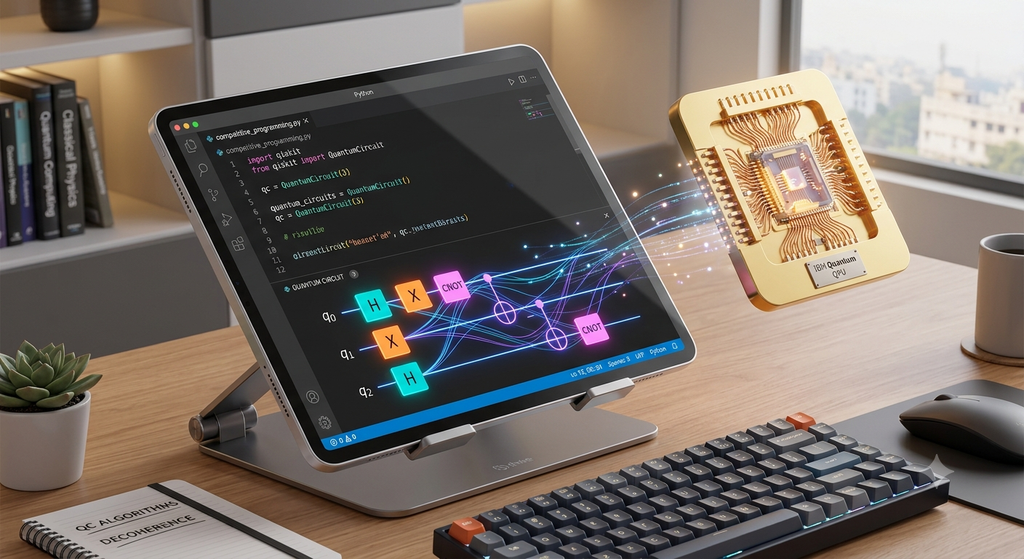
Your theoretical textbook knowledge is completely useless if you cannot articulate it through actual, functional quantum gates. The proper strategy for getting started with quantum computing basics ensures you deeply understand Pauli X, Y, and Z gates. Getting started with quantum computing basics requires strict programming rules to maintain maximum algorithmic efficiency and lower error rates.
When structuring your quantum circuits, always use clean, separate logical operations like the fundamental Hadamard gate. The Hadamard gate is absolutely essential because it forces a standard classical qubit directly into a perfect state of superposition. The ideal strategy for getting started with quantum computing basics teaches you to heavily weigh gate operations against physical system noise.
Ensure your technical vocabulary remains highly professional, actively utilizing industry-standard terms like CNOT gates and Toffoli gates confidently. The correct execution format for getting started with quantum computing basics avoids classical logic errors completely. Getting started with quantum computing basics requires a straight, clean architectural narrative to aggressively build trust with senior engineering leads.
Popular Quantum Algorithms for Beginners
Even when enthusiastic candidates know the exact theory behind quantum mechanics, they must efficiently implement real algorithms. Steer clear of randomly guessing Python code and strictly follow established, globally verified quantum protocols. Getting started with quantum computing basics requires strict, uncompromising attention to famous algorithms like Shor’s and Grover’s.
Shor’s algorithm was brilliantly built directly on the profound concepts of superposition and quantum interference to factor massive numbers. Technical recruiters can instantly tell when you recklessly build quantum circuits without deeply understanding period finding logic. Getting started with quantum computing basics means you must manually optimize your circuits for absolute maximum computational speed.
The Deutsch-Jozsa algorithm solves specific mathematical problems with absolute certainty that classical algorithms can only solve probabilistically by guessing. Implementing this successfully is a massive, critical step for anyone focused on getting started with quantum computing basics. Getting started with quantum computing basics is completely useless if your code cannot eventually outperform a classical machine.
Running Your First Circuit on Real Hardware
You might proudly write brilliant functional code, but running it on a local simulator is only the first step. If you lazily deploy an algorithm without touching real, physical quantum hardware, senior engineers will be highly unimpressed. Getting started with quantum computing basics requires you to rigorously send your code directly to IBM’s actual quantum processing units.
IBM Quantum provides an exceptional, globally recognized platform that enables learners and developers to address quantum systems directly. International tech teams mercilessly reject candidate projects that aggressively leak cryptic server error messages because of simulator limitations. Getting started with quantum computing basics requires you to formally verify your IBM Quantum account and manage your usage budget properly.
Start with one incredibly small, highly testable workflow using a local StatevectorSampler before pinging the remote cloud. Writing a successful Bell-state circuit proves you truly understand the core principles of getting started with quantum computing basics. Getting started with quantum computing basics creates a powerful, lasting digital footprint when successfully executed on real hardware.
Week-by-Week Learning Roadmap
Writing brilliant quantum code is only half the battle in your exciting, highly competitive technical job hunting journey. Preparing your impressive GitHub profile directly for the right decision-makers strongly determines your actual corporate placement success. Getting started with quantum computing basics gives you incredible leverage, but only if you bravely start your intense preparation early.
Use week one strictly to build the correct mental model regarding classical bits, qubits, quantum state, and statistical probability. A structured roadmap for getting started with quantum computing basics works best when you explicitly follow at least a four-week plan. Week two should be heavily dedicated to cleanly making your circuits executable on local software simulators without errors.
Week three is the exact phase when you officially learn complex algorithm patterns and matrix state vectors thoroughly. Once you have your live research projects fully deployed in week four, you can aggressively apply for premium quantum internships. Getting started with quantum computing basics creates immense career momentum when you consistently execute it systematically and calmly.
The Role of Quantum Cryptography
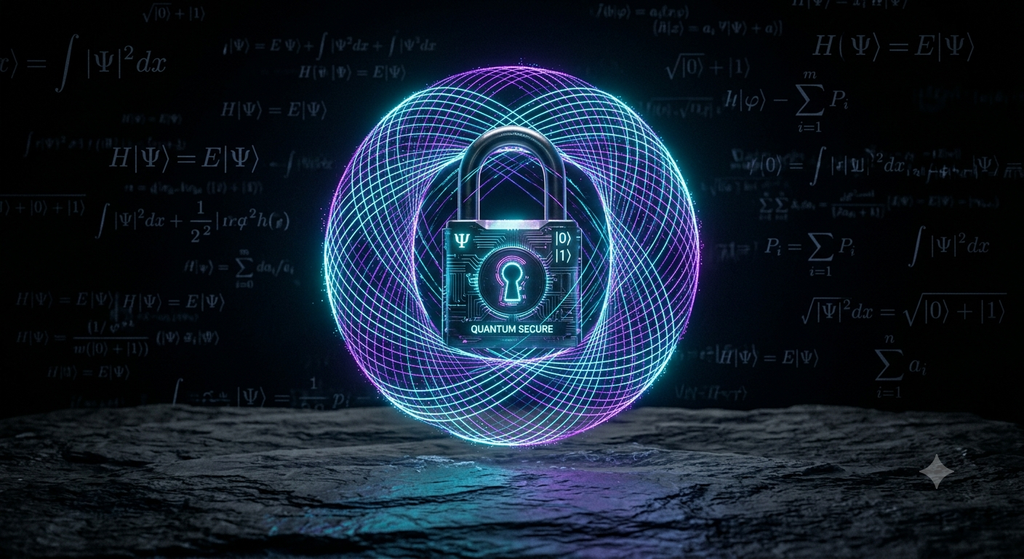
One of the most thrilling and highly lucrative applications you will discover while getting started with quantum computing basics is cryptography. Classical encryption relies entirely on the mathematical difficulty of factoring incredibly massive prime numbers using standard computers. Getting started with quantum computing basics clearly reveals exactly how Shor’s algorithm threatens to break these traditional security systems completely.
However, the amazing quantum realm generously provides its own highly secure solutions through verified Quantum Key Distribution (QKD). Integrating cybersecurity concepts heavily into your plan for getting started with quantum computing basics ensures you remain highly relevant to defense contractors. Quantum mechanics strictly guarantees that any unauthorized attempt to secretly measure a secure quantum key instantly alters its delicate state forever.
This immediate, irreversible alteration perfectly alerts the communicating parties to the exact presence of a malicious eavesdropper immediately. A comprehensive approach to getting started with quantum computing basics proves that you deeply understand both the offensive and defensive capabilities of qubits. Getting started with quantum computing basics is absolutely critical for ambitious cybersecurity professionals actively protecting future digital infrastructure.
Solving Complex Optimization Problems
Regular classical computers handle everyday digital tasks perfectly, but they struggle massively with large-scale logistical optimization challenges. When you are deeply getting started with quantum computing basics, you learn how quantum systems beautifully evaluate millions of potential routes simultaneously. Getting started with quantum computing basics is explicitly essential for modern researchers actively looking to optimize global supply chains or complex financial portfolios.
Classical systems lazily try one single path, fail, and then try another path sequentially until they finally find the solution. Getting started with quantum computing basics beautifully teaches you how quantum interference dramatically amplifies the correct mathematical path instantly. By fiercely utilizing getting started with quantum computing basics, you prepare yourself to rapidly solve problems that would traditionally take classical computers thousands of years.
Fields like pharmaceutical medicine and advanced sustainable material science desperately need these rapid, unparalleled optimization capabilities to survive. A dedicated engineering student prioritizing getting started with quantum computing basics will heavily outpace candidates who only understand basic classical machine learning. Getting started with quantum computing basics is your direct, exclusive ticket to working on humanity’s most complex and rewarding scientific challenges.
Career Opportunities in Quantum Technology
From brilliant quantum algorithms to highly advanced quantum networking, massive new career paths are rapidly opening up every single year globally. Exploring these incredibly high-paying roles heavily justifies the immense mental effort required for getting started with quantum computing basics. Forward-thinking students and modern developers have a massive golden opportunity to rapidly gain a massive competitive edge early on.
You can confidently and proudly explore incredibly lucrative careers like quantum software developer, cryptography specialist, or elite algorithm researcher. Getting started with quantum computing basics prepares you flawlessly for these incredibly high-demand roles in the fast-approaching future tech landscape. Every single dedicated hour spent getting started with quantum computing basics is an incredibly smart investment in your future earning potential.
Government-backed programs and highly accessible platforms like FutureSkills Prime are heavily democratizing this once-exclusive, elite physical knowledge. Mastering getting started with quantum computing basics gives you the ultimate, undeniable academic and professional advantage over your standard college peers. Getting started with quantum computing basics is fundamentally about raw persistence and beautifully confident technical debugging on a subatomic level.
Common Mistakes Beginners Make in Quantum
Even when enthusiastic, highly intelligent candidates know the exact theory behind getting started with quantum computing basics, simple oversights destroy their chances. Steer clear of these massive, widely common traps to fiercely protect your technical career prospects from embarrassing failures. Getting started with quantum computing basics requires strict, uncompromising attention to minor mathematical details and physical laws.
The first massive mistake is completely skipping linear algebra and blindly jumping directly into writing Qiskit code from internet tutorials. Technical recruiters can instantly tell when you recklessly build quantum circuits without truly understanding the underlying mathematical matrices. Getting started with quantum computing basics means you must proudly and manually calculate gate operations on physical paper first before programming.
The second mistake is foolishly assuming that quantum computers will completely replace standard laptops for everyday tasks like web browsing. Classical computers will effortlessly continue to handle normal digital work seamlessly for decades to come. Getting started with quantum computing basics requires you to gracefully understand that QPUs are highly specialized accelerators, not general-purpose replacements.
The third major error is completely ignoring the profound, destructive effects of quantum noise and decoherence in real-world physical systems. You might write brilliant functional code on a perfect simulator, but physical qubits lose their state incredibly fast due to environmental interference. Getting started with quantum computing basics is completely useless if you do not actively study error mitigation strategies thoroughly.
Frequently Asked Questions (FAQs)
Do I need a physics degree for getting started with quantum computing basics?
No, you absolutely do not need a formal physics degree to boldly begin your exciting quantum journey today. You can easily write high-quality quantum code using Python frameworks like Qiskit with just basic engineering linear algebra knowledge. Getting started with quantum computing basics relies entirely on clear logical thinking and consistent, dedicated daily practice.
What programming language is best for getting started with quantum computing basics?
Python is currently the absolute, undisputed industry standard for anyone actively learning quantum computing globally. A deep, unwavering focus on Python is explicitly designed to seamlessly integrate with massive frameworks like IBM Qiskit. Getting started with quantum computing basics means placing your absolute focus on mastering Python’s diverse scientific libraries.
Are there free courses available for getting started with quantum computing basics?
Yes, there are highly accessible, free, and incredibly affordable courses generously provided by IBM, Coursera, and FutureSkills Prime. Getting started with quantum computing basics gets significantly easier when you strictly follow structured, industry-backed learning pathways instead of random videos. Always double-check to strictly ensure your chosen course covers hands-on, practical Qiskit implementation.
Why is superposition important for getting started with quantum computing basics?
Superposition beautifully allows a quantum bit to securely hold more than one possible state prior to actual, physical measurement. A solid, robust foundation in getting started with quantum computing basics means understanding exactly how this enables massive parallel processing. It is the exact, fundamental property that makes quantum computers exponentially faster than classical machines for certain complex logistical tasks.
Can I run my code on a real quantum computer while getting started with quantum computing basics?
Yes, leading companies like IBM generously allow students to run their specific Python circuits directly on real quantum hardware via free cloud access. Getting started with quantum computing basics means you must never pass up the rare opportunity to test real, unpredictable quantum noise. It provides incredible, highly sought-after hands-on experience that heavily impresses technical recruiters during tough technical interviews.
Launch Your Tech Career Trajectory Today
The modern corporate hiring environment heavily rewards candidates who take bold, creative initiative to solve complex technical bottlenecks. Thousands of intelligent college peers continue sending identical, boring web development applications without having real deep technical substance. Knowing the importance of getting started with quantum computing basics sets you apart instantly and aggressively from this massive, unseen crowd.
It shows extreme professional discipline and demonstrates absolute logical clarity to your future engineering manager or lead researcher. It actively proves that you are completely ready to thrive in modern digital, fast-paced technical workplaces dealing with cutting-edge physics. Understanding the incredible value of getting started with quantum computing basics is no longer optional for top-tier research and security roles in highly competitive tech industries. Getting started with quantum computing basics gives you the ultimate, undeniable advantage over your college peers.
Do not wait for the perfect professional portfolio or a flawless academic transcript to get started with coding qubits. Open your Python IDE immediately, carefully install the Qiskit library, and write out your first basic Hadamard gate operation. The magnificent journey of getting started with quantum computing basics begins the exact moment you find the courage to compile your first quantum program today.
Your first recorded logic does not need to achieve absolute algorithmic perfection or solve massive prime numbers instantly. It simply needs to be genuine, mathematically clear, and relentlessly focused on the real technical value you want to build. Getting started with quantum computing basics is fundamentally about raw persistence and beautifully confident digital problem-solving. Practice daily on trusted platforms like IBM Quantum to build your algorithmic muscle memory safely in the cloud. CareerGrowKaro is fully committed to supporting every step of your professional coding journey with actionable, tested guidance.
Before you enthusiastically hit send on your next technical application, make sure your standard written documents are just as heavily optimized by reviewing the Biggest Resume Mistakes to Avoid. If you are balancing your heavy quantum coding practice with ongoing rigorous university semester exams, carefully check out our Best Study Timetable for College Students to manage your time effectively. Open your code editor, boldly tackle your next logic problem, and show the corporate tech world exactly what you are capable of achieving!