

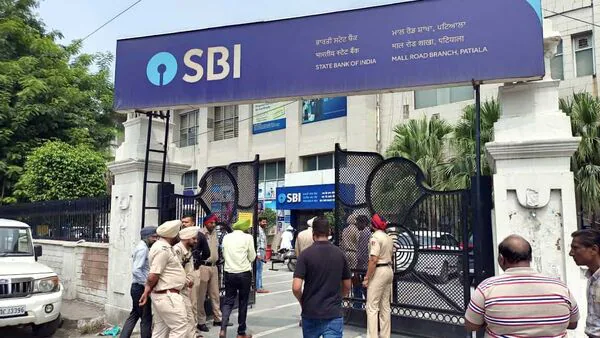
The State Bank of India Probationary Officer (SBI PO) exam is one of the most sought-after banking exams in India. Every year, thousands of aspirants compete for a limited number of vacancies, making the selection process highly competitive. Clearing the exam requires more than just knowledge of the syllabus; it demands speed, accuracy, time management, and consistent practice.
A well-planned SBI PO preparation strategy can help candidates cover the syllabus systematically while giving enough time for revision, mock tests, and improvement. Instead of studying randomly, aspirants should understand the exam pattern, identify their strengths and weaknesses, and follow a realistic study schedule.
In this guide, CareerGrowKaro brings you a practical approach to SBI PO preparation, covering the exam syllabus, section-wise preparation strategies, useful study resources, a 30-day study plan, important preparation tips, and common mistakes to avoid. Whether you are starting your preparation from scratch or looking to improve your existing strategy, this guide can help you prepare more effectively and confidently for the SBI PO examination.
SBI PO Exam Pattern 2026

Understanding the exam pattern is the first step towards effective SBI PO preparation. The SBI Probationary Officer recruitment process is conducted in three phases: a preliminary examination, a main examination, and Phase III, which includes a psychometric test, a group exercise, and a personal interview. Candidates must qualify through each stage to reach the final selection.
Phase I: SBI PO Preliminary Examination
The preliminary examination is an objective online test of 100 marks with a total duration of 1 hour. It consists of three sections, with 20 minutes allotted separately to each section. There is no sectional cut-off in the preliminary examination; candidates are shortlisted for the main examination based on their aggregate performance.
| Section | No. of Questions | Marks | Duration |
| English Language | 40 | 40 | 20 minutes |
| Quantitative Aptitude | 30 | 30 | 20 minutes |
| Reasoning Ability | 30 | 30 | 20 minutes |
| Total | 100 | 100 | 1 hour |
For candidates following an SBI PO preparation strategy, it is important to practice all three sections regularly because the separate sectional timings make time management crucial.
Phase II: SBI PO Main Examination
The main examination consists of an objective test worth 200 marks followed immediately by a descriptive test worth 50 marks. The objective portion has a total duration of 3 hours, with separate timings for each section. The Descriptive Test is conducted for 30 minutes.
| Section | No. of Questions | Marks | Duration |
| Reasoning & Computer Aptitude | 40 | 60 | 50 minutes |
| Data Analysis & Interpretation | 30 | 60 | 45 minutes |
| General Awareness/Economy/Banking Knowledge | 60 | 60 | 45 minutes |
| English Language | 40 | 20 | 40 minutes |
| Total | 170 | 200 | 3 hours |
The descriptive test carries 50 marks and has a duration of 30 minutes. It assesses communication skills through tasks such as emails, reports, situation analysis, and precis writing.
Phase III: Psychometric Test, Group Exercise & Interview
Candidates shortlisted after the Main Examination proceed to Phase III. It includes a psychometric test, group exercise, and personal interview. The psychometric test is used for personality profiling, while the group exercise and interview assess candidates on their overall suitability for the officer role.
| Component | Maximum Marks |
| Psychometric Test | 20 |
| Group Exercise | 30 |
| Personal Interview | 50 |
For final selection, marks from the main examination and Phase III are considered, while preliminary examination marks are not added to the final merit list. The Main Examination and Phase III scores are normalized to a total of 100 marks in the final selection process.
SBI PO Preparation Strategy for Each Section
A section-wise strategy is important for effective SBI PO preparation, as every subject requires a different approach. Candidates should balance conceptual understanding, regular practice, revision, and mock tests to improve their overall performance.
1. Quantitative Aptitude
Quantitative Aptitude evaluates a candidate’s numerical ability, calculation speed, and problem-solving skills. For effective SBI PO preparation, candidates should first strengthen basic arithmetic concepts and then gradually move towards advanced and time-intensive questions.
- Important Topics: Percentages, profit and loss, ratio and proportion, averages, simplification, number series, time and work, and time, speed, and distance.
- Key Focus: Build strong conceptual understanding and improve calculation speed.
- Preparation Strategy: Learn tables, squares, cubes, fractions, and percentage conversions for faster calculations.
- Practice Tip: Solve topic-wise and sectional questions within a fixed time limit to improve speed and accuracy.
2. Reasoning Ability
Reasoning ability tests a candidate’s logical thinking, analytical ability, and problem-solving skills. This section can be scoring if candidates understand different question patterns and practice them consistently during their SBI PO preparation.
- Important Topics: Puzzles, seating arrangements, syllogisms, inequality, coding-decoding, blood relations, direction sense, and ranking.
- Key Focus: Develop a logical approach instead of relying only on memorized tricks.
- Preparation Strategy: Begin with basic reasoning questions before progressing to complex puzzles and seating arrangements.
- Practice Tip: Take sectional tests regularly and learn to identify questions that can be solved quickly.
3. English Language
The English Language section evaluates reading comprehension, vocabulary, grammar, and overall language proficiency. Regular reading and question practice should be an important part of your SBI PO preparation for this section.
- Important Topics: Reading comprehension, cloze test, error detection, para jumbles, sentence correction, fillers, vocabulary, and grammar.
- Key Focus: Improve reading speed, comprehension, grammar, and vocabulary.
- Preparation Strategy: Read newspapers, editorials, magazines, and reliable online articles regularly.
- Practice Tip: Maintain a vocabulary notebook and solve previous-year and sectional questions frequently.
4. General/Economy/Banking Awareness
The General/Economy/Banking Awareness section tests candidates on current events and their understanding of the banking and financial sector. Unlike numerical sections, it requires consistent reading and revision throughout your SBI PO preparation.
- Important Topics: Current affairs, banking terminology, RBI, financial awareness, government schemes, appointments, awards, and economic developments.
- Key Focus: Pay particular attention to banking, finance, and economy-related current affairs.
- Preparation Strategy: Prepare short notes on important events and revise them at regular intervals.
- Practice Tip: Attempt current-affairs and banking-awareness quizzes frequently to improve retention.
5. Data Analysis & Interpretation
Data Analysis & Interpretation tests a candidate’s ability to understand, analyze, and interpret numerical information. Strong arithmetic fundamentals and quick calculations are essential for performing well in this section during SBI PO preparation.
- Important Topics: Tables, bar graphs, line graphs, pie charts, caselet DI, mixed DI, and data sufficiency.
- Key Focus: Improve calculation speed and learn to interpret large amounts of data quickly.
- Preparation Strategy: Strengthen percentages, ratios, averages, fractions, and other arithmetic concepts commonly used in DI.
- Practice Tip: Start with basic DI sets and gradually practice more complex sets under timed conditions.
6. Descriptive Paper
The descriptive paper assesses a candidate’s written communication, clarity of thought, and ability to present information effectively. Candidates should include regular writing practice in their SBI PO preparation rather than leaving this section until the final stage.
- Important Areas: Emails, reports, situation analysis, and precis writing, as prescribed in the latest SBI PO pattern.
- Key Focus: Clear structure, correct grammar, logical flow, and concise communication.
- Preparation Strategy: Read editorials and articles on banking, the economy, technology, education, and major current issues.
- Practice Tip: Practice writing within the prescribed time limit and review each response for grammar, structure, and clarity.
How to Start SBI PO Preparation

Starting your preparation with a clear strategy can help you avoid unnecessary stress and make better use of your study time. Instead of trying to cover everything at once, follow these practical steps to build a structured SBI PO preparation plan.
Step 1: Understand the Exam Pattern and Syllabus
Before beginning your SBI PO preparation, familiarize yourself with the latest exam pattern, syllabus, marking scheme, and selection process. This will help you understand what to study and how much time to dedicate to each section.
- Go through the Prelims and Mains syllabus carefully.
- Identify the important topics in each section.
- Understand the sectional time limits and negative marking.
- Check the latest official SBI notification for any changes.
Step 2: Assess Your Current Preparation Level
Take a full-length mock test before starting intensive SBI PO preparation. Your initial score can help you understand your current strengths and weaknesses.
- Identify the sections where you perform well.
- Note the topics where you make frequent mistakes.
- Analyze whether your main issue is speed, accuracy, or conceptual clarity.
- Use the results to set realistic preparation targets.
Step 3: Build Your Basic Concepts
Strong fundamentals are the foundation of effective SBI PO preparation. Before solving advanced questions, make sure you understand the basic concepts of every section.
- Revise fundamental concepts in quantitative aptitude and reasoning.
- Strengthen grammar and vocabulary for English.
- Start reading about banking, finance, and current affairs.
- Gradually increase the difficulty level of questions.
Step 4: Create a Realistic Study Schedule
A practical timetable can make your SBI PO preparation more consistent. Divide your available study hours between learning concepts, solving questions, revision, and mock tests.
- Allocate time to all major sections.
- Give additional time to your weaker subjects.
- Keep dedicated slots for current affairs and revision.
- Include short breaks to maintain concentration.
- Adjust your schedule according to your progress.
Step 5: Practice Topic-Wise Questions
Once your concepts are clear, begin solving topic-wise questions. Regular practice is one of the most important parts of SBI PO preparation because it improves both accuracy and familiarity with different question patterns.
- Start with easy and moderate-level questions.
- Gradually move towards difficult questions.
- Practice previous-year questions.
- Use a timer to develop speed.
- Record recurring mistakes and revise those topics.
Step 6: Take Mock Tests and Analyse Them
Mock tests should become a regular part of your SBI PO preparation, especially after completing the basics. Simply taking a mock is not enough; analyzing your performance is equally important.
- Start with sectional tests and gradually move to full-length mocks.
- Analyze incorrect and unattempted questions.
- Identify questions that consumed too much time.
- Track your scores and accuracy over time.
- Develop an effective question-selection strategy.
Step 7: Revise Regularly and Improve Your Strategy
The final stage of SBI PO preparation should focus heavily on revision, practice, and performance improvement.
- Revise formulas, grammar rules, vocabulary, and important concepts.
- Regularly revise current affairs and banking awareness.
- Reattempt questions you previously got wrong.
- Take full-length mocks under exam-like conditions.
- Avoid starting completely new topics at the last minute.
- Keep refining your strategy based on mock-test performance.
Best SBI PO Preparation Tips
A smart strategy can make your SBI PO preparation more organized and effective. Along with covering the syllabus, candidates should focus on consistency, practice, revision, and regular performance analysis.
1. Follow a Consistent Timetable: Create a realistic daily schedule and allocate dedicated time to each section. Consistency is more important than studying for long hours occasionally.
2. Practice Previous-Year Questions: Solve previous-year SBI PO questions to understand the difficulty level, question patterns, and frequently tested topics.
3. Take Regular Mock Tests: Include sectional and full-length mock tests in your SBI PO preparation to improve speed, accuracy, and time management.
4. Analyze Every Mock Test: Do not focus only on your score. Check incorrect, unattempted, and time-consuming questions to identify areas that need improvement.
5. Maintain an Error Notebook: Note down recurring mistakes, difficult concepts, formulas, shortcuts, and important facts. Revise these notes regularly.
6. Improve Calculation and Reading Speed: Practice mental calculations and read newspapers or editorials regularly to improve numerical and comprehension speed.
Conclusion
Cracking the SBI PO exam requires more than completing the syllabus or solving a large number of questions. Effective SBI PO preparation is built on consistency, smart practice, regular revision, and continuous improvement. Candidates should focus on strengthening their concepts, improving speed and accuracy, solving previous-year questions, and taking regular mock tests. However, simply attempting mocks is not enough. Analyzing mistakes and identifying weak areas can help you improve your performance significantly.
Every aspirant has a different learning pace, academic background, and preparation level. Therefore, avoid blindly copying someone else’s timetable or study strategy. Instead, create a personalized plan based on your strengths, weaknesses, available study hours, and target score. Keep your resources limited, revise regularly, and track your progress throughout your preparation.
At CareerGrowKaro, we aim to provide practical career guidance and useful preparation resources to help aspirants make informed decisions about their careers. With disciplined preparation and a positive mindset, you can steadily move closer to your goal of becoming an SBI probationary officer. Stay consistent, learn from your mistakes, and trust the process.
FAQs
1. How many months are enough for SBI PO preparation?
The required preparation time varies depending on your existing knowledge and daily study hours. Generally, 3–6 months of consistent preparation can provide enough time to cover the syllabus, practice questions, revise important topics, and take mock tests.
2. How many hours should I study for SBI PO?
There is no fixed number of hours required. Ideally, candidates should study for 4–6 focused hours daily, depending on their preparation level. Quality, consistency, and regular practice matter more than simply counting study hours.
3. Can I prepare for SBI PO without coaching?
Yes. SBI PO can be prepared for through self-study with reliable books, previous-year papers, online resources, and mock tests. Candidates should follow a structured timetable and regularly analyze their performance.
4. Which section should I prepare first for SBI PO?
Start with the sections or topics where your fundamentals are weak. At the same time, practice all major sections regularly so that you maintain balanced preparation and do not neglect any subject.
5. How can I improve my SBI PO mock test score?
Analyze every mock after completing it. Identify incorrect answers, questions that took too long, and questions you could not attempt. Revise the relevant concepts and practice similar questions before taking the next mock.